Photo via Reason

Gina Hinojosa Wants To Freeze Electricity Rates in Texas. New Jersey Shows Why That Won't Work.

Read the original at Reason ↗
Cite

Akintola, T. (2026, November 9). Gina Hinojosa Wants To Freeze Electricity Rates in Texas. New Jersey Shows Why That Won't Work. Reason. https://reason.com/2026/11/09/gina-hinojosa-wants-to-freeze-electricity-rates-in-texas-new-jersey-shows-why-that-wont-work/

Dated from the outlet's own feed. Check the original for its byline.

Reason · collected 2026-11-09 · by Tosin Akintola

Quick Summary

Gina Hinojosa, who will become Texas governor in January, plans to freeze residential electricity rates shortly after taking office and suspend gas and diesel taxes. She attributes the 3.3 percent increase in average electricity prices for residential customers between August 2025 and August 2026 to Republican policies. However, because Texas has a decentralized market where retail providers set electricity prices, Hinojosa's ability to actually freeze rates is limited. The article cites New Jersey as an example of why such measures are unlikely to succeed: despite Governor Mikie Sherrill’s efforts to freeze rate hikes and allocate $500 million for short-term relief, residents still faced high electricity bills.
Written by AI on 2026-11-09, from this article's own text only (the story summary below draws on all the coverage).

Story

Gina Hinojosa's Electricity Rate Proposal
Politics · 1 article(s) covering the same event.

Compared with similar articles

Nothing to compare against. No article is close enough to this one for the pipeline to have linked or judged the pair.
How this article was measured signals, leaning charts, publisher record, byline, topics and claims

Signals How these are calculated →

Claims extracted
24
sentences that state something as happening or true
Uncertain
17%
4 of 24 hedged ("reportedly", "may", "according to")
Leaning
withheld
no quote in the article backed the model's score
Publisher signals
67/100
Reason's corrections and hedging, across everything collected from it. Not a measure of accuracy.
Outlets on this story
1
Politics
Same framing elsewhere
1
articles that frame the event the way this one does
Analyzed 2026-11-09 · how these are computed

How this is being covered How these are calculated →

Article leaning vs. publisher reliability
Source leaning vs. consistency

Publisher

Reason · 1232 article(s) · 4 correction(s) detected
Running correction rate · 4 correction(s)

Who wrote this

Tosin Akintola
22 article(s) here · 1 carrying a prediction
When Democrat Gina Hinojosa is sworn in as Texas governor in January, one of her first acts, "within an hour of taking the oath of office," she recently told The Texas Tribune, will be to "declare a high-cost emergency in the state of Texas and issue an emergency executive order to: one, suspend the gas and diesel tax; and two, freeze electricity rates."
Yet messaging from ranking Democrats makes it clear their inquiries won't be limited to government actions; they will also extend to the actions of private companies and industries they perceive as allies of the president.
Even when they weren't on the ballot, they may have been a factor in the elections: NBC's exit polls report that artificial intelligence and data centers were a "crucial or a major factor" for 56 percent of voters.
2026-11-04 · assertive framing · Ohio Leads a Wave of Local Data Center Bans
In August, U.S. District Court Judge Robert J. Shelby found that federal law did not preempt Utah from enforcing its anti-gambling laws against Kalshi, meaning the platform could not legally operate in the Beehive State.
2026-10-29 · assertive framing · Utah Files Criminal Charges Against Kalshi Co-Founders
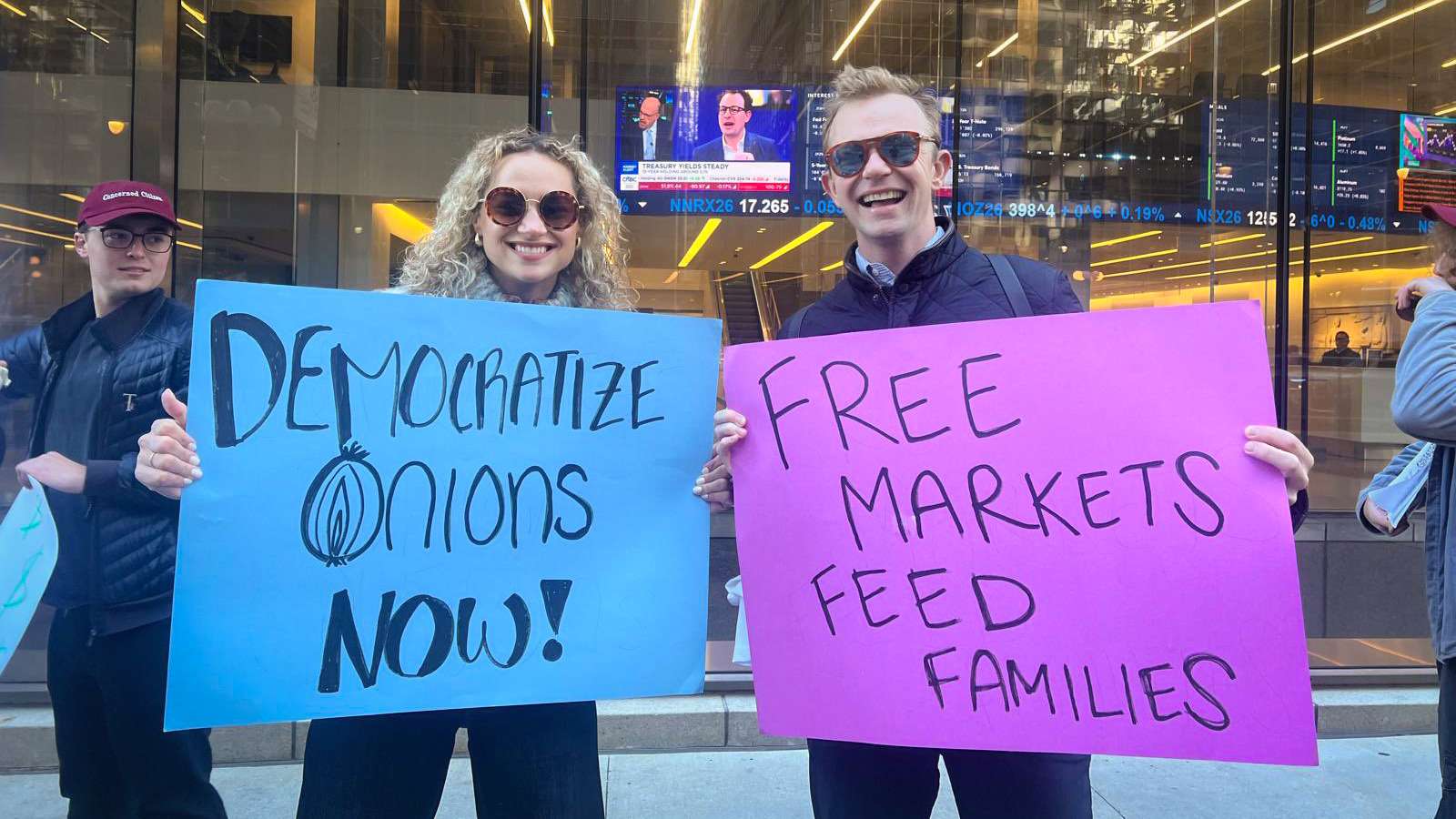
If onion futures contracts were legal, farmers could rely on market expectations instead of planting crops based on last year's prices.
The U.S. income tax rate is low compared to other high-income countries, so Americans living overseas typically pay more in local taxes than they would here.
In its brief, the NFL points to platforms such as Kalshi for being unwilling to adopt the league's list of prohibited wagers to guard against market manipulation and insider trading and requiring anyone wagering on sports to be at least 21 years old.
And that might be the tamest idea in this sprawling populist platform.
On Wednesday, the New York Post reported that the Federal Trade Commission (FTC) would be "ramping up a sweeping probe of Anthropic, OpenAI and other frontier labs to uncover the potential dangers their technology poses to consumers, and plans to slap the tech titans with formal demands, similar to subpoenas, to turn over information."
In Harlow v. Fitzgerald (1982), the Court established that government officials are entitled to qualified immunity when their conduct does not "violate clearly established constitutional rights of which a reasonable person would have known."
Also by Tosin Akintola
Nothing else under this byline is closely related to this article, so these are simply their most recent.
All 22 articles by Tosin Akintola →

Topics

Democrat New Jersey Sherrill Texas The Texas Tribune

Subjects

Hinojosa PERSON · 6× Texas GPE · 4× Sherrill PERSON · 3× Democrat NORP · 2× Democratic NORP · 2× Georgia GPE · 2× New Jersey GPE · 2× Gina Hinojosa PERSON · 1× Republican NORP · 1× The Texas Tribune ORG · 1×

Narrative

Hinojosa—who tied increases in property taxes and electricity bills to Republican Gov. Greg Abbott's policies—promised during her campaign that if elected, she would "direct the Public Utility Commission to freeze the rates residential customers pay until we have laws to ensure that data centers and other high-load users pay for themselves." With Texans seeing a 3.3 percent increase in the average electricity price for residential customers between August 2025 and August 2026—roughly in line with the national increase—the state's electorate clearly found Hinojosa's pledge compelling.
framing: assertive · carried by 1 article(s) · first seen 2026-11-09
When Democrat Gina Hinojosa is sworn in as Texas governor in January, one of her first acts, "within an hour of taking the oath of office," she recently told The Texas Tribune, will be to "declare a high-cost emergency in the state of Texas and issue an emergency executive order to: one, suspend the gas and diesel tax; and two, freeze electricity rates."

Claims (24 extracted, 4 hedged)

When Democrat Gina Hinojosa is sworn in as Texas governor in January, one of her first acts, "within an hour of taking the oath of office," she recently told The Texas Tribune, will be to "declare a high-cost emergency in the state of Texas and issue an emergency executive order to: one, suspend the gas and diesel tax; and two, freeze electricity rates." asserted
she → swear → rates
Hinojosa—who tied increases in property taxes and electricity bills to Republican Gov. Greg Abbott's policies—promised during her campaign that if elected, she would "direct the Public Utility Commission to freeze the rates residential customers pay until we have laws to ensure that data centers and other high-load users pay for themselves." With Texans seeing a 3.3 percent increase in the average electricity price for residential customers between August 2025 and August 2026—roughly in line with the national increase—the state's electorate clearly found Hinojosa's pledge compelling. asserted
pledge → tie → increase
However, it's unclear if Hinojosa actually has the power to follow through on her campaign promise. uncertain
Hinojosa → have → promise
In Texas' decentralized market, retail providers, not regulators, set electricity prices. asserted
providers → set → prices
This means Hinojosa has very little authority over residential prices, and her order would not lower costs. asserted
order → mean → costs
But as Click2Houston.com points out, Hinojosa could still impact prices; she could use her influence over the state budget "to push lawmakers toward her priorities," including forcing data centers to pay more. uncertain
she → point → more
Of course, this would do little to address the primary cause of nationwide electricity spikes: transmission and distribution charges. asserted
this → do → spikes
Instead of Texas imposing price controls on the free market, Hinojosa could learn from the mistakes of New Jersey Gov. Mikie Sherrill, a fellow Democrat who has failed to meaningfully lower electricity prices in her state despite signing an executive order that declared a state of emergency and froze rate hikes by the state's utilities. uncertain
that → impose → utilities
Sherrill realized that even if she froze rates, it wouldn't erase the factors driving higher electricity prices, such as the supply and transmission costs providers pay. asserted
providers → realize → costs
In June, to offset the increases utilities typically pass on to customers, Sherrill signed off on a budget authorization that allocates $500 million to provide ratepayers short-term relief. asserted
that → offset → relief
Yet in October, a CBS News report found that even after the rate freeze, utility costs in the Garden State remained high, with one resident remarking her electricity bill had "nearly doubled." asserted
bill → find → State
In July, the consulting firm E3 released a report—commissioned by Sherrill for the New Jersey Board of Public Utilities—that found that changes to state policy mainly affect distribution, which is "roughly a quarter" of the charges on residents' electricity bills, and that "no single reform or modernization option" could be presented as a standalone fix. uncertain
option → consult → fix
It's not just New Jersey that has tried (and failed) to bring down utility costs by freezing electricity rates; last July Georgia's Public Service Commission unanimously approved an agreement to freeze base power rates for at least three years. asserted
Commission → try → years
A year after the freeze was implemented, the average electricity price for residential customers in Georgia rose by 2.3 percent. asserted
price → implement → percent
Meanwhile, in October, Virginia Democratic Gov. Abigail Spanberger called for a six-year freeze on residential electricity rates as a condition for approving the proposed $67 billion merger between utilities Dominion Energy and NextEra Energy. asserted
Spanberger → call → utilities
Regardless of where it's proposed, a rate freeze is a superficial fix for a problem that requires less government thumb on the scale, not more. asserted
that → propose → scale
At least one Democratic governor has declined to use rate freezes as a temporary panacea for rising energy costs. asserted
governor → decline → costs
In a March appearance on CBS 2's "The Point," New York Gov. Kathy Hochul was asked if she thought a "two-year moratorium or freeze on utility rates statewide" was "doable." asserted
moratorium → ask → rates
She quickly rejected the idea, favoring an "all-of-the-above approach to find more sources of energy to help drive down [costs]." asserted
She → reject → costs
What rate freezes like Hinojosa's miss is that states have little direct impact on electric prices. asserted
states → have → prices
As the E3 report notes, "Most of a typical bill…is set in federal and regional markets with limited ability at the state level to influence those costs." asserted
Most → note → costs
Still, that doesn't make the idea behind these policies—that government should interfere in the market—any less harmful. asserted
government → make → market
Without the price signals they receive from electricity rates, utilities can't properly plan for upgrades, expansion, or future demand. asserted
utilities → receive → upgrades
Freezing electricity rates clearly polls well as policy, but it works better on the campaign trail than in practice. asserted
it → freeze → practice

Give feedback · no sign-in needed

No sign-in needed for now. Your note is sent without a name, so it cannot be answered.

History Support