That is 0 articles you have read today.
The Aporia is free and carries no advertising, so readers are the only
thing paying for it. If you are getting this much out of it, a small
donation is what keeps it independent.
Daily limit reached
You have read 0 articles today.
That is more than the 15 a day The Aporia gives away,
and well past what it can carry on nothing. Your allowance resets at
midnight.
There is no advertising here and nothing about you is sold, so readers
are the only thing paying for it. If the site is worth this much of
your day, it is worth a few dollars.
Everything else stays open: the
maps, the
directory and
search do
not count against this, and neither does re-opening something you have
already read today.
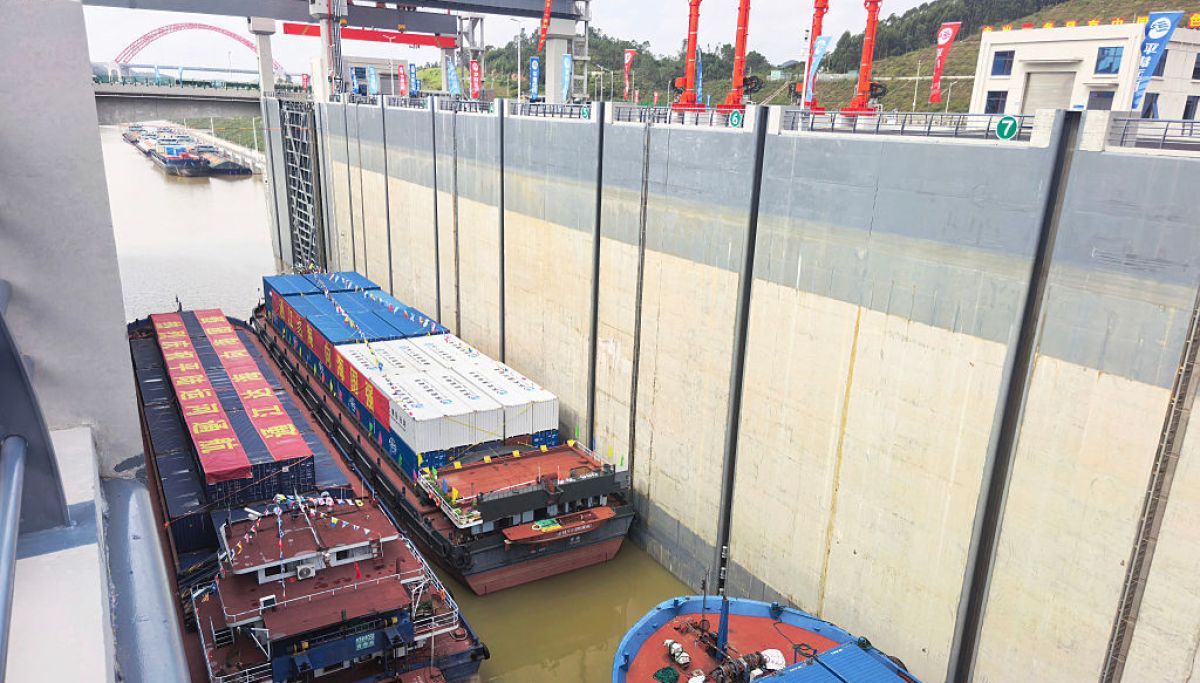
China recently opened the Pinglu Canal, a $10 billion shipping canal connecting the Xijiang River with the Gulf of Tonkin in Southeast Asia. Stretching 83 miles and capable of accommodating vessels up to 5,000 tons, the canal is expected to reduce shipping costs and logistical challenges for southwest China by cutting hundreds of miles off traditional routes. The project is part of China’s Belt and Road Initiative aimed at expanding trade through new infrastructure projects globally, particularly with Southeast Asian nations, which are its largest trading partners.
Written by the local model on 2026-09-16,
using this article's own text rather than the other coverage of the
same event (that is the story summary below).
Claims extracted
15
claim-shaped sentences
Uncertain
13%
2 of 15 hedged
Leaning
Leans left
of the writing, not the subject
Correction & hedging signals
96.2
corrections and hedging in what we collected;
not a measure of accuracy
Outlets on this story
1
Politics
Narrative spread
1
articles carrying this framing
Story summary
On Wednesday, China opened the Pinglu Canal, a significant project under its Belt and Road Initiative, connecting the Xijiang River with the Gulf of Tonkin in the South China Sea. The canal stretches over 83 miles and is expected to reduce shipping distances by hundreds of miles while lowering logistical costs. Estimated at approximately $10 billion, it is the first major canal built in China since 1949. The Chinese government highlights its importance for the country’s southwest region, which has traditionally lagged economically compared to the eastern coast. By providing a more direct route to seaports and overseas markets, the project aims to boost regional trade and supply-chain integration.
Written for “China Belt and Road Shipping Canal Opens” on 2026-09-17,
grounded in this article and the 0 other(s) covering the same event.
Why this leaning score
The article's own words the score was based on. Each is quoted
verbatim and was checked against the article text before being
stored, so you can find it in the original.
Leaning score -0.35 for article 14000 (medium confidence, 1 verified quote) · logged 2026-09-16
The Chinese Communist Party has chalked up a major win for its Belt and Road Initiative, opening a massive shipping canal that will connect swaths of the country to trade routes in Southeast Asia.
asserted
that → chalk → Asia
Beijing announced the official opening of the Pinglu Canal on Wednesday, connecting the Xijiang River with the Gulf of Tonkin in the South China Sea.
asserted
Beijing → announce → Sea
The 83-mile waterway will cut hundreds of miles off traditional shipping routes and slash logistical costs.
asserted
waterway → cut → costs
“The new artery carries particular significance for China’s southwest, which has long lagged behind the more prosperous eastern coast and faced higher costs getting goods to seaports,” the Chinese government said in a statement celebrating the opening.
asserted
government → carry → opening
“Coal, ore, grain, new-energy materials and auto parts from the region can now take a more direct route to overseas markets.”
asserted
Coal → take → markets
It additionally claimed that the impact of the canal “could extend beyond the movement of goods, spurring new cross-border investment and deepening regional supply-chain integration.”
The canal has been under construction since late 2022 and is estimated to have cost approximately $10.1 billion dollars to finish.
uncertain
canal → claim → dollars
It reportedly has the capacity to accommodate vessels weighing up to 5,000 tons.
uncertain
It → have → tons
It’s the first canal of its kind built in China since 1949 and is touted as a feather in the CCP’s cap as it continues to build out its New International Land-Sea Trade Corridor — a massive infrastructure project aimed at expanding Chinese trade through new passages and shipping infrastructure.
asserted
it → ’ → passages
The project is particularly focused on building out shipping routes to Europe and the Southeast.
asserted
project → focus → Europe
The Land-Sea Trade Corridor is only one facet of President Xi Jinping’s grand Belt and Road Initiative, an international finance and construction project aimed at exporting Chinese infrastructure across the globe through ports, railways, canals, pipelines, highways, and border crossings.
asserted
Corridor → aim → ports
The scope of the BRI is overwhelming, with approximately 150 countries signed on to at least one project.
asserted
countries → sign → project
The United States and its allies have for years cautioned against cooperation with the BRI, characterizing it as a dangerous expansion of Chinese soft power.
asserted
States → caution → power
Additionally, the electrical and digital infrastructure provided by Chinese companies is subject to control from the CCP.
asserted
infrastructure → provide → CCP
While impoverished nations were initially enthusiastic about participation, the debt accrued from Chinese projects in places like Africa has at times reached crisis levels.
asserted
debt → accrue → levels
The Center for Global Development has characterized the current trajectory of the BRI as China’s “transition from financier to debt collector.”
asserted
Center → characterize → collector
 The Aporia