That is 0 articles you have read today.
The Aporia is free and carries no advertising, so readers are the only
thing paying for it. If you are getting this much out of it, a small
donation is what keeps it independent.
Daily limit reached
You have read 0 articles today.
That is more than the 15 a day The Aporia gives away,
and well past what it can carry on nothing. Your allowance resets at
midnight.
There is no advertising here and nothing about you is sold, so readers
are the only thing paying for it. If the site is worth this much of
your day, it is worth a few dollars.
Everything else stays open: the
maps, the
directory and
search do
not count against this, and neither does re-opening something you have
already read today.
Mohammed Sharifullah, an ISIS-K militant linked to the 2021 Abbey Gate bombing in Kabul that killed 13 U.S. service members and over 160 Afghans, was sentenced to 20 years in prison after being convicted of conspiracy charges earlier this year. During his trial, jurors could not agree unanimously on whether Sharifullah’s actions directly caused the deaths at the airport, which would have led to a potential life sentence. The bombing occurred as U.S. troops were evacuating from Afghanistan and resulted in the Taliban retaking control shortly after. Sharifullah admitted during FBI interviews that he surveilled routes near the airport for an attacker and received support from ISIS-K for his involvement in multiple attacks.
Written by the local model on 2026-09-16,
using this article's own text rather than the other coverage of the
same event (that is the story summary below).
Story summary
Mohammed Sharifullah, an alleged ISIS-K militant, has been sentenced to 20 years in prison after being convicted of providing material support to the terrorist group involved in the Abbey Gate bombing on August 26, 2021. The attack killed 13 American service members and over 160 Afghans at Hamid Karzai International Airport during the evacuation operations orchestrated by U.S. troops as part of their withdrawal from Afghanistan under the Biden administration. Sharifullah was involved in surveilling a route for the suicide bomber and admitted to receiving funds, a motorcycle, and instructions via social media from ISIS-K before the attack. Although jurors deadlocked on whether his actions directly caused deaths at the airport, Sharifullah could have faced life imprisonment if they had agreed unanimously on this point.
Written for “ISIS Bombing Sentence” on 2026-09-17,
grounded in this article and the 0 other(s) covering the same event.
Why this leaning score
This article does not take a side on a contested political
question, so it has no leaning score. That is an
answer rather than a gap: a match report or a rescue can be warmly
or critically written without being left or right, and scoring it
anyway is how approval of a subject gets recorded as a political
position.
No political leaning scored for article 13993 · logged 2026-09-16
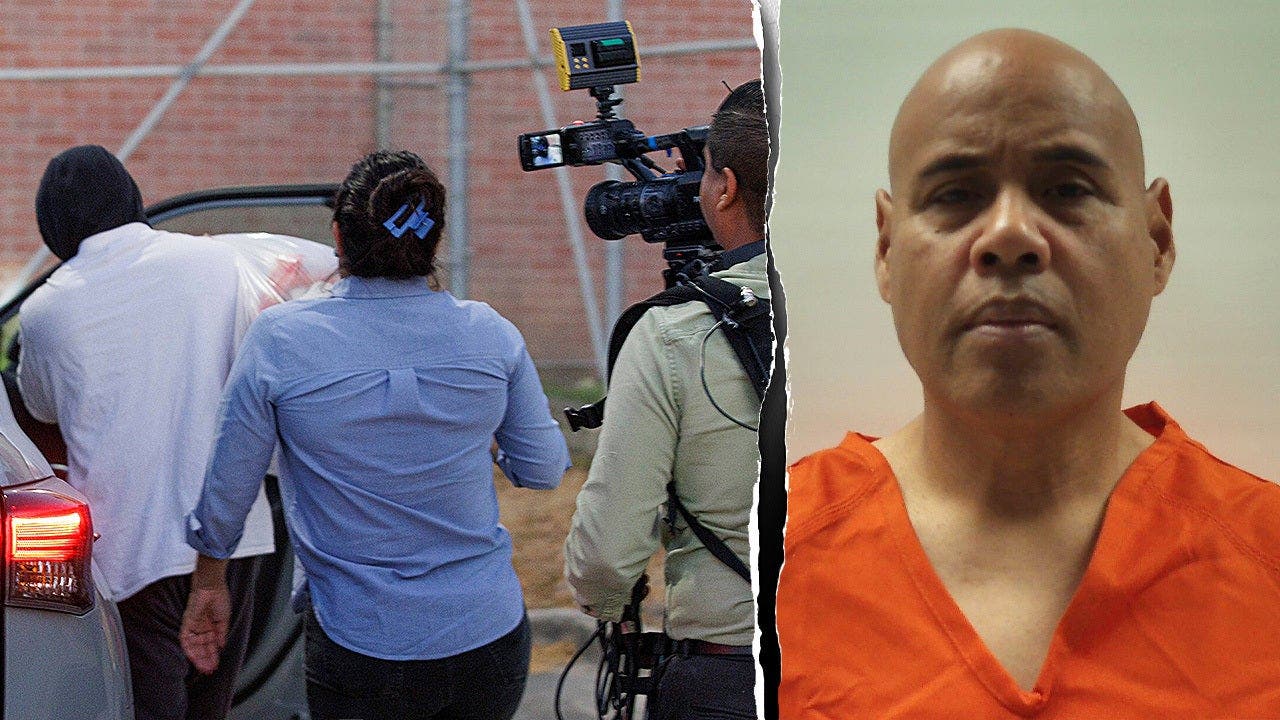
A man convicted of providing material support to the Islamic State terror group in connection with the deadly Abbey Gate bombing that killed 13 American service members during the Biden administration's chaotic withdrawal from Afghanistan has been sentenced to 20 years in prison.
asserted
that → convict → prison
Mohammed Sharifullah, an alleged militant with ISIS-K, a regional branch of the terrorist group, was convicted in April of a conspiracy charge in a deadly 2021 suicide bombing at the Hamid Karzai International Airport in Kabul.
asserted
Sharifullah → convict → Kabul
During his trial, jurors deadlocked on whether any deaths at the airport "resulted from" that conspiracy.
asserted
deaths → deadlocke → conspiracy
Sharifullah could have faced a possible life sentence if the jury had unanimously agreed on that point.
uncertain
jury → face → point
More than 160 Afghans and 13 U.S. military service members were killed on Aug. 26, 2021, at the airport, where U.S. troops were conducting evacuation operations when a lone suicide bomber detonated an improvised explosive device near Abbey Gate, an entry point.
asserted
bomber → kill → Gate
The U.S. withdrawal was completed days later as the Taliban retook control of the country.
asserted
Taliban → complete → country
During interviews with the FBI, Sharifullah admitted that he surveilled a possible route for the suicide bomber to the Abbey Gate during the last days of the U.S. military’s presence in Afghanistan, according to evidence presented at trial.
uncertain
he → admit → trial
"ISIS-K members provided Sharifullah with a motorcycle, funds for a cell phone and a SIM card, and instructions to open an account on a particular social media platform to communicate with them during the attack operation," an affidavit cited Sharifullah as saying in an FBI interview.
asserted
affidavit → provide → interview
"After making these preparations for the attack, Sharifullah was tasked with scouting a route near Hamid Karzai International Airport for an attacker," the affidavit said.
asserted
affidavit → make → attacker
"Sharifullah conducted surveillance on a route, specifically checking for law enforcement and American or Taliban checkpoints.
asserted
Sharifullah → conduct → enforcement
Prosecutors also presented evidence of several other ISIS-K attacks in Afghanistan in which Sharifullah admitted involvement.
asserted
Sharifullah → present → involvement
President Donald Trump announced the capture of Sharifullah during a March 2025 address to a joint session of Congress.
asserted
Trump → announce → Congress
"Tonight, I am pleased to announce that we have just apprehended the top terrorist responsible for that atrocity.
asserted
we → announce → atrocity
And he is right now on his way here to face the swift sword of American justice," Trump said at the time to lawmakers.
asserted
Trump → face → lawmakers
Fox News Digital has reached out to the Justice Department for comment.
asserted
Digital → reach → comment
 The Aporia