Now that the most historic midterm election in memory is almost over, some of the more mundane, and yet potentially significant, issues in the new political landscape are emerging.
asserted
some → emerge → landscape
One of them—far less dramatic than a Blue Texas, the first Black woman Governor, and the “epic fail” of Republican gerrymandering—is a controversial permitting reform deal that has the potential to shape the trajectory of the US energy infrastructure buildout for decades to come.
asserted
that → have → decades
Should this measure pass, it could also expedite President Donald Trump’s construction makeover of Washington, DC.
uncertain
it → pass → Washington
On Monday, the lame-duck Senate will vote on the Bipartisan American Affordability and Jobs Act (BAAJA), a measure aimed to ease the regulatory barriers of a permitting system that is unanimously considered antiquated.
asserted
that → vote → system
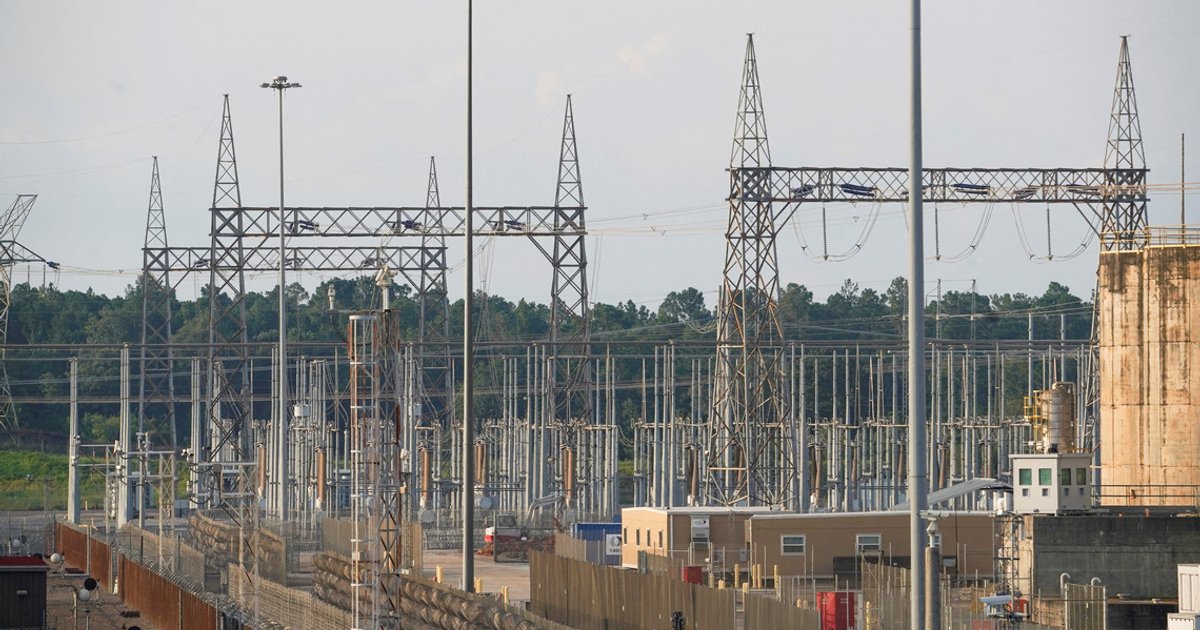
Introduced by a bi-partisan group of Senators in September—Sens. Sheldon Whitehouse (D-RI), Heinrich Martin (D-NM), Mike Lee (R-UT), and Shelley Moore Capito (R-WV)—the bill would overhaul federal environmental regulations and review standards to speed up the development of transmission lines, power grids, power plants, and gas pipelines.
asserted
bill → introduce → lines
But questions over whether streamlining of infrastructure development is worth rolling back foundational environmental protections has erupted in a “civil war” between different factions of the climate movement.
asserted
streamlining → streamline → movement
And now, because of the impending Democratic majority in Congress, the calculus has changed on whether some Democrats think a better deal can be struck in the new year.
asserted
deal → impend → year
Perhaps the biggest debates over the bill have centered on its proposed acceleration of critical energy infrastructure projects.
asserted
debates → center → projects
One camp, mainly renewable energy companies and think tanks, have praised a future boom in renewable energy projects such as offshore wind or solar farms, which often get bogged down by lengthy review processes.
asserted
which → praise → processes
The other camp—activists, environmentalists, and lawyers—have warned the bill is a Trojan Horse: it may appear to be environmentally friendly, but contains within it a “drill-baby-drill” pass for the fossil fuel industry.
uncertain
it → warn → industry
Aside from the energy impact of this legislation, a growing chorus of critics argue that the bill also would give the government permission to gut an array of existing critical historical and cultural regulations, threatening tribal sovereignty and federal public lands, including those in Washington, DC.
asserted
bill → grow → Washington
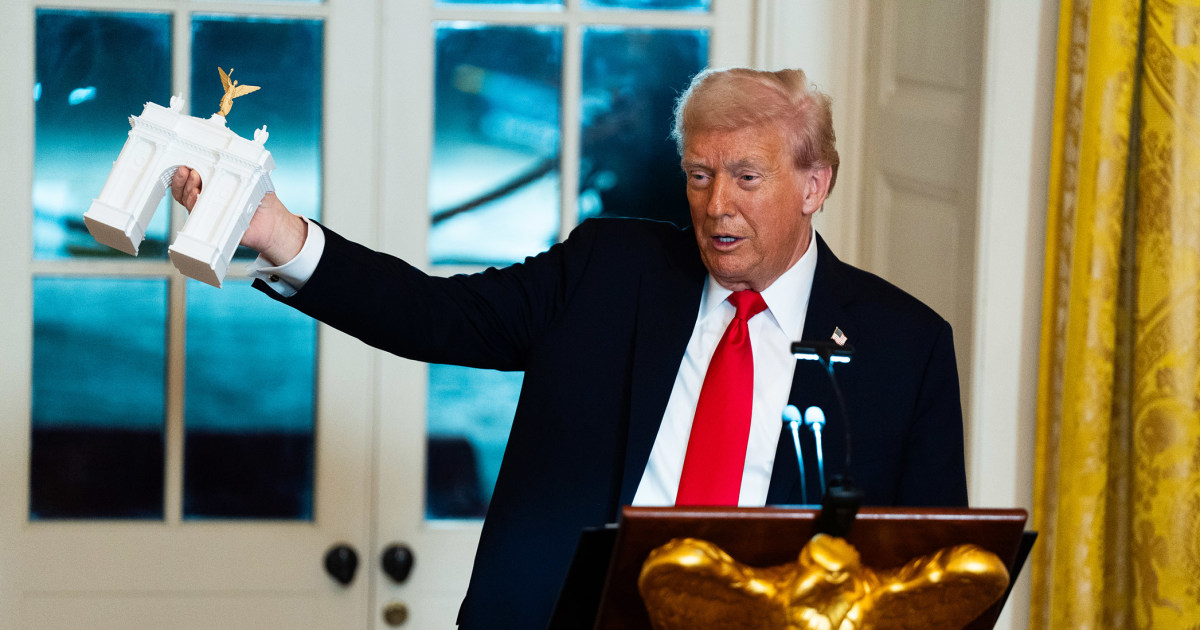
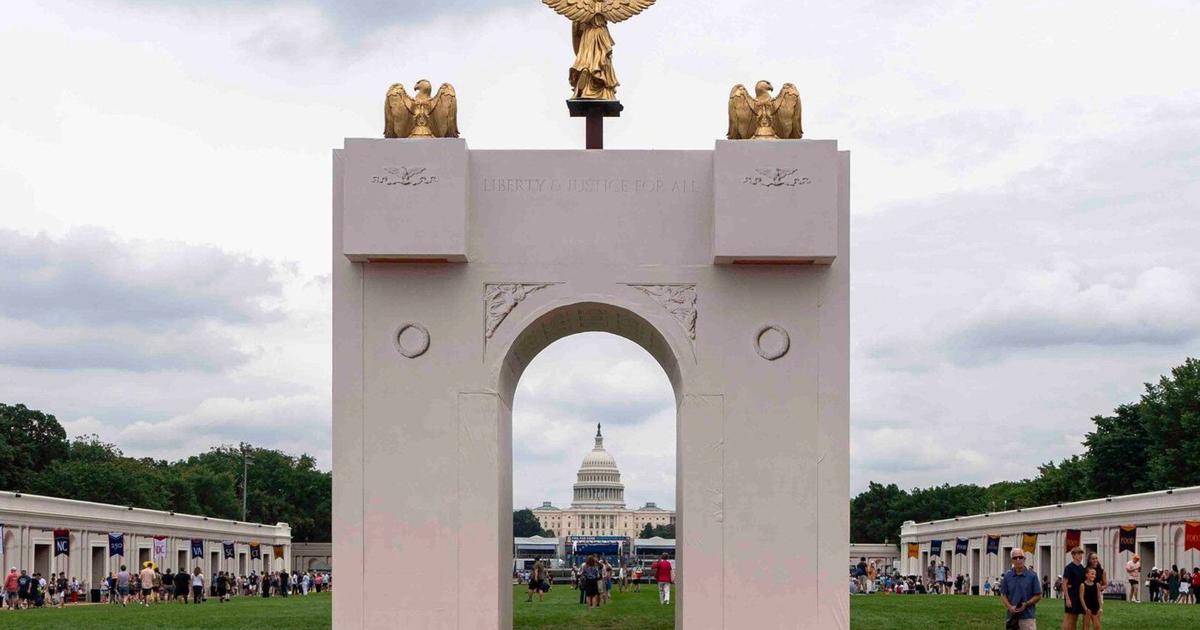
Since taking office for a second time, Trump has been seemingly obsessed with an assortment of so-called “beautification” efforts—from a gilded White House Ballroom born from the ashes of the East Wing, to the towering (and fascistic) Triumphal Arch near Arlington National Cemetery, to the “golf course of his dreams” at Haines Point, a public park beloved by DC residents and tourists—all while ignoring mandated congressional approval.
asserted
Trump → take → approval
Mounting legal changes, most recently when a federal judge blocked construction of his arch, have delayed much of the construction.
asserted
judge → mount → construction
But some of his initiatives, such as the East Wing of the White House and the Reflecting Pool, have proceeded despite legal challenges.
asserted
some → proceed → challenges
Historic preservation groups argue that BAAJA would remove a key barrier to Trump’s construction frenzy by recasting National Historic Preservation Act (NHPA) that’s been on the books for six decades and is a provision of BAAJA.
asserted
that → argue → BAAJA
Signed by President Johnson in 1966, and championed by Lady Bird Johnson through her beautification campaign, this act has protected both cherished and virtually unknown historical and archeological sites across the country.
asserted
act → sign → country
Christopher Cody, senior associate general counsel for the National Trust for Historic Preservation, a privately funded, nonprofit that works alongside government to save America’s historic sites—helped explain why the law was enacted in the first place.
asserted
law → fund → place
“The federal government was doing things in our communities and in our states that destroyed our historic resources,” he told me, “and the American people wanted a bigger say.”
asserted
people → do → say
When a wave of urban renewal projects in the 1950s and 60s gutted local landmarks and reorientated regional priorities around the automobile to favor major roadway and highway construction, local and state government leaders “wanted to have a voice before the federal government came into [their] communities and destroyed [their] historic resources.”
asserted
government → gutte → resources
According to Cody, BAAJA would gut Section 106 of the NHPA, which is part of the act that requires federal agencies both to consider the effects of their actions on historic properties and places, and consult with local historic preservation, archeological, and landscape experts.
uncertain
that → accord → experts
“BAAJA would eliminate all Section 106 consultation for all the administration’s projects in DC,” Cody said.
asserted
Cody → eliminate → DC
“There is a poison pill in this bill that says, at the outset of any undertaking, a federal agency head can simply declare that other considerations outweigh historic preservation.”
asserted
considerations → be → preservation
Cody acknowledges that these concerns “only a small part of this bill.”
asserted
Cody → acknowledge → bill
But even though small, it is one that would bring sweeping changes in the approval process for construction projects—including where the government is allowed to build.
asserted
government → bring → projects
Another fundamental change is how federal agencies consider the “adverse effects” of their projects.
asserted
agencies → consider → projects
In other words, if the proposed construction would significantly diminish the historic integrity of a site, through its location, design, setting, materials, or even the feelings associated with a place.
asserted
construction → propose → place
While some of these considerations might be more subjective than others, a watered-down NHPA would give the government full autonomy to determine what is or is not considered to be detrimental.
uncertain
what → water → autonomy
Under this new system, Cody noted, “None of the projects in DC would even qualify as having adverse effects.”
asserted
None → note → effects
Consider the Triumphal Arch, which the National Park Service identified would have adversely visually affect more than 40 nearby properties, including such significant historical sites such as Arlington National Cemetery and the Lincoln Memorial.
asserted
Service → consider → Cemetery
BAAJA “would move the goalpost,” Cody said, regarding what physical, visual, and character-defining impacts are considered worthwhile to preserve—and which can be bulldozed.
asserted
which → move → goalpost
“It’s just an incredibly problematic bill,” he concluded, “that is going to lead to more problems than it’s going to solve.”
asserted
it → ’ → problems
Recently, John Podesta—former Clinton, Obama, and Biden advisor on climate change and energy policy—said that the proposed permitting bill would hand President Trump “not just a loaded gun” but a “loaded Howitzer” to go after public lands.
asserted
bill → say → lands
Moreover, it would “permit stuff that even if it’s illegal can’t be reversed by the courts.”
asserted
’s → permit → courts
As reported by Heatmap, Podesta said, “They’re going to have a permit gorge like you’ve never seen, not really caring about whether they’re going through the legal steps to do it.
asserted
they → report → it
Of course, the devastation would extend well beyond the historic integrity of buildings and spaces in the Nation’s Capital.
asserted
devastation → extend → Capital
Other staunch opponents of the bill, such as the Cultural Landscape Foundation (TCLF), which is a plaintiff and co-plaintiff on ongoing D.C. construction project lawsuits, argue that the effects will be felt on tribal lands by severing “cultural lifeways” of Native people across the country.
asserted
effects → argue → country
“This is really a kind of worst-case scenario for tribal lands and tribal preservation,” said Charles Birnbaum, Founding President and CEO of TCLF.
asserted
Birnbaum → say → TCLF
“This country has been known for its erasure of stories, whether it’s tribal lands, or African American communities that were redlined.
asserted
that → know → stories
I don’t really see how we as a culture could allow [the government] to purposely destroy [this] heritage.”
uncertain
government → see → heritage
As criticism of the bill has escalated in recent weeks, and as the outlook for BAAJA’s passage in the Senate diminishes post-election, it’s uncertain what the future holds for a significant point of agreement for the bill’s proponents and critics: meaningful permitting reform which could propel our energy infrastructure into the 21st century.
uncertain
which → escalate → century
…and 2 more, not listed.
 The Aporia