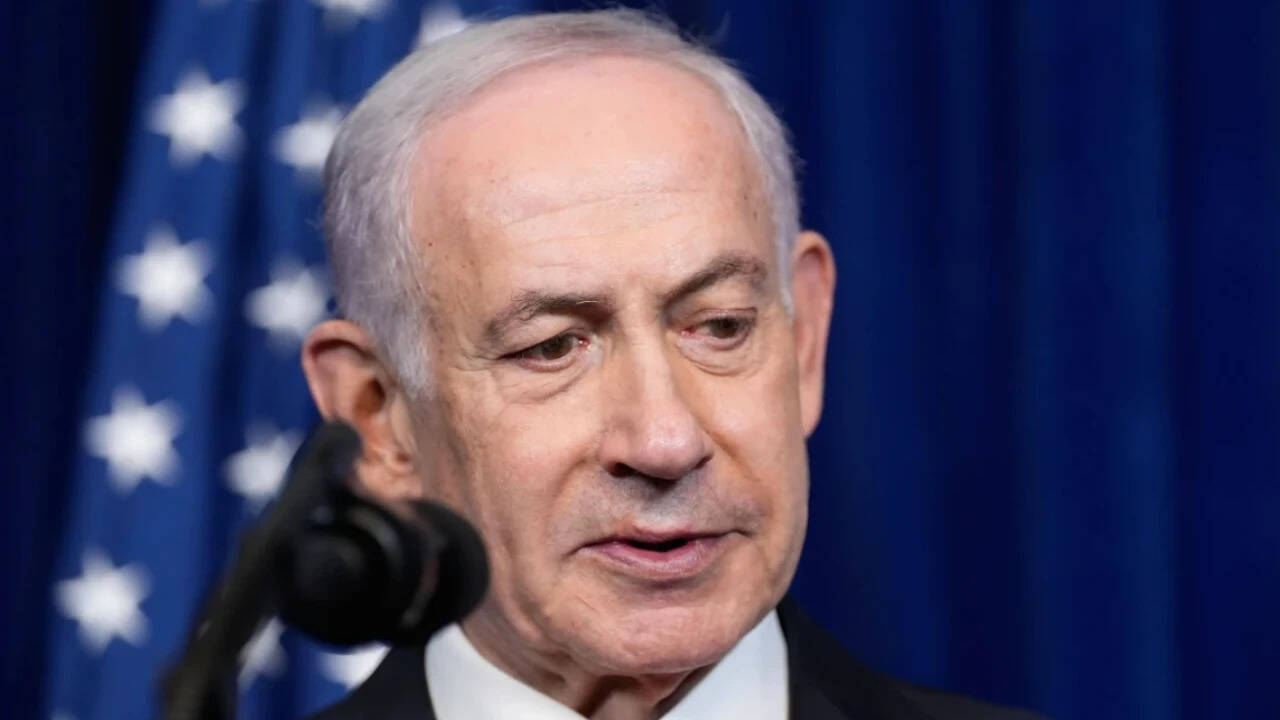
Photo via Times of India

Iran’s hidden oil network in China: Leaked letter details Tehran’s strategy

Read the original at Times of India ↗
Cite

Patnaik, P. (2026, November 9). Iran’s hidden oil network in China: Leaked letter details Tehran’s strategy. Times of India. https://timesofindia.indiatimes.com/world/middle-east/irans-hidden-oil-network-in-china-leaked-letter-details-tehrans-strategy-to-bypass-us-sanctions/articleshow/135678848.cms

Dated from the outlet's own feed. Check the original for its byline.

Times of India · collected 2026-11-09 · by Prisha Patnaik

Quick Summary

Iran has secured control over several oil terminals and storage facilities in China to bypass US sanctions on its crude oil exports, according to a confidential letter obtained by Iran International. The arrangement includes long-term leases and direct unloading of sanctioned tankers at designated Chinese ports, with Iran now controlling seven oil storage tanks across various locations like Ningbo-Zhoushan, Qingdao, and Dalian. This covert cooperation allows Iranian oil to reach the market directly through facilities built or leased in China, facilitating trade despite US restrictions on 51 vessels linked to key intermediaries.
Written by AI on 2026-11-09, from this article's own text only (the story summary below draws on all the coverage).

AI analysis

Story summary

Iran has secured control of several oil terminals and storage facilities in China to bypass US sanctions on its crude oil sales. According to a confidential letter obtained by Iran International, Hamid Bovard, the acting oil minister, wrote about an arrangement involving long-term leases and Iranian-controlled port facilities that allow sanctioned tankers to unload directly in China. This reduces the need for transfers between vessels or reliance on conventional shipping routes. The leaked letter details plans developed under President Masoud Pezeshkian, which involve covert cooperation from Chinese authorities. Previously, Mohammad Javad Bavand, a special assistant to the oil minister, had instructed four intermediaries to sell 86 million barrels of Iranian crude at an 8.5% discount. The reports suggest that while China remains Iran's most important oil customer, Beijing may be limiting its willingness to accommodate Tehran due to these demands for discounts and import quotas.

Written for “Iran's Hidden Oil Network in China” on 2026-11-09, grounded in this article and the 0 other(s) covering the same event.
Why this leaning score
This article does not take a side on a contested political question, so it has no leaning score. That is an answer rather than a gap: a match report or a rescue can be warmly or critically written without being left or right, and scoring it anyway is how approval of a subject gets recorded as a political position.
No political leaning scored for article 138115 · logged 2026-11-09

Story

Iran's Hidden Oil Network in China
Politics · 1 article(s) covering the same event.

Compared with similar articles

This article reads unscored and hedges 31% of its claims. Each row says how that neighbour differs.
Semafor
Hedges 1 of 6 claims Outlet record 68/100
“The articles discuss different aspects of China's and Iran's relations without clearly referencing the same specific incident.”
Semafor
Leans right Hedges 3 of 20 claims Outlet record 68/100
“The articles discuss different strategies employed by Iran and Gulf energy companies to secure their oil supply chains in response to geopolitical tensions.”
How this article was measured signals, leaning charts, publisher record, byline, topics and claims

Signals How these are calculated →

Claims extracted
32
sentences that state something as happening or true
Uncertain
31%
10 of 32 hedged ("reportedly", "may", "according to")
Leaning
not political
takes no side on a contested political question
Publisher signals
59/100
Times of India's corrections and hedging, across everything collected from it. Not a measure of accuracy.
Outlets on this story
1
Politics
Same framing elsewhere
1
articles that frame the event the way this one does
Analyzed 2026-11-09 · how these are computed

How this is being covered How these are calculated →

Article leaning vs. publisher reliability
Source leaning vs. consistency

Publisher

Times of India · 4405 article(s) · 4 correction(s) detected
Running correction rate · 4 correction(s)

Who wrote this

Prisha Patnaik
97 article(s) here · 1 carrying a prediction
The measures will also target financial enablers, including cryptocurrency exchanges, that help Russia evade sanctions and finance its war effort.
Although China remains Iran's most important oil customer, the reported demand for larger discounts and restrictions on import quotas suggest that Beijing's willingness to accommodate Tehran may have limits.
US president Donald Trump has blamed the Democrats’ sweeping victory in the midterm elections for a $3 trillion wipeout in stock market value, saying America had “taken a giant step back in history” but promising that his party would return “bigger and stronger than ever before”.
Degel HaTorah, which holds four of the party's seats, said it would not recommend any candidate following instructions from its spiritual leaders.
Authorities assessed the threats as low risk but said all necessary security measures had been activated and inspections would be carried out after landing.
As the president sees red over his party’s defeat, governments around the world are watching warily, weighing how the shift in congressional power could reshape Washington’s foreign policy and its approach to conflicts and alliances across the globe.
In a statement to Sky News, the EFS said the incident had affected a limited number of its sites and that further technical information from its service provider would help establish its full extent.
US first lady Melania Trump will host representatives from Russia and Ukraine at the White House on Thursday to discuss a recently concluded ceasefire and humanitarian operation in the Russian-occupied Ukrainian town of Oleshky, the White House announced on Tuesday.
The outcome of the US midterm elections could reshape the political constraints on US president Donald Trump’s war with Iran, even if it does not directly determine the course of the military campaign.
US president Donald Trump on Tuesday said Washington will stop providing $4 billion in annual funding to Israel after the end of 2026, claiming the country no longer needs American financial support.
Also by Prisha Patnaik
Nothing else under this byline is closely related to this article, so these are simply their most recent.
All 97 articles by Prisha Patnaik →

Topics

China Chinese Iran Iran International Iranian

Subjects

China GPE · 10× Iran GPE · 10× Iranian NORP · 10× Chinese NORP · 7× Bovard PERSON · 3× Iran International ORG · 3× Tehran GPE · 3× Ali Shamkhani PERSON · 2× Hossein Shamkhani PERSON · 2× Oil Ministry ORG · 1×

Narrative

The latest disclosures follow an earlier Iran International report in September, which said that Mohammad Javad Bavand, a special assistant to the oil minister, had instructed four intermediaries, including Hossein Shamkhani, to sell 86 million barrels of Iranian crude at an 8.5% discount.
framing: mixed · carried by 1 article(s) · first seen 2026-11-09
Although China remains Iran's most important oil customer, the reported demand for larger discounts and restrictions on import quotas suggest that Beijing's willingness to accommodate Tehran may have limits.

Claims (32 extracted, 10 hedged)

Iran has secured control of oil terminals and storage facilities at several locations in China to help transport and sell its sanctioned crude despite US restrictions, according to a confidential letter obtained by Iran International and accounts from sources in Iran's Oil Ministry. uncertain
Iran → secure → Ministry
The arrangement involves Iranian-controlled port facilities, long-term leases and oil storage tanks that allow sanctioned tankers to unload crude directly in China, reducing the need to transfer cargoes between vessels or rely on conventional shipping routes. asserted
tankers → involve → routes
In his letter, Bovard criticised the oil-trading policies of former president Ebrahim Raisi and described an alternative arrangement developed under President Masoud Pezeshkian, involving what he characterised as covert cooperation from China. asserted
he → criticise → China
According to Bovard, Iranian authorities instructed trusted oil intermediaries to continue using sanctioned vessels capable of docking at designated Chinese ports. uncertain
authorities → accord → ports
The Iranian foreign ministry negotiated access to port facilities and oil terminals, while Tehran secured long-term leases on storage infrastructure to facilitate the direct sale of Iranian crude in the Chinese market. asserted
Tehran → negotiate → market
Two Iranian oil ministry sources told Iran International that Tehran had acquired control of facilities at three locations in China. asserted
Tehran → tell → China
These include a terminal in the Ningbo-Zhoushan free trade zone, where Iran reportedly gained control after helping build smaller transit facilities, as well as stakes in smaller docks at Qingdao and Pant in Shandong province. uncertain
Iran → include → province
The docks are located close to pipelines, allowing crude to be transported to Chinese refineries without being transferred to other vessels, the sources said. asserted
sources → locate → vessels
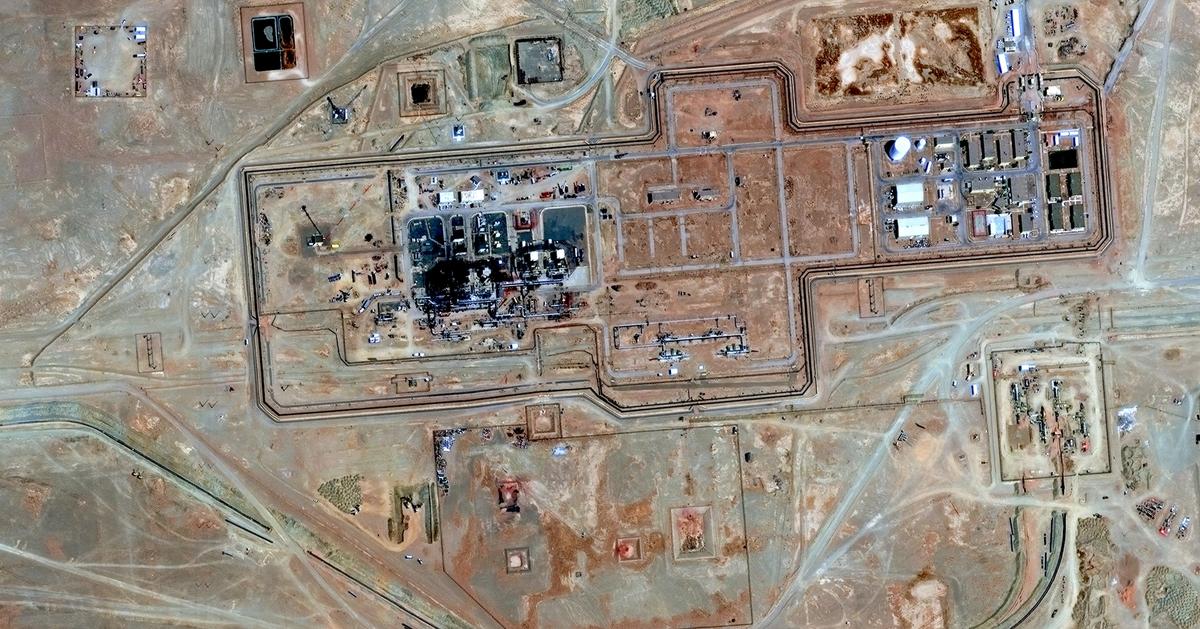
Iran has also purchased seven oil storage tanks in China, according to the report. uncertain
Iran → purchase → report
Four are located at the ports of Dalian and Huizhou and in the coastal cities of Dongying and Weifang. asserted
Four → locate → Dongying
The oil ministry controls three others in the Zhoushan area of the Ningbo-Zhoushan archipelago, including facilities on Aoshan and Shulanghu islands and in the Zengyamuo oil zone. asserted
ministry → control → zone
The facilities are reportedly being used by tankers linked to Hossein Shamkhani, son of Ali Shamkhani, who operates a shadow fleet. uncertain
who → use → fleet
Iran International said the arrangement allows these vessels to continue delivering Iranian crude despite US sanctions. asserted
vessels → say → sanctions
The US Treasury has sanctioned 51 vessels linked to Hossein Shamkhani. asserted
Treasury → sanction → Shamkhani
How Iran and China keep oil trade flowing China has long been central to Iran's efforts to sustain oil exports despite US sanctions. asserted
China → keep → sanctions
It is the biggest buyer of Iranian crude, with independent Chinese refineries, commonly known as “teapot” refineries, purchasing much of the oil through intermediaries. asserted
refineries → know → intermediaries
China accounted for more than 80% of Iran's shipped oil exports in 2025, averaging around 1.4 million barrels per day, according to Kpler data cited in a Reuters report. uncertain
China → account → report
The two countries have also developed a barter-like payment mechanism that allows Iran to convert oil proceeds into credits for purchasing Chinese goods, bypassing conventional international banking channels. asserted
Iran → develop → channels
Under the arrangement, proceeds from Iranian oil sales are channelled through a special-purpose vehicle (SPV), which pays Chinese suppliers for goods ranging from medicines and vehicles to communication equipment. asserted
which → channel → equipment
The system allows Chinese companies to receive payments without directly dealing with Iranian buyers or using conventional international banking channels, limiting their exposure to US sanctions. asserted
companies → allow → sanctions
China, meanwhile, continues to access discounted Iranian crude. asserted
China → continue → crude
China seeks deeper discounts as Iran faces pressure asserted
Iran → seek → pressure
Despite the arrangements, Bovard's letter suggests that Tehran has faced growing resistance from Beijing over its oil trade. uncertain
Tehran → suggest → trade
According to the correspondence, China rejected Iran's request to increase crude import quotas for Chinese refineries, raised purchases from Venezuela and demanded deeper discounts on Iranian oil. uncertain
China → accord → oil
The letter also exposed tensions within Iran's oil-trading network, particularly over the role of Hossein Shamkhani and other intermediaries. asserted
letter → expose → Shamkhani
Bovard alleged that Hossein Shamkhani had used loans from the Iranian government to purchase vessels but deployed them to transport Russian oil rather than Iranian crude. asserted
Shamkhani → allege → crude
He also accused him of receiving Iranian oil on consignment without providing collateral and selling it on the market. asserted
He → accuse → market
Bovard portrayed the United Arab Emirates as Shamkhani's exclusive trading domain, alleging that the oil ministry had effectively become an agent for his business interests. asserted
ministry → portray → interests
The letter also disputed Ali Shamkhani's assessment of the discounts at which Iranian oil was being sold. asserted
oil → dispute → which
Shamkhani had reportedly told Khamenei that the discount stood at 50 cents per barrel under Raisi, compared with $9 per barrel under Pezeshkian. uncertain
discount → tell → Pezeshkian
The latest disclosures follow an earlier Iran International report in September, which said that Mohammad Javad Bavand, a special assistant to the oil minister, had instructed four intermediaries, including Hossein Shamkhani, to sell 86 million barrels of Iranian crude at an 8.5% discount. asserted
Bavand → follow → discount
Although China remains Iran's most important oil customer, the reported demand for larger discounts and restrictions on import quotas suggest that Beijing's willingness to accommodate Tehran may have limits. uncertain
willingness → remain → limits

Give feedback · no sign-in needed

No sign-in needed for now. Your note is sent without a name, so it cannot be answered.

History Support