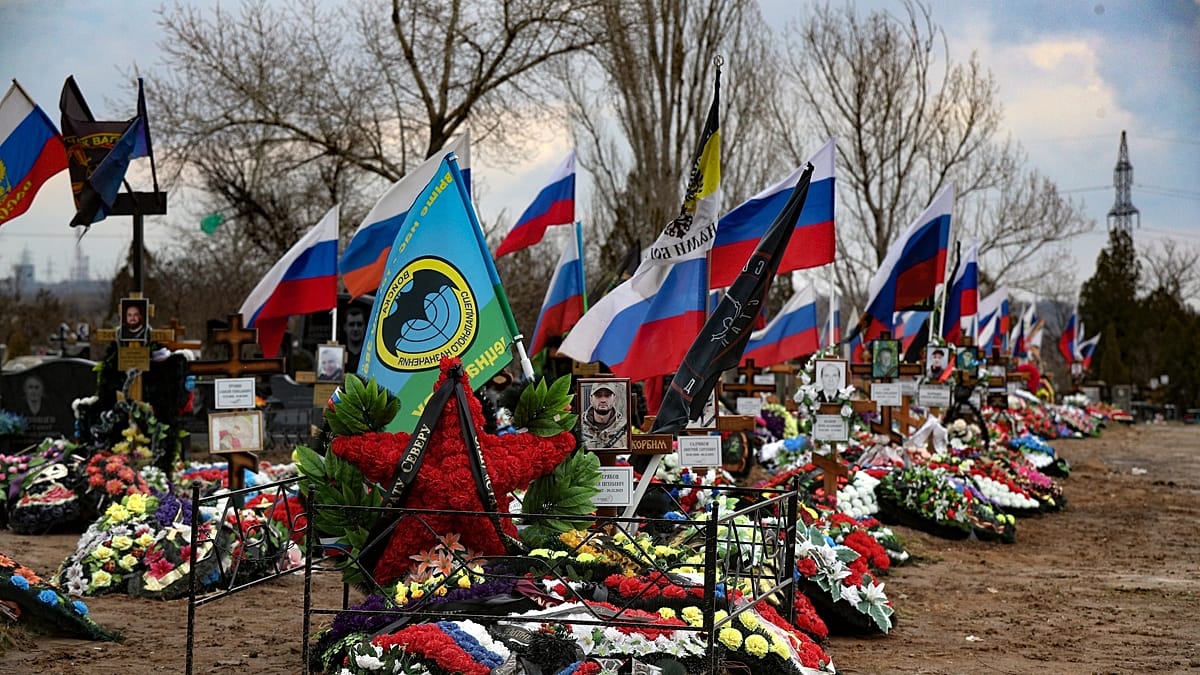
Russia has recorded the deaths of about 400,000 of its people fighting in Ukraine since the full-scale invasion almost five years ago, according to confidential data held by the country’s statistics agency, Rosstat.
uncertain
Russia → record → agency
The information comes from more than 11 million death certificates obtained by the Belarusian pro-opposition group Cyber Partisans and the Ukrainian hacker operation Silent Crow and subsequently shared with Bloomberg News and a small group of other outlets.
asserted
information → come → outlets
Between February 24, 2022 and late August 2026, almost 392,700 death certificates in the data explicitly link the fatalities to the war, either via coding or free-form text fields mentioning terms such as “military operation,” “shelling” or “drones”.
asserted
certificates → link → operation
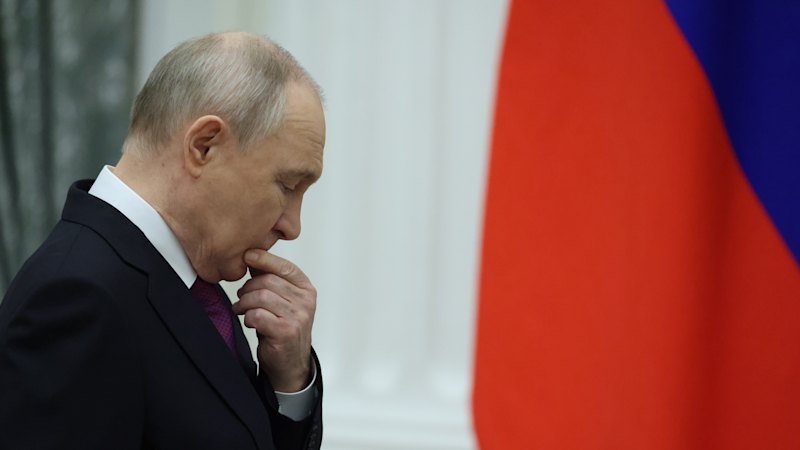
President Vladimir Putin has gone to great lengths to avoid acknowledging the scale of Russian fatalities in Ukraine.
asserted
Putin → go → Ukraine
As far back as 2015, he made military losses incurred “in peacetime during special operations” or during war a state secret.
asserted
losses → make → war
The data set almost certainly understates the total number killed because of the difficulties of recording combat fatalities.
asserted
set → understate → fatalities
Some people will have been reported missing, some bodies will have been unidentified, and others may have died months later from war-related injuries that are not explicitly set out in the records.
uncertain
that → report → records
Other deaths may be recorded under unrelated categories or not at all.
uncertain
deaths → record → categories
Silent Crow’s own calculations put the figure at about 450,000, in part because they also include non-combat-related fatalities and records without an explicit cause.
asserted
they → put → cause
Rosstat didn’t respond to a request for comment.
asserted
Rosstat → respond → comment
The material offers rare insight into the war’s true cost for Russia, since Rosstat gradually stopped publishing many statistics after the 2022 invasion.
asserted
Rosstat → offer → invasion
It shows how the body count grew dramatically after the early months of the war as Russian forces were held up in eastern Ukraine and Kyiv’s defensive operations became increasingly effective.
asserted
operations → show → Ukraine
Separate reporting suggests the fighting has been even tougher for the Russians this year, with fewer territorial advances than in 2025 and increasing numbers of casualties.
uncertain
fighting → suggest → casualties
The Kremlin lost a record 54,000 troops in October, either killed or seriously wounded, according to Ukraine and Western intelligence agencies.
uncertain
Kremlin → lose → Ukraine
On the Ukrainian side, President Volodymyr Zelensky told French media in February that at least 55,000 of his soldiers had been killed in the war and a large number of people were missing.
asserted
number → tell → people
With no significant gains on the battlefield this year, Russia has shifted tactics to heavily bomb Ukrainian cities and critical infrastructure with the aim of breaking Kyiv’s morale.
asserted
Russia → shift → morale
At the same time, the Kremlin has been trying to persuade the US to force Ukraine to give up additional territory to end the war.
asserted
Kremlin → try → war
Officials from Russia, Ukraine and the US are due to meet in Abu Dhabi this week to discuss the parameters of a potential ceasefire.
asserted
Officials → meet → ceasefire
Silent Crow and Cyber Partisans said on November 1 they breached Rosstat’s internal infrastructure, accessed about 25,000 computers, and extracted about 23 terabytes of data, including information on Russian military losses.
asserted
they → say → losses
Rosstat said days later it detected targeted cyberattacks between October 29 and November 1 but found no evidence that its databases had been compromised or that confidential information had leaked.
asserted
information → say → evidence
An estimate of about 400,000 Russian war deaths is realistic, according to people familiar with the situation in the Russian military, who spoke on condition of anonymity because they aren’t authorised to speak to the media.
uncertain
they → accord → media
The figure is also in line with estimates from a tracking project run by the independent Russian outlet Mediazona and the BBC Russian service, which identified 285,881 deaths by name as of this month.
asserted
which → run → month
A separate estimate by Mediazona and another independent news outlet, Meduza, based on Russia’s probate registry – that excludes any combatants from occupied Ukraine – puts the death figure at about 352,000 through to December 2025.
asserted
that → base → December
According to Ukraine’s General Staff, Russia has suffered 1.6 million deaths and serious injuries since the war began.
uncertain
war → accord → deaths
So far in 2026, nearly 37,800 military deaths have been recorded, but there can be months-long lags before deaths are registered.
asserted
deaths → record → 2026
More than half of those deaths occurred in eastern Ukraine where Russian forces have been struggling to break through some of the country’s strongest defensive fortifications.
asserted
forces → occur → fortifications
With monthly losses often exceeding recruitment levels and Russian troops not advancing on the ground, Moscow may soon have to mobilise more aggressively.
uncertain
Moscow → exceed → ground
The Kremlin has built the digital infrastructure to summon people to the army and has closed off potential escape routes for those who don’t want to fight.
asserted
who → build → those
Given that the 2022 decree on partial mobilisation has never been formally revoked, the authorities could still call up additional reservists without announcing a new mobilisation.
uncertain
authorities → give → mobilisation
Russia has also introduced sign-up bonuses and other benefits to incentivise people to join the military, though some payments are being cut due to the growing pressure on the country’s finances.
asserted
payments → introduce → finances
The statistics reviewed by Bloomberg, which run from 2021 to late August 2026, show the war’s growing toll on Russian society.
asserted
which → review → society
They illustrate how the relatively youthful army that invaded Ukraine has come to draw on older sections of Russian society and how poorer, more remote and ethnically diverse regions have borne a heavier share of deaths, while those in the major cities may have been shielded to an extent.
uncertain
those → illustrate → extent
In the first half of 2022, only 146 men between the ages of 50 and 59 died of war-related causes, less than 1 per cent of all deaths for that cohort.
asserted
men → die → cohort
In the first six months of 2025, that number rose to more than 12,600 and constituted more than 16 per cent of deaths for Russian men in that age bracket.
asserted
number → rise → bracket
In remote Siberian regions such as the republics of Buryatia, Tuva and Zabaykalsky Krai, which all border Mongolia, about one-third of men aged 18 to 49 who died between the start of the invasion and mid-2024 were recorded as war-related.
asserted
who → border → invasion
Since the war started, military deaths are taking longer and longer to register.
asserted
deaths → start → ?
In August 2026 alone, more than 2500 deaths related to the war appeared in the database even though they occurred in 2025.
asserted
they → relate → 2025
From mid-2024, the records become patchier, with nearly half of war deaths missing a home region, compared with about one in 20 for other deaths.
asserted
half → become → deaths
Bloomberg, with assistance from Alex Newman
Get a note directly from our foreign correspondents on what’s making headlines around the world.
asserted
what → get → world
 The Aporia