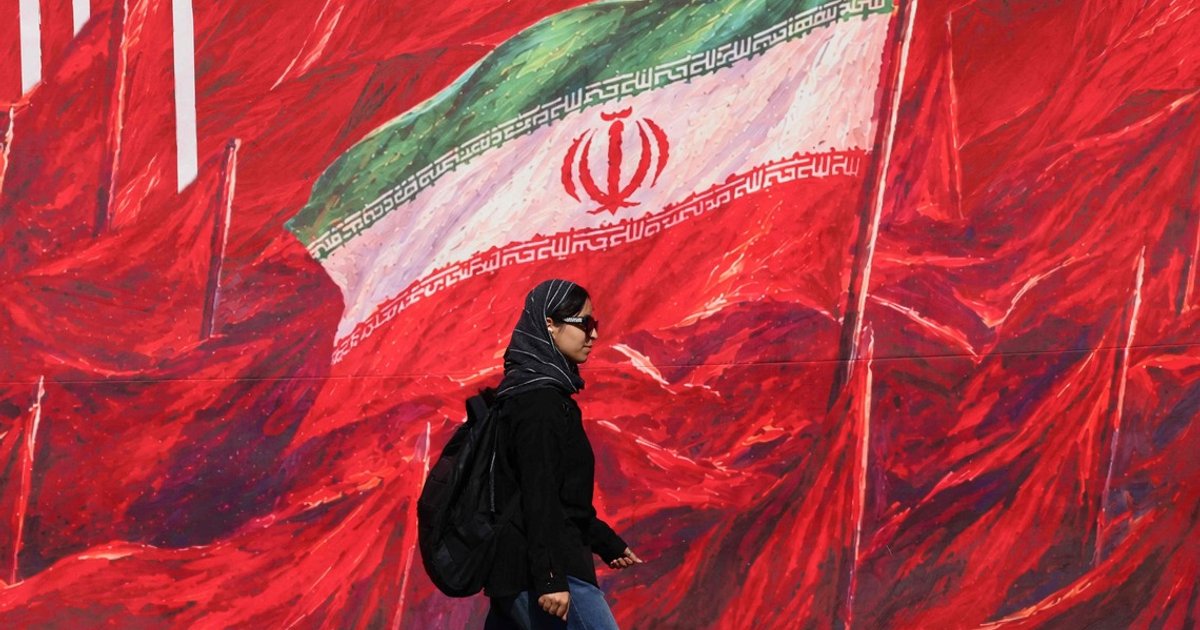
Photo via BBC News

Iran executes three men for 'armed unrest' after January protests

Read the original at BBC News ↗
Cite

Ireland, O. (2026, November 8). Iran executes three men for 'armed unrest' after January protests. BBC News. https://www.bbc.co.uk/news/articles/ckly0ex633ydo?at_medium=RSS&at_campaign=rss

Dated from the outlet's own feed. Check the original for its byline.

BBC News · collected 2026-11-08 · by Olivia Ireland

Quick Summary

Iran has executed three men—Hassan Dioband, Hamid Kazemi, and Reza Zanganeh—for their alleged involvement in armed unrest during January's anti-government protests. According to Iran’s state news agency Tasnim, they were accused of using weapons like Molotov cocktails and firearms, setting fires at public facilities in Karaj, west of Tehran. The executions follow a series of similar cases linked to the protests, with more than 3,000 deaths reported by Iranian authorities amid allegations of foreign involvement from the US and Israel.
Written by AI on 2026-11-08, from this article's own text only (the story summary below draws on all the coverage).

AI analysis

Story summary

On November 8, 2026, Iran executed three men — Hassan Dioband, Hamid Kazemi, and Reza Zanganeh — after they were convicted of working with Israel and the United States during anti-government protests in January. The executions took place following a Supreme Court ruling that upheld their death sentences. According to state media reports, the men were accused of using firearms, grenades, and Molotov cocktails to attack public facilities and cause power outages by damaging an electrical substation in Karaj, west of Tehran.

The judiciary also sentenced ten other individuals involved in the unrest under Dioband's supervision to prison terms ranging from five to ten years. This execution is part of a broader crackdown on those arrested during January’s protests; Iran has executed at least 35 people since then, with state media claiming that the unrest caused nearly 3,000 deaths and widespread destruction before the US and Israel launched their ongoing war against Iran. Human rights groups have noted that half of the reported executions this year are linked to these protests.
Written for “Iran Executes Three Men Over Protests” on 2026-11-09, grounded in this article and the 4 other(s) covering the same event.

Story

Iran Executes Three Men Over Protests
Politics · 5 article(s) covering the same event. See how they differ ↓

Compared with similar articles

This article reads unscored and hedges 20% of its claims. Each row says how that neighbour differs.
The Straits Times
Hedges 1 of 7 claims Outlet record 66/100
The Hindu
Hedges 1 of 5 claims Outlet record 78/100
Just The News
Hedges 2 of 7 claims Outlet record 95/100
The Independent
Hedges 0 of 10 claims Outlet record 59/100
How this article was measured signals, leaning charts, publisher record, byline, topics and claims

Signals How these are calculated →

Claims extracted
15
sentences that state something as happening or true
Uncertain
20%
3 of 15 hedged ("reportedly", "may", "according to")
Leaning
withheld
no quote in the article backed the model's score
Publisher signals
66/100
BBC News's corrections and hedging, across everything collected from it. Not a measure of accuracy.
Outlets on this story
5
Politics
Same framing elsewhere
1
articles that frame the event the way this one does
Analyzed 2026-11-08 · how these are computed

How this is being covered How these are calculated →

Article leaning vs. publisher reliability
Source leaning vs. consistency

Publisher

BBC News · 5386 article(s) · 7 correction(s) detected
Running correction rate · 7 correction(s)

Who wrote this

Olivia Ireland
17 article(s) here · 0 carrying a prediction
In his latest update, Kyiv's Mayor Vitali Klitschko said the city's water supply system is back to operating normally.
- Published Home Secretary Shabana Mahmood will announce her final decision on changes to immigration rules on Monday.
Even more disturbing are claims that footage from these cameras may have been uploaded online before the cameras were discovered.
Despite Trump stating on Sunday the truce would be "effective immediately", the Ukrainian president said Russia had hit "our gas stations, energy infrastructure, and other facilities".
Hanning is due in court on Wednesday and Manfred D will appear on Tuesday.
This breaking news story is being updated and more details will be published shortly.
The attacker was arrested in Saudi Arabia and is expected to be transferred to the UAE, Netanyahu said.
While extradition remains unlikely, the convictions could renew diplomatic tensions between Italy and Egypt.
Italy's prime minister Giorgia Meloni previously said she was confident Swiss authorities would "shed full light on what happened and find anyone responsible".
Nepal's foreign minister initially said an earthquake was reported on the Tibet-Nepal border shortly before the landslide, suggesting it may have triggered the disaster. The United States Geological Survey (USGS) had first reported the event as a magnitude 4.4 earthquake on Wednesday, but later confirmed the incident "was instead a glacial collapse and debris flow" that "caused subsequent catastrophic impacts downstream".
2026-08-27 · mixed framing · What we know about deadly Nepal-Tibet floods
Also by Olivia Ireland
Nothing else under this byline is closely related to this article, so these are simply their most recent.
All 17 articles by Olivia Ireland →

Topics

Iran Israel Karaj Tehran the United States

Subjects

Iran GPE · 5× Israel GPE · 2× Karaj GPE · 2× Tasnim GPE · 2× the United States GPE · 2× Hamid Kazemi PERSON · 1× Hassan Dioband PERSON · 1× Reza Zanganeh PERSON · 1× Tehran GPE · 1× the Islamic Republic GPE · 1×

Narrative

Ten others accused of taking part in the unrest under his supervision were later arrested. Reuters news agency reports that they received prison terms of 5 to 10 years. The latest executions in Iran come after the UN human rights chief Volker Türk said he was alarmed by the rise in death penalties.
framing: assertive · carried by 1 article(s) · first seen 2026-11-08
2026-11-08 · BBC News
Iran executes three men for 'armed unrest' after January protests · assertive framing

Claims (15 extracted, 3 hedged)

- Published Iran has executed three men accused of carrying out armed unrest during January's anti-government protests, according to state media. uncertain
Iran → publish → media
Hassan Dioband, Hamid Kazemi and Reza Zanganeh were accused of throwing Molotov cocktails and grenades, using bladed weapons and firearms, and setting fire to public facilities in the city of Karaj, west of Tehran, Iran's state news agency Tasnim, external reported. asserted
agency → accuse → Tehran
The executions are the latest in a series linked to the protests, including those of people accused of having ties to Israel and the United States. asserted
executions → link → Israel
The number of executions in Iran has increased since US-Israeli strikes on the Islamic Republic began in late February. asserted
strikes → increase → February
The protest movement initially sparked in December last year by the high cost of living rapidly evolved into widespread anti-government demonstrations that peaked on 8 and 9 of January. asserted
that → spark → January
Iranian authorities reported more than 3,000 deaths, and blamed the violence on "terrorist acts" orchestrated by the US and Israel. asserted
authorities → report → US
However foreign-based NGOs gave higher figures and the BBC received multiple accounts from Iranians of security forces opening fire on unarmed protesters. asserted
forces → base → protesters
Tasnim reported that the three men were executed after the Supreme Court upheld their convictions and found them guilty of "participating in operational activities on behalf of the Israeli Zionist regime, the United States and hostile groups". asserted
them → report → regime
The damage allegedly included an electricity substation in Karaj which caused power outages in some areas. uncertain
which → include → areas
Dioband was arrested on 11 January after investigations identified him as a suspect in attacks on public property and incitement to violence. asserted
investigations → arrest → violence
Ten others accused of taking part in the unrest under his supervision were later arrested. Reuters news agency reports that they received prison terms of 5 to 10 years. The latest executions in Iran come after the UN human rights chief Volker Türk said he was alarmed by the rise in death penalties. asserted
he → accuse → penalties
In August, Türk said at least 56 people had been executed on national security-related charges since 19 March, including 27 in cases linked to January's nationwide anti-government protests. asserted
people → say → protests
Iran is thought to be the world's second-most prolific executioner after China. asserted
Iran → think → China
Last year, it put to death at least 2,159 people, according to Amnesty International. uncertain
it → put → International
The human rights group said that was the highest figure on record since 1981 and included 45 executions of suspected dissidents on national security-related charges. asserted
that → say → charges
Give feedback · no sign-in needed

No sign-in needed for now. Your note is sent without a name, so it cannot be answered.

History Support