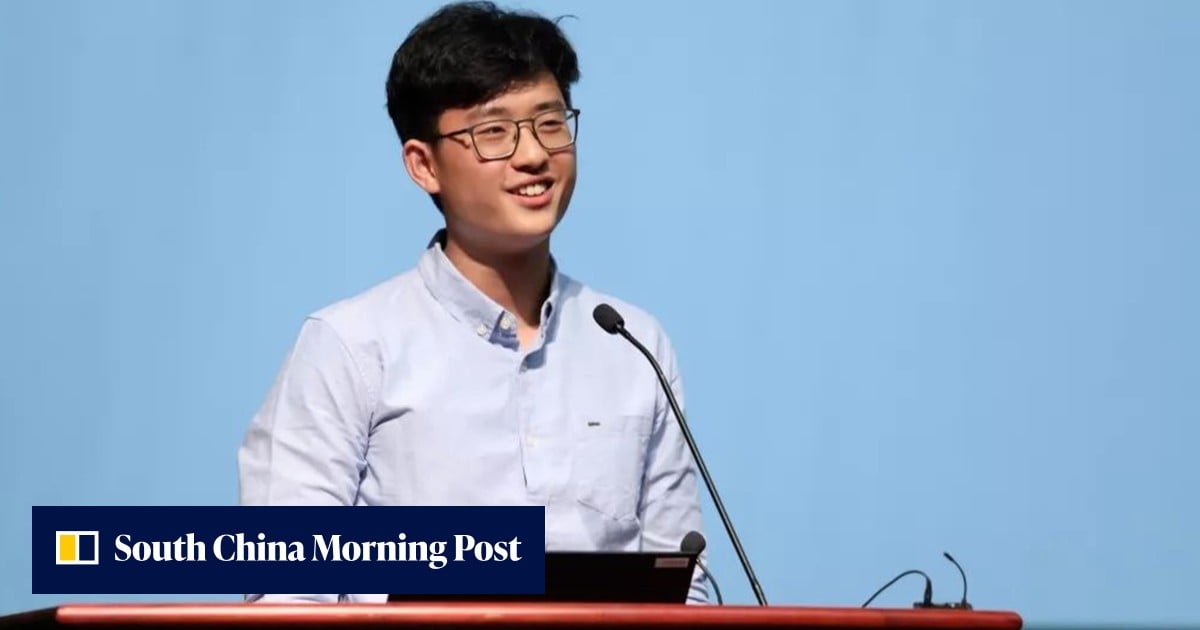
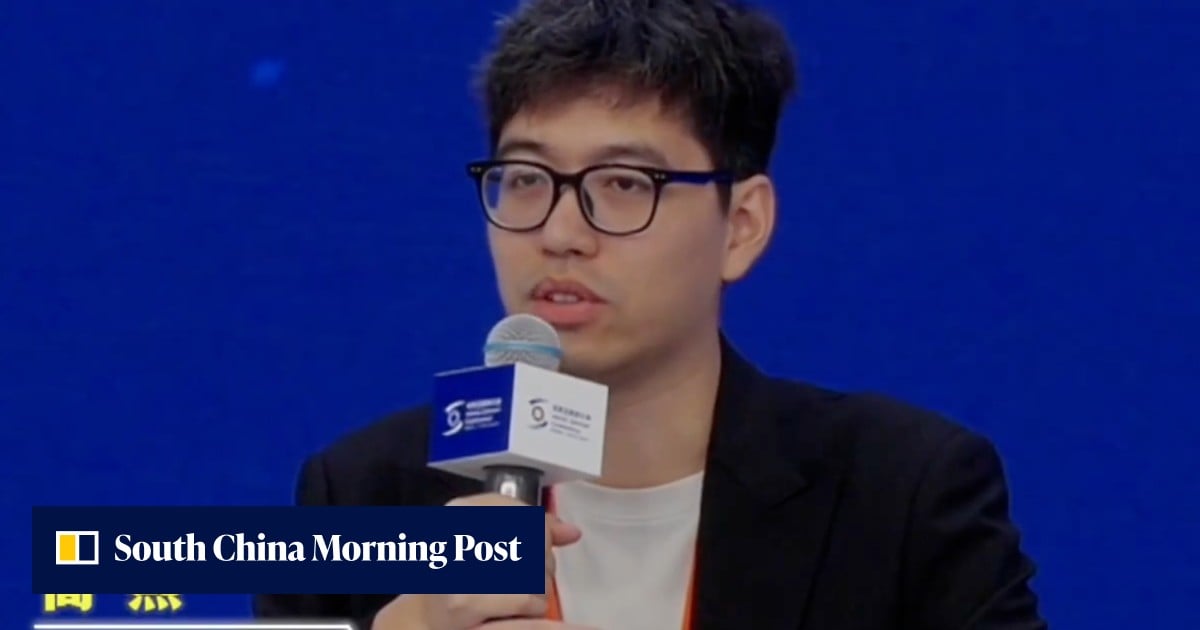
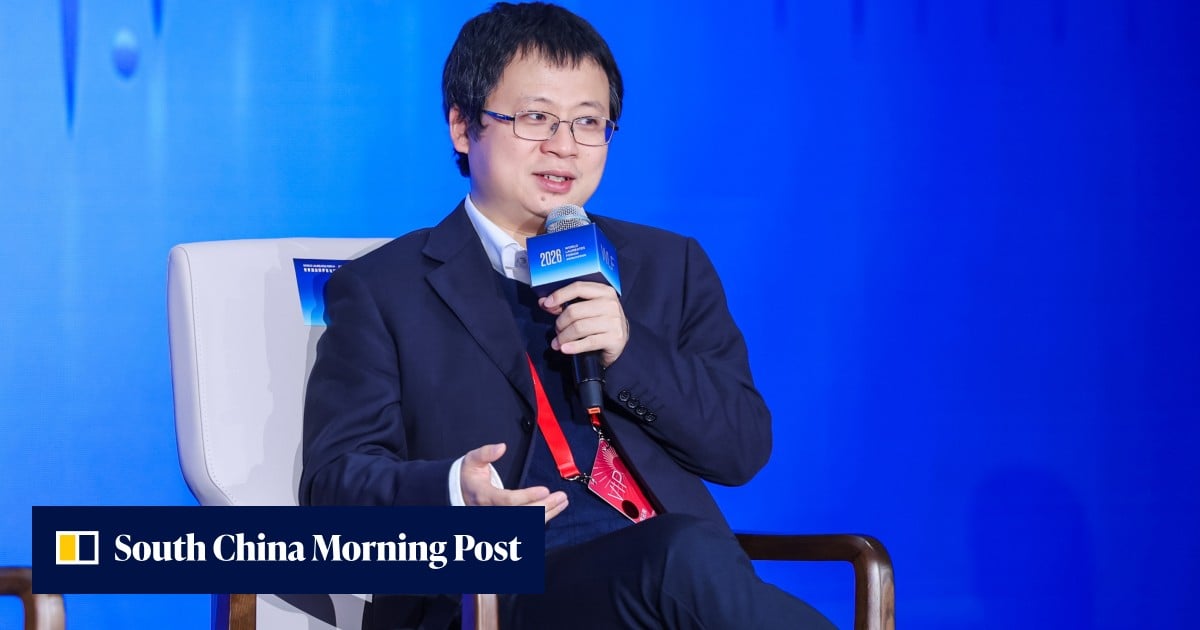
Photo via South China Morning Post

AI will soon master biology, unleashing new safety risks, Tencent AI chief warns

Read the original at South China Morning Post ↗
Cite

Chow, V. (2026, November 8). AI will soon master biology, unleashing new safety risks, Tencent AI chief warns. South China Morning Post. https://www.scmp.com/tech/big-tech/article/3373697/ai-will-soon-master-biology-unleashing-new-safety-risks-tencent-ai-chief-warns

Dated from the outlet's own feed. Check the original for its byline.

South China Morning Post · collected 2026-11-08 · by Vincent Chow

Quick Summary

Tencent's chief AI scientist, Vinces Yao Shunyu, warned during a public appearance on Saturday that advanced AI systems could soon achieve mastery over biology, potentially accelerating drug discovery but also posing risks such as facilitating bioweapons development or contributing to future pandemics. The event was part of a science symposium co-hosted by the Hong Kong Academy of Sciences and the Future Science Prize.
Written by AI on 2026-11-09, from this article's own text only (the story summary below draws on all the coverage).

AI analysis

Story summary

Vinces Yao Shunyu, Tencent Holdings’ chief AI scientist and former OpenAI researcher, warned during a science symposium in Hong Kong on Saturday that advanced artificial intelligence systems will soon be capable of mastering biology. This development could accelerate drug discovery but also potentially enable the creation of new bioweapons or start future pandemics. The symposium was co-hosted by the Hong Kong Academy of Sciences and the Future Science Prize. Yao stated, "The cyber abilities of [AI] models and soon [the] bio ability of models will reach a threshold where it’s actually possible to do harm," highlighting the dual nature of AI's potential impact on biological sciences.

Written for “AI Safety Risks Warning” on 2026-11-09, grounded in this article and the 0 other(s) covering the same event.
Why this leaning score
This article does not take a side on a contested political question, so it has no leaning score. That is an answer rather than a gap: a match report or a rescue can be warmly or critically written without being left or right, and scoring it anyway is how approval of a subject gets recorded as a political position.
No political leaning scored for article 136593 · logged 2026-11-09

Story

AI Safety Risks Warning
Technology · 1 article(s) covering the same event.

Compared with similar articles

This article reads unscored and hedges 50% of its claims. Each row says how that neighbour differs.
The Guardian
Leans left Hedges 4 of 47 claims Outlet record 65/100
“The articles discuss different perspectives on AI risks but describe distinct events and figures.”
How this article was measured signals, leaning charts, publisher record, byline, topics and claims

Signals How these are calculated →

Claims extracted
2
sentences that state something as happening or true
Uncertain
50%
1 of 2 hedged ("reportedly", "may", "according to")
Leaning
not political
takes no side on a contested political question
Publisher signals
62/100
South China Morning Post's corrections and hedging, across everything collected from it. Not a measure of accuracy.
Outlets on this story
1
Technology
Same framing elsewhere
1
articles that frame the event the way this one does
Analyzed 2026-11-09 · how these are computed

How this is being covered How these are calculated →

Article leaning vs. publisher reliability
Source leaning vs. consistency

Publisher

South China Morning Post · 4023 article(s) · 8 correction(s) detected
Running correction rate · 8 correction(s)

Who wrote this

Vincent Chow
13 article(s) here · 1 carrying a prediction
AI will soon master biology, unleashing new safety risks, Tencent AI chief warns Frontier AI systems could soon be capable of accelerating drug discovery – but also creating new bioweapons and starting the next pandemic Artificial intelligence models will soon be powerful enough to master biology, presenting both benefits and serious risks, Tencent Holdings’ chief AI scientist and former OpenAI star researcher Vinces Yao Shunyu said during a rare public appearance on Saturday.
How Democratic sweep could slow AI growth in US – and help China’s ambitions Democrats’ congressional victory fuels expectations of tighter scrutiny of AI and the data centres that power it The assessment comes as concerns about AI and the data centres that power it proved to be a contributing factor in the backlash against the Republican Party and US President Donald Trump, a vocal supporter of the tech industry.
DeepSeek engineer defends push for open-source AI smarter than humans despite higher risks Some AI pioneers have warned that AGI may escape human control DeepSeek is committed to open-source artificial intelligence to accelerate the arrival of artificial general intelligence (AGI), even if it heightens safety risks, a company engineer says, defying growing safety concerns from the US and scrutiny in China over whether the strategy poses national security risks.
safety is key: Z.ai founder Tang says RSI represents a ‘new paradigm’ of R&D that will accelerate AI development even more than it has been The remarks underscore how AI companies in the US and China are both chasing the holy grail of recursive self-improvement (RSI), where increasingly powerful AI systems also become better at improving themselves in an ever-accelerating “loop”.
Predicting that AI advances would develop even faster, Chen proposed a universal “ethics checker” that all leading AI models would need to satisfy, citing the systems developed by Chinese companies DeepSeek and ByteDance as well as American start-up OpenAI.
Trump rejects calls to work with China on AI safety despite Xi summit progress US president won’t collaborate with Beijing to govern AI as it would make it harder for American companies to get ahead in global tech race “Whoever wins superintelligence wins.
A foreign ministry spokesperson did not say if China would adopt Trump’s preferred term for artificial intelligence but respects the choice of the term US President Donald Trump is pushing for a rebrand of artificial intelligence (AI) — and looking to get the world’s other AI superpower, China, on board.
China’s growing semiconductor self-reliance may explain the relative calm, but looming US measures could put it to the test There is little question that Jensen Huang and Lisa Su, the heads of US semiconductor chip giants Nvidia and Advanced Micro Devices (AMD), had secured two of the best seats in the house at the White House state dinner on Thursday evening: at the head table alongside the two presidents and their wives.
More than 80 questions sought to uncover potential biases in the landmark criminal case against the Chinese tech giant Known as voir dire, the process allows the presiding judge and two legal teams to question prospective jurors before the trial begins to identify possible bias and conflicts that could impede their ability to adjudicate the case in a “fair and impartial” way.
Also by Vincent Chow
Nothing else under this byline is closely related to this article, so these are simply their most recent.
All 13 articles by Vincent Chow →

Topics

Hong Kong OpenAI Tencent Tencent Holdings’ the Future Science Prize

Subjects

Hong Kong GPE · 1× OpenAI ORG · 1× Tencent ORG · 1× Tencent Holdings’ ORG · 1× Vinces Yao Shunyu PERSON · 1× Yao PERSON · 1× the Future Science Prize ORG · 1×

Narrative

“The cyber abilities of [AI] models and soon [the] bio ability of models will reach a threshold where it’s actually possible to do harm,” Yao said at a science symposium co-hosted by the Hong Kong Academy of Sciences and the Future Science Prize.
framing: mixed · carried by 1 article(s) · first seen 2026-11-09
AI will soon master biology, unleashing new safety risks, Tencent AI chief warns Frontier AI systems could soon be capable of accelerating drug discovery – but also creating new bioweapons and starting the next pandemic Artificial intelligence models will soon be powerful enough to master biology, presenting both benefits and serious risks, Tencent Holdings’ chief AI scientist and former OpenAI star researcher Vinces Yao Shunyu said during a rare public appearance on Saturday.
2026-11-09 · South China Morning Post
AI will soon master biology, unleashing new safety risks, Tencent AI chief warns · mixed framing

Claims (2 extracted, 1 hedged)

AI will soon master biology, unleashing new safety risks, Tencent AI chief warns Frontier AI systems could soon be capable of accelerating drug discovery – but also creating new bioweapons and starting the next pandemic Artificial intelligence models will soon be powerful enough to master biology, presenting both benefits and serious risks, Tencent Holdings’ chief AI scientist and former OpenAI star researcher Vinces Yao Shunyu said during a rare public appearance on Saturday. uncertain
scientist → master → Saturday
“The cyber abilities of [AI] models and soon [the] bio ability of models will reach a threshold where it’s actually possible to do harm,” Yao said at a science symposium co-hosted by the Hong Kong Academy of Sciences and the Future Science Prize. asserted
Yao → reach → Sciences
Give feedback · no sign-in needed

No sign-in needed for now. Your note is sent without a name, so it cannot be answered.

History Support