That is 0 articles you have read today.
The Aporia is free and carries no advertising, so readers are the only
thing paying for it. If you are getting this much out of it, a small
donation is what keeps it independent.
Daily limit reached
You have read 0 articles today.
That is more than the 15 a day The Aporia gives away,
and well past what it can carry on nothing. Your allowance resets at
midnight.
There is no advertising here and nothing about you is sold, so readers
are the only thing paying for it. If the site is worth this much of
your day, it is worth a few dollars.
Everything else stays open: the
maps, the
directory and
search do
not count against this, and neither does re-opening something you have
already read today.
Merriam-Webster recently updated its dictionary with 1,400 new words and definitions, reflecting current language usage trends. The additions include trendy terms like "shapewear," "looksmaxxing," and "meme coin," as well as more nuanced concepts such as "parasocial" relationships and the phenomenon of "cuffing season." The update also includes technological and cultural references, such as definitions for "uncanny valley" and the impact of AI on digital content quality.
Written by the local model on 2026-09-16,
using this article's own text rather than the other coverage of the
same event (that is the story summary below).
Story summary
Merriam-Webster recently updated its dictionary with 1,400 new words and definitions, reflecting widespread usage over time. Among the additions are "shapewear," "looksmaxxing," "meme coin," "parasocial," "compute," "vibe coding," "superfood," and "cuffing season." The update also includes "uncanny valley" amid concerns about AI's impact on humanity. Each word is added after a rigorous internal review process where initial judgments are validated by senior colleagues, without formal committees or meetings. This comprehensive update offers insights into current cultural and technological trends.
Written for “Dictionary Updates” on 2026-09-17,
grounded in this article and the 0 other(s) covering the same event.
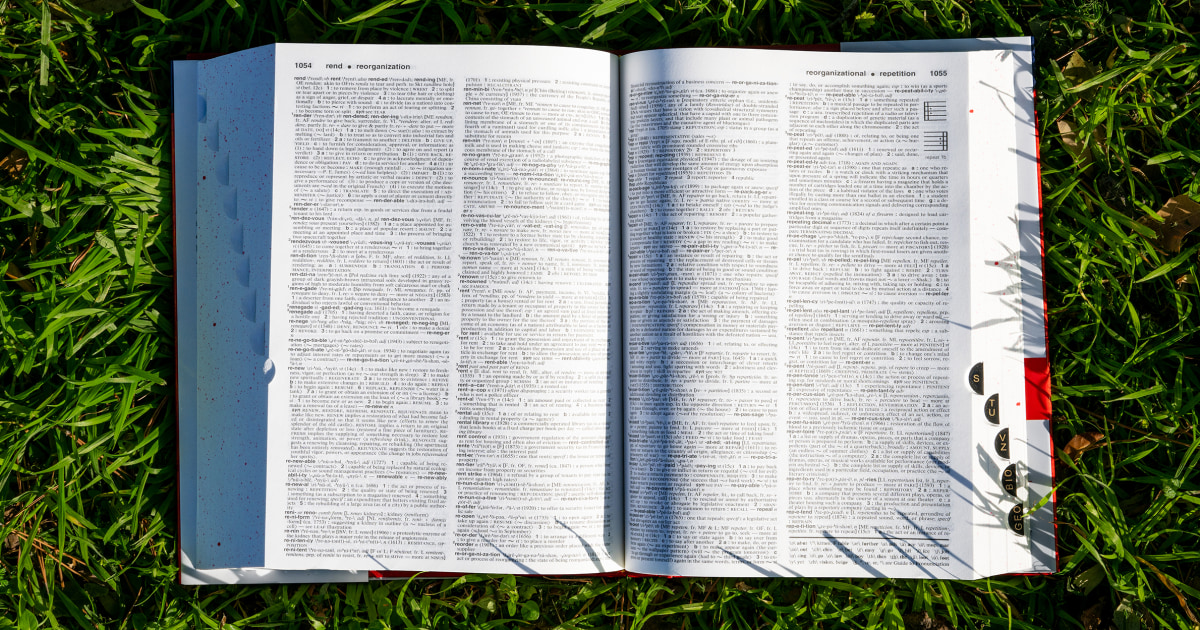
Merriam-Webster is giving its dictionary another “glow-up,” adding 1,400 words and definitions.
asserted
Webster → give → words
The dictionary publisher announced the additions on its website Tuesday.
asserted
publisher → announce → website
The new words and definitions include “shapewear,” “looksmaxxing” and “meme coin.”
asserted
words → include → shapewear
“The new entries reflect words and meanings that have demonstrated widespread use over time, offering a window into the world today,” it said in the release.
asserted
it → reflect → release
Other words and definitions that made it into the dictionary include “parasocial,” “compute,” “vibe coding” and “superfood” (food rich in nutrients, including salmon, broccoli and blueberries).
asserted
that → make → salmon
As temperatures drop across the country, Merriam-Webster fittingly added “cuffing season” to its dictionary.
asserted
Webster → drop → dictionary
The company defines the term as “a time of the year when people who are not married or in a relationship begin looking for a short-term romantic partner to spend the colder months of the year with.”
asserted
who → define → year
And amid widespread fears in recent days about AI’s impact on humanity, the company added “uncanny valley” to its collection of definitions.
asserted
company → add → definitions
Merriam-Webster defines the term as “that creepy feeling that results from something artificial appearing almost—but not quite—human.”
asserted
something → define → feeling
The nod to AI follows Merriam-Webster’s word of 2025, “slop,” which it defines as “digital content of low quality that is produced usually in quantity by means of artificial intelligence.”
asserted
that → follow → intelligence
Merriam-Webster has not yet announced a Word of the Year for 2026.
asserted
Webster → announce → 2026
The company typically makes the announcement in the final quarter of the year.
asserted
company → make → year
The company said on its website that it adds new words and phrases to its repertoire based on frequent, widespread and meaningful use.
asserted
it → say → use
“The definer must judge whether there is enough evidence to put a new word in; that judgment will be reviewed by more senior colleagues as the dictionary moves through the editorial process, but there’s no committee, no advocacy, no meetings for new word inclusion,” the company said.
asserted
company → judge → inclusion
 The Aporia