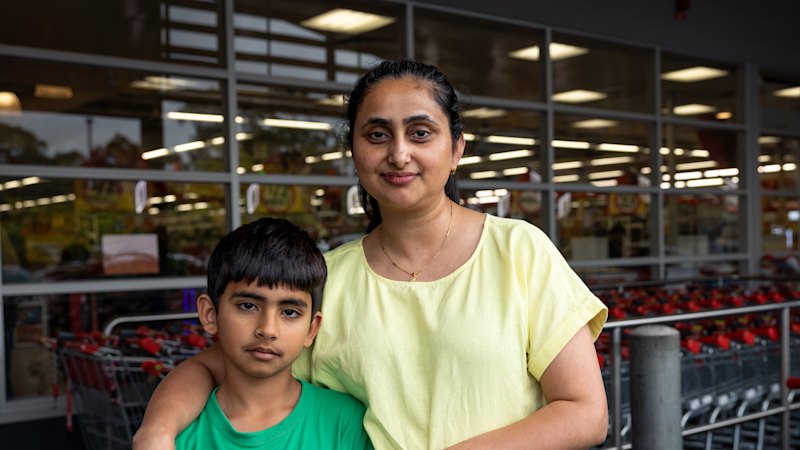
Jot Gill and her husband are working every hour they can, and cutting back on entertainment, groceries and personal spending to “make ends meet” to pay their mortgage.
asserted
ends → work → mortgage
The personal carer and mother of two was previously working three days a week, trying to spend as much time as possible with her three-year-old daughter, but has had to take on more hours, often working four or five days to help pay the bills.
asserted
carer → work → bills
“It’s less time for the kids, and more time for the job because we have to work,” she said.
asserted
she → ’ → job
“Half of the salary is going on just the groceries, there’s nothing left for other expenses.
asserted
Half → go → expenses
Gill and her husband had been paying any spare money into their mortgage “to get rid of the thing”, but increasingly there’s nothing left at the end of the week.
asserted
Gill → pay → week
“It’s hard to survive,” she said.
asserted
she → ’ → ?
Gill lives in Pakenham, in Melbourne’s outer south-east, where many homeowners are feeling the pinch.
asserted
homeowners → live → pinch
It’s the suburb with the greatest share of borrowers in arrears on their mortgage in Australia.
asserted
It → ’ → Australia
About one in 35 homeowners, or 2.88 per cent, are late on repayments by 30 days or more based on June data from S&P Global Ratings.
asserted
homeowners → base → Ratings
With the Reserve Bank hiking the cash rate to 4.85 per cent on Tuesday, the highest since 2008, Australian households are watching their mortgage repayments soar amid a cost-of-living crisis.
asserted
repayments → hike → crisis
The rise adds about $100 a month to repayments on a $600,000 mortgage.
asserted
rise → add → mortgage
Pakenham’s median house price, at $712,000 in September on Domain data, means many residents who bought within the past year may be making payments on about that amount.
uncertain
who → mean → amount
PRD Real Estate chief economist Dr Diaswati Mardiasmo said the “compounding effect” of the five rate hikes since the start of the year was hitting borrowers.
asserted
effect → say → borrowers
She estimated the average Melbourne homeowner would see their repayments increase a total of between $480 and $550 per month once Tuesday’s hike flows through.
asserted
hike → estimate → month
She said last time Australians saw rates rise over 2022 and 2023 households were more prepared, with more savings.
“It’s a really different situation right now,” she said.
asserted
she → say → savings
RBA governor Michele Bullock acknowledged on Tuesday this would be “very challenging” for some households, but said “some pain now will prevent even worse pain down the track”.
asserted
pain → acknowledge → track
The impact of belt-tightening
For shopfitter Stan Grigoriadis, it’s “very difficult” to see how it could get much worse – his mortgage will go up another $107 per month after Tuesday’s announcement.
uncertain
mortgage → ’ → announcement
“It’s like everyone’s just forgotten all about us,” the 55-year-old said.
asserted
old → ’ → us
“It’s getting harder to manage your finances, and figure out your budget, because it’s getting smaller and smaller.”
asserted
it → get → budget
He and his wife have three teenage children at home, ranging from 17 to 19, and he imagines they’ll be staying there for some time because “they can’t afford to go anywhere” as rents in the area also soar.
asserted
rents → have → area
While the RBA governor said unemployment remained “relatively low” – 4.6 per cent in September, the latest ABS data – Grigoriadis felt his industry was being hit especially hard as people tightened their belts.
asserted
people → say → belts
“Retail’s going bad,” he said.
“Especially when companies like David Jones are going to start closing stores down...
asserted
companies → go → stores
That’s hundreds of jobs.
asserted
That → ’ → jobs
We do their cosmetics [counters] and all their cupboards.
asserted
We → do → cosmetics
But they can’t afford the rent, and the bigger companies...
asserted
they → afford → rent
they don’t care.”
asserted
they → care → ?
Uber driver Naseem Ahmed said he’s feeling the impact of people cutting back on spending.
asserted
people → say → spending
“Obviously when people are saving money, they don’t want to use Uber,” he said.
asserted
he → save → Uber
“So we have less jobs, we have to wait a lot for the jobs, and the jobs pay less.”
asserted
jobs → have → less
He’s trying to step up the number of hours he does every day, but said he was pushing the boundaries of what felt safe.
asserted
what → try → boundaries
“I feel like too much driving is very risky...
asserted
driving → feel → ?
I’ve driven 350 km today, in traffic the whole day.
asserted
I → drive → traffic
It’s not easy,” he said.
asserted
he → ’ → ?
He gestured to the small bag of groceries he was taking home to his wife and two children and said the “little items” in it had cost him more than $100.
asserted
items → gesture → 100
The choices they were having to make to stay in their Pakenham home were “heartbreaking”, he said.
asserted
he → have → home
“I don’t want to sell it.
asserted
I → want → it
It’s my children’s home,” he said.
asserted
he → ’ → ?
But the mortgage is killing us.”
asserted
mortgage → kill → us
The RBA governor said on Tuesday an increase in the number of people taking on multiple jobs suggested those who wanted more work could get it.
uncertain
who → say → it
“Technically we’re not supposed to need a second job,” she said.
asserted
she → suppose → job
…and 11 more, not listed.
 The Aporia