Photo via The Guardian

Abdul El-Sayed’s victory has laid bare a truth about America's view on Israel | Peter Beinart

Read the original at The Guardian ↗
Cite

Beinart, P. (2026, November 5). Abdul El-Sayed’s victory has laid bare a truth about America's view on Israel | Peter Beinart. The Guardian. https://www.theguardian.com/commentisfree/2026/nov/05/abdul-el-sayeds-victory-has-laid-bare-a-truth-about-americas-view-on-israel

Dated from the outlet's own feed. Check the original for its byline.

The Guardian · collected 2026-11-05 · by Peter Beinart

Quick Summary

Peter Beinart argues that Abdul El-Sayed's victory in the Michigan Senate race highlights a divide in American political views on Israel, not between left and right but between wealthy elites and ordinary people. Despite substantial pro-Israel funding supporting his opponents Haley Stevens and Mike Rogers, El-Sayed won by criticizing US support for Israel, indicating grassroots opposition to such policies. Beinart critiques media coverage that portrayed El-Sayed’s stance negatively, suggesting it is influenced by pro-Israel billionaires who own major networks like CBS and CNN. He asserts that a similar dynamic exists in universities and within the Jewish community itself, where younger, less affluent individuals are more likely to oppose Israel's actions while older, wealthier Jews tend to support it.
Written by AI on 2026-11-05, from this article's own text only (the story summary below draws on all the coverage).

AI analysis

Story summary

In the 2026 Michigan Senate race, Abdul El-Sayed emerged victorious, highlighting a significant shift in American public opinion regarding US policy towards Israel. The election revealed that widespread grassroots support for maintaining military aid and weapons sales to Israel was absent in Michigan, with ordinary Republicans also distancing themselves from this stance. Instead, the campaign saw substantial financial backing from wealthy individuals advocating for pro-Israel policies. El-Sayed's opponents, Haley Stevens and Mike Rogers, were largely seen as proxies for these corporate interests, which diminished their grassroots appeal compared to El-Sayed. Despite media portrayals suggesting criticism of Israel could harm candidates, polls showed that El-Sayed won voters concerned about the issue by an even larger margin than his overall victory margin. This outcome underscores a growing disconnect between elite perceptions and broader public opinion on US-Israel relations in key electoral contexts like Michigan.

Written for “Abdul El-Sayed's Victory Truth About America Israel View” on 2026-11-05, grounded in this article and the 0 other(s) covering the same event.
Why this leaning score
The article's own words the score was based on. Each is quoted verbatim and was checked against the article text before being stored, so you can find it in the original.
Reading Leans strongly left (beta estimate) Confidence high
Leaning: leans strongly left for article 131905 (high confidence, 10 verified quotes) · logged 2026-11-05

Story

📰 Abdul El-Sayed's Victory Truth About America Israel View
Politics · 1 article(s) covering the same event.

Compared with similar articles

This article reads leans strongly left and hedges 0% of its claims. Each row says how that neighbour differs.
Mother Jones
⚖️ Leans strongly left Hedges 3 of 14 claims Outlet record 60/100
“While both articles discuss Abdul El-Sayed's victory in Michigan, Article A focuses on the details of the election itself and its various controversies, while Article B uses the election result to comment on broader political trends regarding US policy towards Israel.”
Reason
Hedges 2 of 53 claims Outlet record 67/100
“The articles discuss different aspects of the election dynamics in Michigan without clearly referring to the same specific incident or time.”
The Intercept
⚖️ Leans left further right than this Hedges 3 of 54 claims Outlet record 97/100
“The articles discuss different aspects of Abdul El-Sayed's campaign and victory in Michigan but do not describe the same specific incident or time.”
Washington Examiner
⚖️ Leans strongly right further right than this Hedges 0 of 3 claims Outlet record 69/100
“Article A discusses Rep. Haley Stevens' decision to withdraw her endorsement of Abdul el Sayed due to antisemitic concerns, while Article B focuses on El-Sayed's victory in the Michigan Senate race and its implications for US policy toward Israel.”
The Straits Times
⚖️ Leans strongly left Hedges 10 of 35 claims Outlet record 66/100
“The articles discuss different aspects of US policy towards Israel and do not describe the same specific incident or occurrence.”
Washington Examiner
⚖️ Leans strongly left Hedges 0 of 2 claims Outlet record 69/100
“While both articles discuss the same election outcome in Michigan involving Abdul El-Sayed's victory, they describe different aspects of the event with distinct focuses.”
CBS News
Hedges 5 of 128 claims Outlet record 69/100
“The first article describes a political debate or discussion about the candidates before an election, while the second discusses Abdul El-Sayed's victory in the Michigan Senate race after the election.”
The Guardian
⚖️ Leans strongly left Hedges 2 of 25 claims Outlet record 66/100
“The articles discuss different aspects of the midterm elections' impact on US-Israel relations but describe distinct events and viewpoints.”
The Intercept
⚖️ Leans strongly left Hedges 2 of 43 claims Outlet record 97/100
“While both articles discuss Abdul El-Sayed's victory in Michigan's Senate race, they focus on different aspects of it (one on political career outcomes, one on views towards Israel policy).”
Fox News
⚖️ Leans strongly left Hedges 1 of 22 claims Outlet record 68/100
“While both articles discuss Abdul El-Sayed's victory in Michigan, Article A covers the immediate outcome of the election, while Article B analyzes broader implications of his win for U.S. policy towards Israel.”
How this article was measured signals, leaning charts, publisher record, byline, topics and claims

Signals How these are calculated →

Claims extracted
33
sentences that state something as happening or true
Uncertain
0%
0 of 33 hedged ("reportedly", "may", "according to")
Leaning
Leans strongly left
of the writing, not the subject · beta estimate
Publisher signals
66/100
The Guardian's corrections and hedging, across everything collected from it. Not a measure of accuracy.
Outlets on this story
1
Politics
Same framing elsewhere
1
articles that frame the event the way this one does
Analyzed 2026-11-05 · how these are computed

How this is being covered How these are calculated →

Article leaning vs. publisher reliability
Source leaning vs. consistency

Publisher

The Guardian · 2104 article(s) · 6 correction(s) detected
Running correction rate · 6 correction(s)

Who wrote this

Peter Beinart
2 article(s) here · 1 carrying a prediction
🔮 Kamala Harris campaigned with Liz Cheney because she believed that a pro-war establishment Republican would help her appeal to swing voters.
🔮 Alongside the video of voters on camelback, Netanyahu’s ad warned: “They will flock in great numbers to the polls.”
Also by Peter Beinart
Nothing else under this byline is closely related to this article, so these are simply their most recent.

Topics

Israel Michigan Palestinian Republicans Senate

Subjects

Israel GPE · 11× Democrats NORP · 5× Republicans NORP · 4× Aipac ORG · 3× El-Sayed PERSON · 3× Abdul El-Sayed’s PERSON · 2× American NORP · 2× Michigan GPE · 2× Rogers PERSON · 2× Trump PERSON · 2×

Narrative

Peter Beinart is a contributing opinion writer at the New York Times, editor at large at Jewish Currents, a professor at the Newmark School of Journalism at the City University of New York, and the author of The Beinart Notebook, a weekly newsletter.
framing: assertive · carried by 1 article(s) · first seen 2026-11-05
🔮 Kamala Harris campaigned with Liz Cheney because she believed that a pro-war establishment Republican would help her appeal to swing voters.

Claims (33 extracted, 0 hedged)

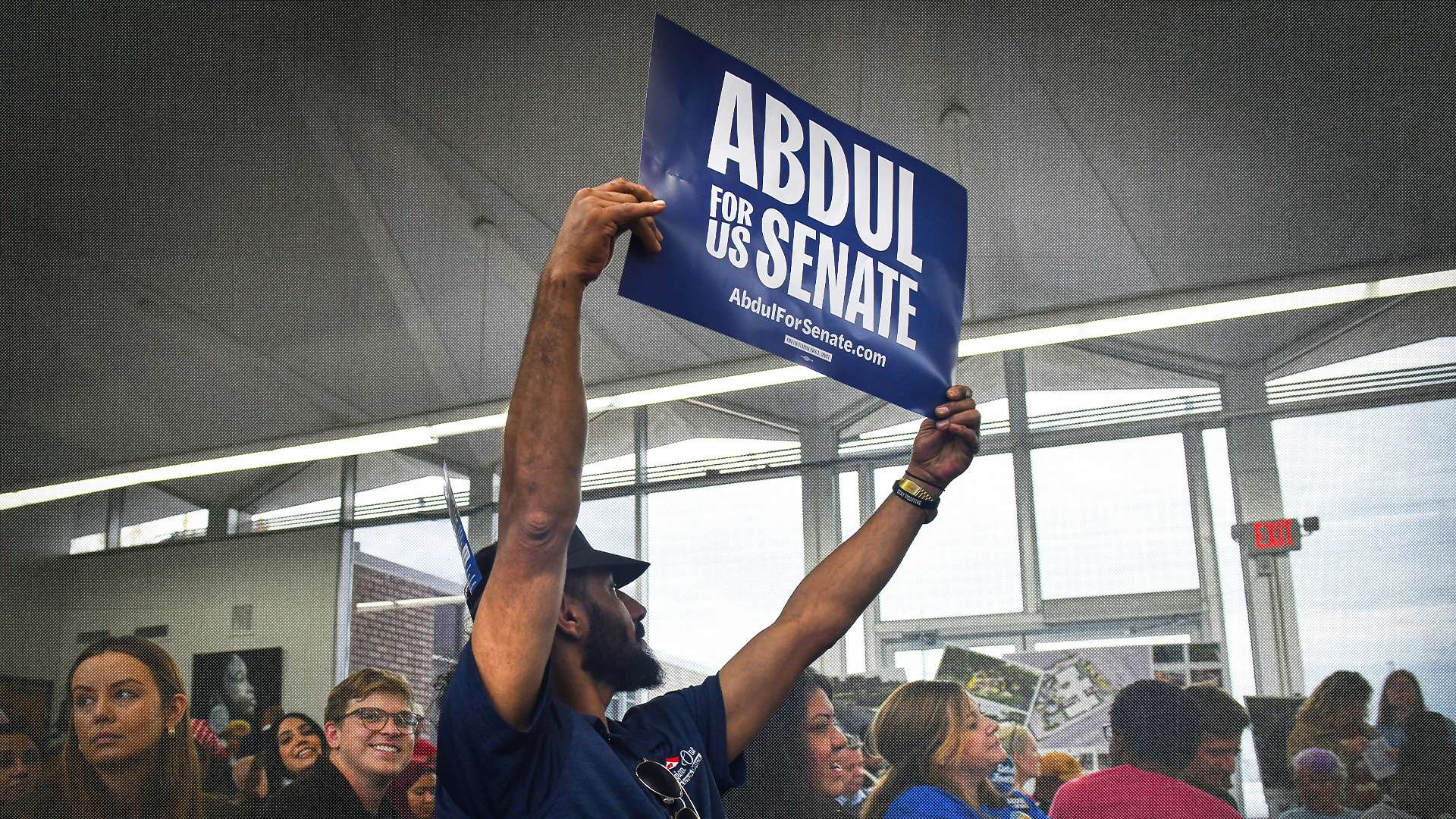
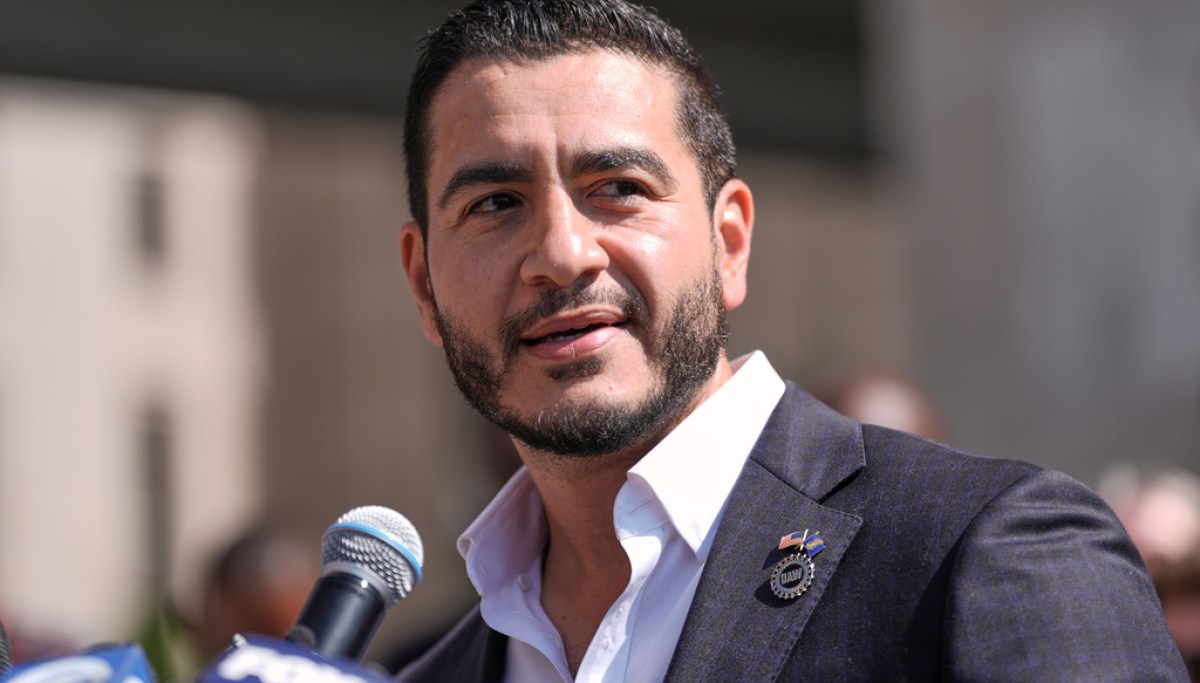
Among the things that Abdul El-Sayed’s victory last night in the Michigan Senate race revealed is this: the debate over US policy toward Israel does not primarily pit the left versus the right. asserted
debate → reveal → right
It pits the top versus the bottom. asserted
It → pit → bottom
That view no longer commands support even among ordinary Republicans. asserted
view → command → Republicans
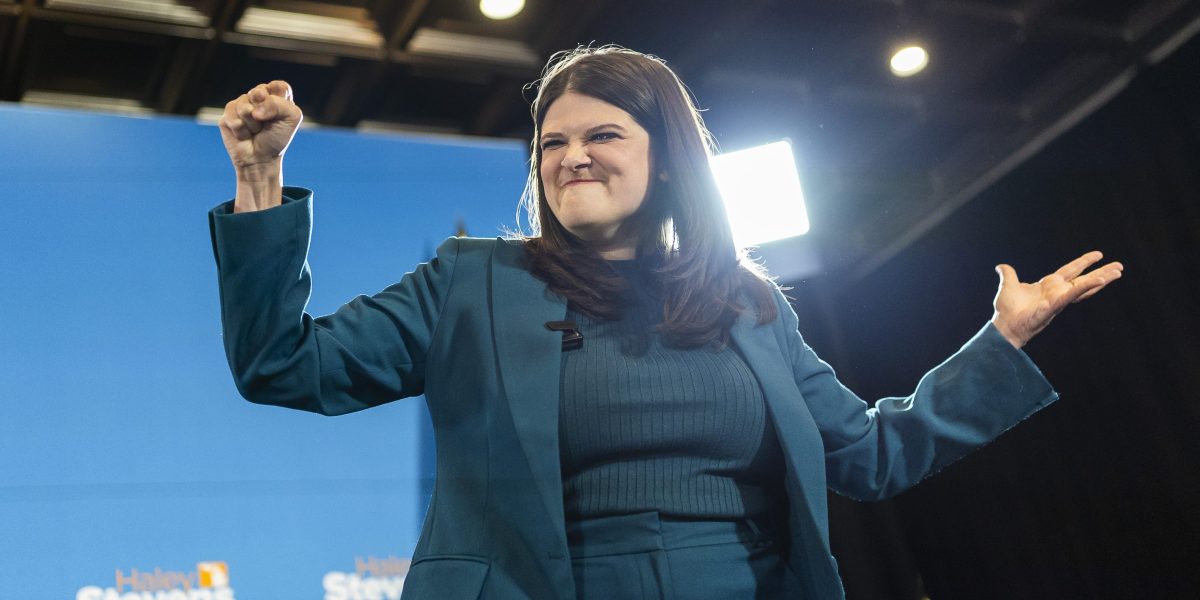
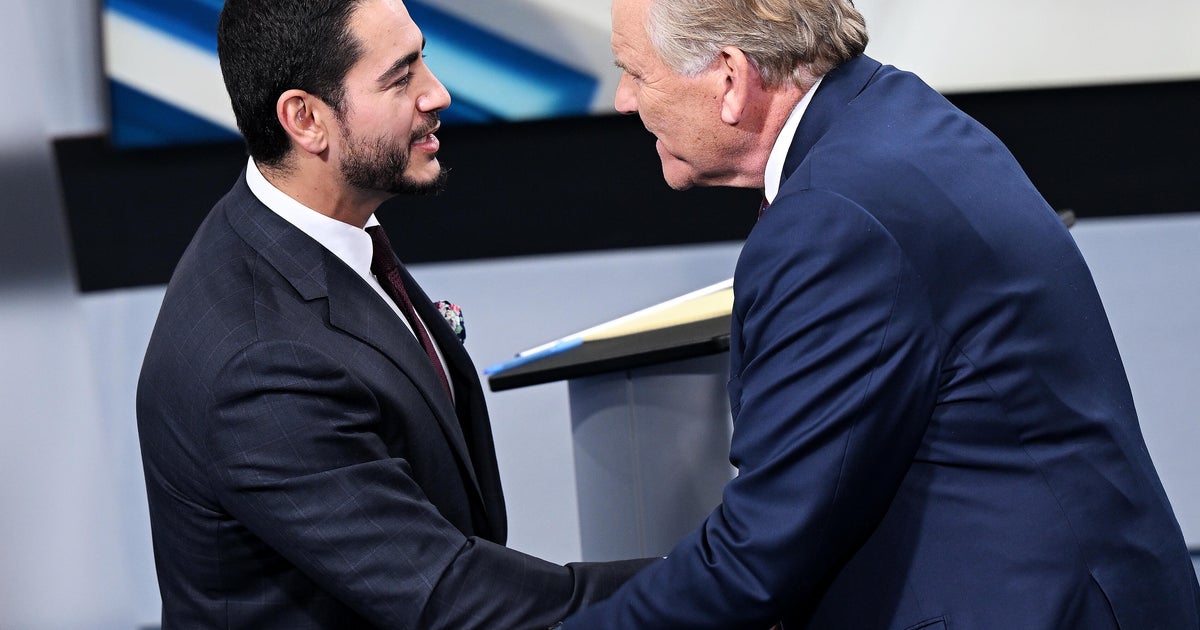
Abdul El-Sayed’s opponents –Haley Stevens and Mike Rogers– were vehicles for that infusion, and for other corporate interests, which is why they came off as so hollow. asserted
they → come → interests
El-Sayed poked fun at how few people attended Rogers’ rallies because it illustrated the lack of popular energy in his campaign. asserted
it → poke → campaign
But the media often made it seem real. asserted
it → make → ?
Commentators tended to depict El-Sayed’s criticism of Israel as a liability when the polls actually showed him winning voters who cared about the issue by an even larger margin than he won overall. asserted
he → tend → margin
Why did so much coverage get this wrong? asserted
this → get → ?
While many journalists support Palestinian rights or at least recognize that most Americans no longer favor Israel, networks like CBS and now CNN are owned by pro-Israel billionaires who share the same perspective as Stevens’ and Rogers’ donors. asserted
who → support → donors
So, they amplify voices who depict pro-Palestinian perspectives as extreme, if not hateful. asserted
who → amplify → perspectives
Over the past two years, the same top versus bottom dynamic has played out in universities. asserted
dynamic → play → universities
Students organized encampments to protest the destruction of Gaza; university presidents called in the police to break them up. asserted
presidents → organize → them
Students voted overwhelmingly to divest university funds from companies involved in Israeli oppression; boards of trustees rejected divestment out of hand. asserted
boards → vote → hand
You can see this split even among American Jews. asserted
You → see → Jews
Support for Israel is concentrated among the older, the wealthier and the more institutionally affiliated, among the people who populate synagogue boards and fund the local Federations and Jewish Community Centers. asserted
who → concentrate → Federations
It’s at the bottom – among younger people, who have fewer resources, that anti-Zionism has become a rising force. asserted
Zionism → ’ → resources
One of Joe Biden’s top political consultants had helped found a consulting firm that after October 7 went to work for Aipac. asserted
that → help → Aipac
Kamala Harris campaigned with Liz Cheney because she believed that a pro-war establishment Republican would help her appeal to swing voters. asserted
Republican → campaign → voters
The gambit failed because while Cheney’s views were popular with donors, they were unpopular with ordinary voters in both parties. asserted
they → fail → parties
Harris massively outraised Trump but her refusal to break with Biden’s support for Israel depressed her base. asserted
refusal → outraise → base
And he deployed his America First, anti-war message to win over voters who had never supported him before. asserted
who → deploy → him
Now the dynamic has flipped. asserted
dynamic → flip → ?
It is Republicans who enjoy a financial advantage but are burdened by an unpopular war. asserted
who → enjoy → war
Democrats are running against Aipac and other big money special interests that corrupt American democracy. asserted
that → run → democracy
But the mass versus elite divide over Israel still runs through both parties. asserted
divide → run → parties
In 2028, it’s likely that both parties will feature populists who denounce Aipac running against establishment-favorites who enjoy its support. asserted
who → ’ → support
By saying that the Iran war and support for Israel helped torpedo Republicans in the midterms, JD Vance is already positioning himself for that debate inside the Republicans in 2028. asserted
Vance → say → 2028
Democrats now have an opportunity. asserted
Democrats → have → opportunity
El-Sayed and some other winning Democrats have created a progressive version of the anti-interventionist energy that propelled Trump in 2024. asserted
that → win → 2024
El-Sayed even ran an ad declaring himself the candidate of “America First.” asserted
himself → run → America
He has shown how Democrats in 2028 can integrate US policy toward Israel into a populist message that resonates across party lines. asserted
that → show → lines
But given how much support Israel retains among the elites who fund Democratic candidates, and help shape the media narrative, Michigan’s bruising senate race is likely a small taste of what is to come. asserted
what → give → narrative
Peter Beinart is a contributing opinion writer at the New York Times, editor at large at Jewish Currents, a professor at the Newmark School of Journalism at the City University of New York, and the author of The Beinart Notebook, a weekly newsletter. asserted
Beinart → contribute → Notebook
💬Give feedback · no sign-in needed

No sign-in needed for now. Your note is sent without a name, so it cannot be answered.

🕘History 🎫Support