Russia may have rehearsed attack on satellite, specialist says, flagging another approach
uncertain
specialist → rehearse → approach
LONDON/WASHINGTON, Nov 5 - A Russian military satellite that approached a Western commercial one last month could have been rehearsing an attack, a military space specialist said, with two related Russian craft now heading in the direction of another Western satellite.
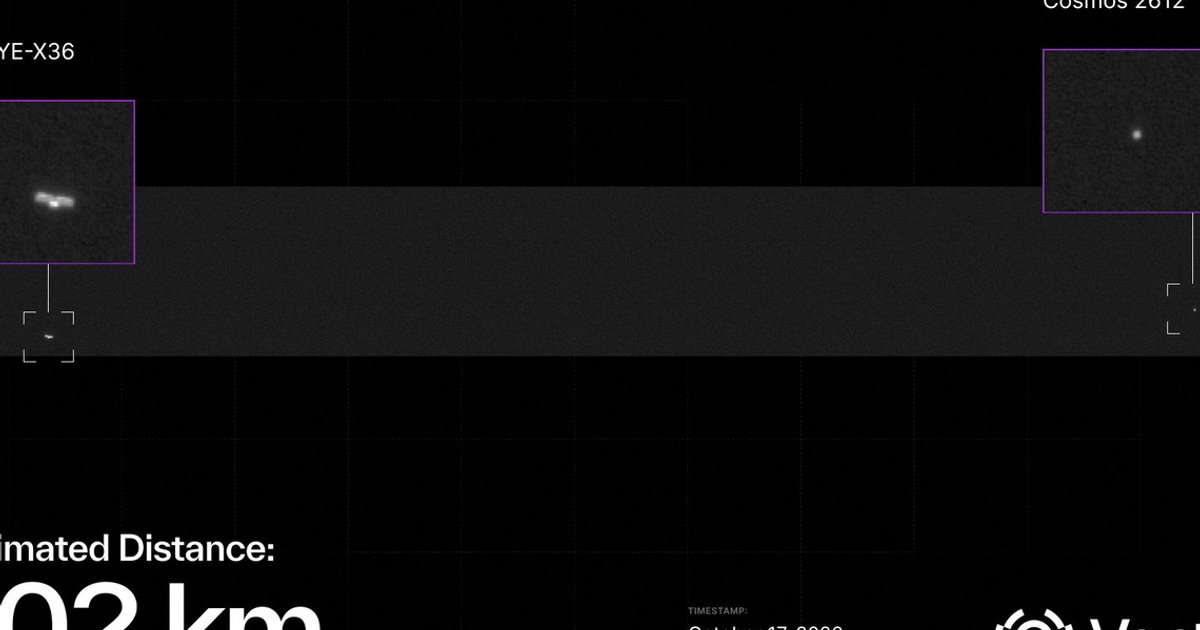
US Under Secretary of State Thomas DiNanno said on X following the mid-October incident that Russia's Cosmos 2612 military satellite had been "intentionally maneuvering dangerously close to a commercial satellite" in conduct "consistent with on-orbit weapons operations."
The satellite approached, called X36, is operated by Finnish company ICEYE and provides radar imagery to Western governments and militaries, including Ukraine.
uncertain
satellite → approach → Ukraine
Three space specialists described the incident as one of the closest known approaches by a Russian military spacecraft to a commercial satellite in low altitude orbit.
asserted
specialists → describe → orbit
The encounter "looks like an attack rehearsal," said Greg Gillinger, a senior space analyst at Integrity ISR, a US company that provides training to US space forces.
asserted
that → look → forces
"This is the most aggressive posture I've seen Russia take in terms of threatening satellites from another nation," he told Reuters.
asserted
he → see → Reuters
Russia's defence ministry did not respond to a request for comment.
asserted
ministry → respond → comment
Moscow has repeatedly warned that commercial Western satellites helping Ukraine could become legitimate targets for retaliation.
uncertain
satellites → warn → retaliation
The head of ICEYE's US operations, Ann Stevens, told Reuters X36 "has been and will continue to be a productive satellite" and that its constellation of radar-imaging satellites is resilient in the event of disruption.
ORBITAL WEAPONS RATCHET UP TENSION IN SPACE
The episode has fuelled concern over the vulnerability of commercial satellite networks that have become increasingly important to military operations.
asserted
that → tell → operations
It follows months of Russian activity around ICEYE that Western officials have warned demonstrates capabilities that could be used to threaten or disrupt commercial constellations, including those operated by Elon Musk's SpaceX.
Gillinger, a former US Air Force intelligence officer who has tracked the Russian satellites, said Cosmos 2612 appeared to be testing kinetic attack-related capability because such a close approach would not be needed for intelligence collection or electronic interference.
uncertain
approach → follow → collection
Cosmos 2612 is publicly categorized as a servicing inspection satellite, according to US space intelligence firm Slingshot Aerospace.
uncertain
Cosmos → categorize → Aerospace
It is one of six military satellites Russia launched in April.
asserted
Russia → launch → April
In May, Russia positioned four of them close to X36, space analysts have said.
uncertain
analysts → position → X36
ICEYE subsequently moved its satellite, prompting further Russian maneuvers, Chief Executive Rafal Modrzewski told Reuters in September.
asserted
Modrzewski → move → September
In early October, Cosmos 2612 positioned itself hundreds of kilometers behind X36, according to space analysts.
uncertain
Cosmos → position → analysts
It then rapidly closed the distance over several days, coming within a kilometer (half a mile) of X36 around mid-October, with some analysts saying it was within a few hundred meters or less.
asserted
it → close → meters
Cosmos 2612 subsequently moved about 400 km (250 miles) away, Gillinger said.
asserted
Gillinger → move → km
Two sibling Russian satellites are now drifting toward the orbital path of another ICEYE spacecraft, X37, he said.
asserted
he → drift → spacecraft
U.S. space-tracking firm COMSPOC also said the two siblings were becoming increasingly well positioned to approach X37.
asserted
siblings → track → X37
Both X36 and X37 are US-registered, according to public space-object catalogs.
uncertain
X36 → register → catalogs
Germany's space commander, Major General Michael Traut, told Reuters that close approaches like Cosmos 2612's could be used for inspection, observation or interference, depending on a spacecraft's technical capabilities.
"We must therefore consider the entire spectrum of possible effects, ranging from temporarily disrupting a satellite's operations to permanently disabling it," he said.
uncertain
he → tell → it
He cautioned that the ability to perform such maneuvers was not in itself evidence that Russia was preparing or rehearsing an attack, and said its purpose could not be determined from publicly available orbital data alone.
uncertain
purpose → caution → data
Major powers are preparing for the possibility of conflict extending into space.
asserted
conflict → prepare → space
Washington recently acknowledged that it has deployed weapons in orbit, while the head of US Space Command said earlier this year that Russia had deployed a space weapon within reach of critical US national security satellites.
asserted
Russia → acknowledge → satellites
Russia's approach to X36 "really elevates the potential of an attack" from either deliberate or inadvertent interaction, said Andrew Turner, a space consultant and retired senior British air force officer.
asserted
Turner → elevate → interaction
 The Aporia