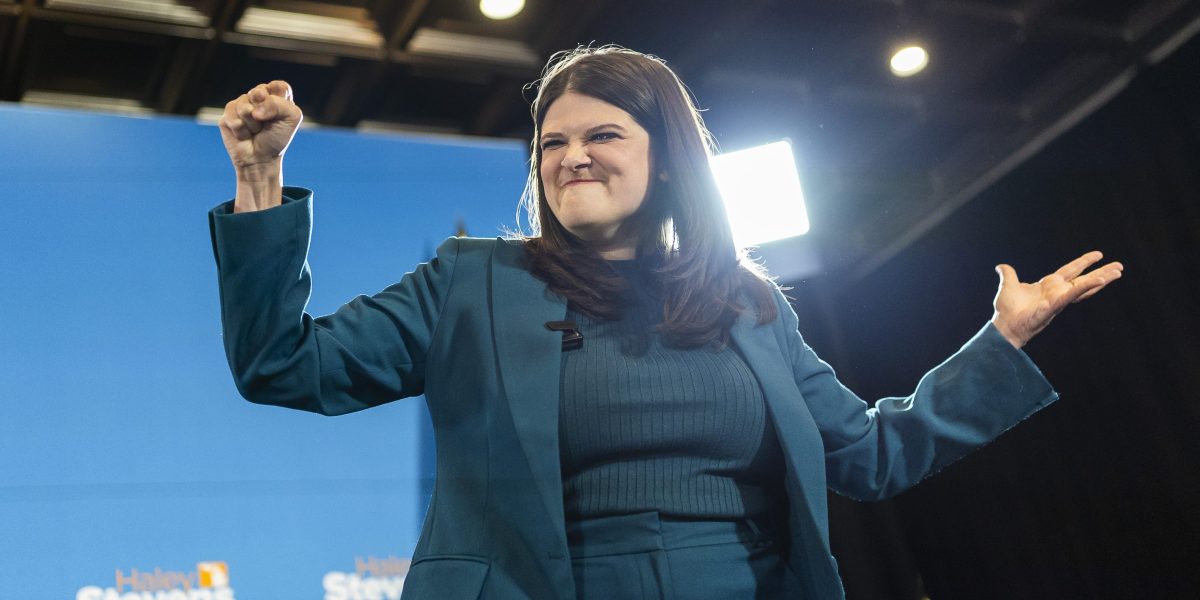
Abdul El-Sayed had an uncomfortable message for US President Donald Trump and Vice President JD Vance as he celebrated his historic election victory in Michigan.
asserted
he → have → Michigan
They had used a range of racist labels and rhetoric to target El-Sayed ahead of the midterm elections, which he was contesting against Trump’s handpicked candidate, Mike Rogers.
asserted
he → use → candidate
Trump mocked his name, and said that as president, he could call the Michigan physician and former public health official anything he wanted.
uncertain
he → mock → physician
Trump called El-Sayed a “jihadist”, while Vance described him as a “psychopath”.
asserted
Vance → call → psychopath
Recommended Stories
list of 3 items- list 1 of 3Trump says US will stop giving Israel aid after year-end
- list 2 of 3Rogers, El-Sayed urge turnout for critical race
- list 3 of 3Firsts for women and minorities in US midterm elections
asserted
3Rogers → say → elections
Now, the 42-year-old winner of the Michigan race pointed out, they would soon need to address him as a senator.
asserted
they → point → senator
“JD, habibi [Arabic term of endearment], it is an irony – you are constitutionally obligated to swear me in in January,” El-Sayed told cheering supporters in the early hours of Wednesday, shortly after he was projected to win the highly contested race.
asserted
he → obligate → race
“Donald, I know you struggle with my name, so when JD swears me in, you can call me ‘senator.’
asserted
you → know → me
May we never have to see the likes of you in Michigan again.
uncertain
we → have → Michigan
”
The Democrat’s victory over Republican Rogers on Tuesday made him the first Muslim elected to the US Senate, following a campaign marked by attacks on his faith and criticism of his opposition to US military adventurism in the Middle East, and Washington’s support of Israel.
asserted
him → make → Israel
“To all the parents who struggled to explain why the president openly mocks someone for their name or how they pray, let them know tomorrow that the bad guys lost,” he said in his victory speech.
asserted
he → struggle → speech
But beyond the historic significance of his election, El-Sayed focused on his promise to challenge economic inequality, healthcare and the cost of living in the country.
asserted
Sayed → focus → country
It shouldn’t be this hard to buy a second bag of groceries or to fill your tank,” he said.
asserted
he → buy → tank
“It shouldn’t be this hard to pay your taxes and know that that money is going to be spent on you and your kids instead of dropping bombs on somebody else and their kids.”
asserted
money → pay → somebody
The Muslim physician is set to win more than 52 percent of the vote with more than 95 percent of votes tallied.
asserted
percent → set → votes
His victory is seen as a breakthrough for progressives in the Democratic Party, who have increasingly challenged the party’s status quo over economic inequality and US wars abroad, including steadfast support for Israel.
asserted
who → see → Israel
Moreover, his win carries particular electoral significance, as Michigan is seen as a swing state that Trump won comfortably just two years ago.
asserted
Trump → carry → that
Early life
El-Sayed was born and raised in the Detroit metropolitan area of Michigan and is of Egyptian descent.
asserted
Sayed → bear → descent
He has often described his upbringing as that of a typical kid in a “brown” family of immigrants — he was expected to be high-achieving and successful at everything he did.
asserted
he → describe → everything
A physician and public health expert, he studied at the University of Michigan, where he was valedictorian of his 2007 graduating class.
asserted
he → study → class
At his commencement, guest speaker and former President Bill Clinton praised the incoming senator for his speech focusing on inclusivity and equality.
asserted
Clinton → praise → inclusivity
“I wish every person in the world who believes that we are fated to have a clash of civilisations, and cannot reach across the religious divides, could have heard you speak today,” he said.
uncertain
he → wish → divides
He went on to become a Rhodes Scholar at the University of Oxford in the United Kingdom.
asserted
He → go → Kingdom
He also earned a medical degree from Columbia University in New York.
asserted
He → earn → York
Before entering electoral politics, El-Sayed built his career in public health, working as an epidemiologist and eventually leading Detroit’s Health Department as its executive director.
asserted
Sayed → enter → director
He later became director of the Wayne County Department of Health, Human and Veteran Services.
asserted
He → become → Health
The incoming senator is married to Indian-American psychiatrist Sarah Jukaku, with whom he has two daughters.
asserted
he → have → daughters
Start in politics
El-Sayed first sought elected office in 2018, when he ran for governor of Michigan on what many considered a progressive platform.
asserted
many → seek → Michigan
He campaigned on expanding healthcare access and challenging corporate influence but lost the Democratic primary to Gretchen Whitmer, who subsequently won the governorship.
asserted
who → campaign → governorship
Despite the defeat, the campaign helped establish El-Sayed as a prominent voice in Michigan politics.
asserted
campaign → establish → politics
Political positions
El-Sayed has advocated for universal healthcare, lower living costs and a foreign policy that prioritises domestic needs over military interventions abroad.
asserted
that → advocate → interventions
He supports Medicare for All, a government-funded universal healthcare programme that would expand coverage to all Americans.
asserted
that → support → Americans
The physician’s campaign has made healthcare affordability a central issue, arguing that access to medical treatment should not depend on a person’s income or employment status.
El-Sayed has also focused on rising grocery and fuel prices, criticising corporate influence over the economy and arguing that working families are struggling to afford everyday necessities.
asserted
families → make → necessities
On foreign policy, El-Sayed has been a vocal critic of US military involvement in the Middle East, opposing the US-Israeli war against Iran and calling for an end to American military assistance to Israel.
asserted
Sayed → oppose → Israel
El-Sayed blamed the Iran war – which he has described as “stupid” – for higher gasoline prices and inflation, accusing the Trump administration of starting an unwarranted conflict.
He has also called out Israel’s government for committing genocide in Gaza, and argued that US taxpayer money should instead be directed towards education, healthcare and childcare.
asserted
money → blame → education
“They tried to call you hateful if you believe that Palestinian kids should get to grow up in the land of their forefathers without being murdered by our tax dollars,” he said after declaring victory.
asserted
he → try → victory
“If you believe in equal rights to peace, dignity and self-determination, that’s not hate, it’s love.”
asserted
it → believe → peace
The Michigan-based politician has also criticised Trump’s trade war with Canada, arguing that tariffs have hurt his state’s economy, which is closely connected to its neighbour in the north.
asserted
which → base → north
Senate campaign
El-Sayed launched his Senate campaign in 2026, seeking to replace retiring Democratic Senator Gary Peters in Michigan, a key battleground state.
asserted
Sayed → launch → Michigan
In August, El-Sayed defeated Congresswoman Haley Stevens in the Democratic primary, delivering a significant victory for progressives and a setback for the American Israel Public Affairs Committee (AIPAC), which had backed his opponent openly.
asserted
which → defeat → opponent
…and 11 more, not listed.
 The Aporia