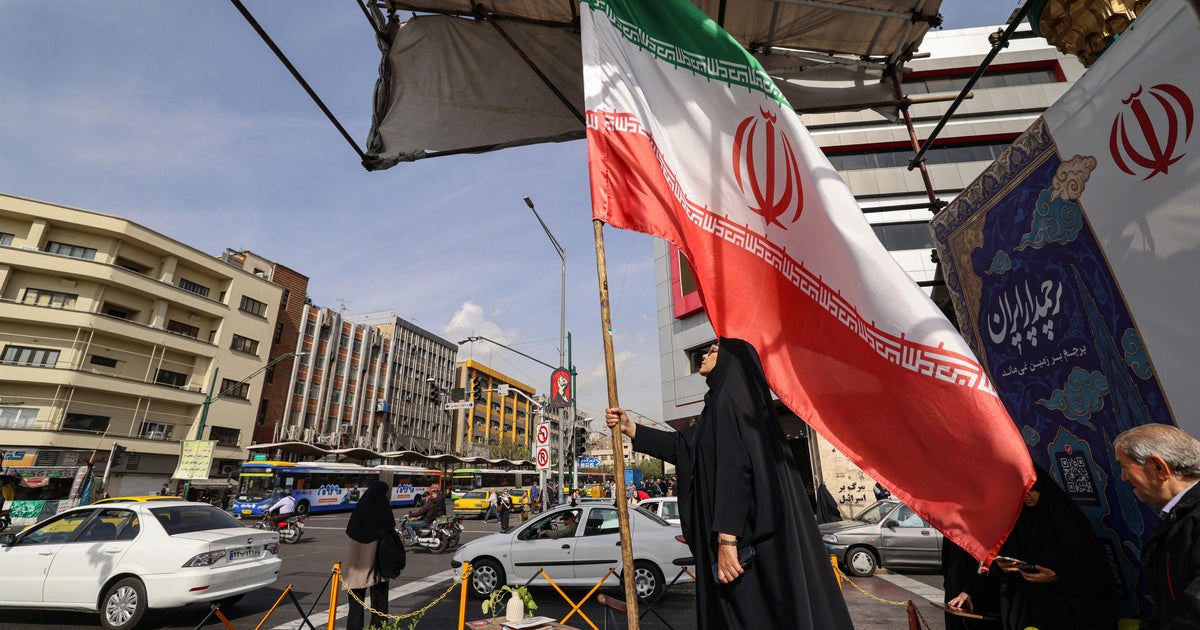
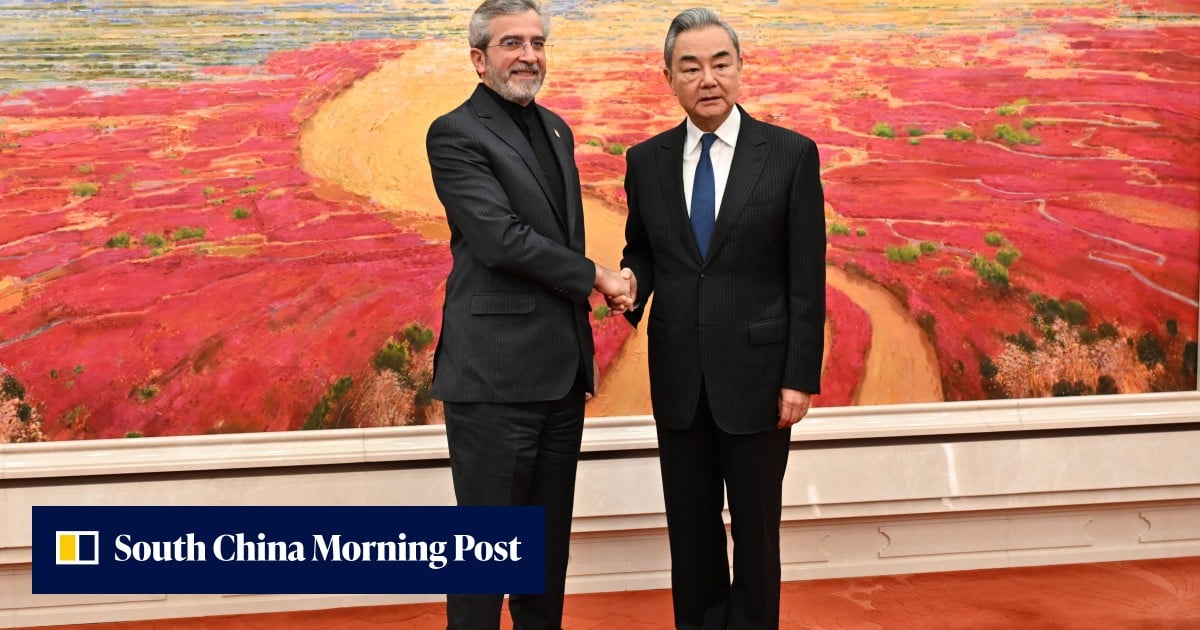
Photo via Al Jazeera

Who determines Iran’s fighting and negotiating position amid US threats?

Read the original at Al Jazeera ↗
Cite

Motamedi, M. (2026, November 4). Who determines Iran’s fighting and negotiating position amid US threats? Al Jazeera. https://www.aljazeera.com/news/2026/11/4/who-determines-irans-fighting-and-negotiating-position-amid-us-threats?traffic_source=rss

Dated from the outlet's own feed. Check the original for its byline.

Al Jazeera · collected 2026-11-04 · by Maziar Motamedi

Quick Summary

Negotiations to prevent further conflict between Iran and the US are ongoing, but power dynamics within Iran's government have shifted since Supreme Leader Ali Khamenei's death in February. President Masoud Pezeshkian said he has been granted certain powers by the new supreme leader, Mojtaba Khamenei, though specifics were not provided. Sina Toossi, a senior fellow at the Center for International Policy, notes that any agreement must be backed by Iran's security-military establishment, reflecting the growing influence of the Islamic Revolutionary Guard Corps and other military entities in decision-making processes.
Written by AI on 2026-11-04, from this article's own text only (the story summary below draws on all the coverage).

AI analysis

Story summary

As of November 4, 2026, negotiations to prevent further war between Iran and the United States are ongoing but have stalled. President Masoud Pezeshkian stated that Supreme Leader Mojtaba Khamenei has granted him certain powers regarding these talks. This comes amid criticism from hardliners who oppose any deal with Washington. The conflict began on February 28, when US and Israeli air strikes killed Supreme Leader Ali Khamenei and other top Iranian officials. Since then, mediators like Qatar and Pakistan have tried to prevent further escalations, including potential US strikes on Iran. Negotiations now involve not just the Iranian nuclear program and sanctions but also broader security issues such as control over the Strait of Hormuz and protection against future attacks.

Written for “Iran Negotiations With US Threats” on 2026-11-04, grounded in this article and the 0 other(s) covering the same event.
Why this leaning score
The article's own words the score was based on. Each is quoted verbatim and was checked against the article text before being stored, so you can find it in the original.
Reading Leans left (beta estimate) Confidence medium 1 quote(s) discarded as not found in the article
Leaning: leans left for article 128327 (medium confidence, 2 verified quotes) · logged 2026-11-04

Story

📰 Iran Negotiations With US Threats
Politics · 1 article(s) covering the same event.

Compared with similar articles

This article reads leans left and hedges 0% of its claims. Each row says how that neighbour differs.
CBS News
⚖️ Leans left Hedges 6 of 28 claims Outlet record 65/100
“The articles describe different stages or aspects of ongoing negotiations and conflict between Iran and the US, not a single identical incident.”
South China Morning Post
Hedges 1 of 3 claims Outlet record 62/100
“The articles describe different aspects related to tensions between Iran and its adversaries, but do not report on the exact same incident.”
The Hindu
Hedges 1 of 9 claims Outlet record 77/100
“Article A describes Iranian negotiators continuing talks in Doha on November 1, while Article B discusses internal power dynamics within Iran's government regarding negotiations on November 4.”
Al Jazeera
⚖️ Leans left Hedges 7 of 40 claims Outlet record 60/100
“The articles discuss ongoing diplomatic efforts and statements from Iranian officials regarding potential conflict with the US, but they describe different time periods and aspects of the situation.”
Al Jazeera
Hedges 4 of 15 claims Outlet record 60/100
“The articles discuss different aspects of diplomatic negotiations and power dynamics within Iran, rather than a single specific incident.”
The Straits Times
⚖️ Leans left Hedges 2 of 29 claims Outlet record 66/100
“While both articles discuss ongoing negotiations between the US and Iran to prevent war, they describe different aspects of the situation at distinct times.”
Al Jazeera
⚖️ Leans left Hedges 12 of 44 claims Outlet record 60/100
“The articles discuss different stages of ongoing negotiations between Iran and the US, with Article A focusing on Qatari mediation efforts around November 1st and Article B discussing internal Iranian power dynamics and further diplomatic signals on November 4th.”
South China Morning Post
Hedges 0 of 4 claims Outlet record 62/100
“The articles discuss related diplomatic negotiations between Iran and the US, but describe different aspects and timelines of the situation.”
CBS News
⚖️ Leans left Hedges 5 of 23 claims Outlet record 65/100
“The articles discuss ongoing diplomatic efforts between Iran and the US, but they describe different time periods and do not focus on the same specific incident.”
South China Morning Post
Hedges 0 of 3 claims Outlet record 62/100
“The articles discuss different aspects and stages of diplomatic efforts between Iran, China, and the US, with Article A focusing on China's advice to Iran for dialogue while Article B focuses on internal Iranian power dynamics affecting negotiations.”
How this article was measured signals, leaning charts, publisher record, byline, topics and claims

Signals How these are calculated →

Claims extracted
51
sentences that state something as happening or true
Uncertain
0%
0 of 51 hedged ("reportedly", "may", "according to")
Leaning
Leans left
of the writing, not the subject · beta estimate
Publisher signals
60/100
Al Jazeera's corrections and hedging, across everything collected from it. Not a measure of accuracy.
Outlets on this story
1
Politics
Same framing elsewhere
1
articles that frame the event the way this one does
Analyzed 2026-11-04 · how these are computed

How this is being covered How these are calculated →

Article leaning vs. publisher reliability
Source leaning vs. consistency

Publisher

Al Jazeera · 4902 article(s) · 3 correction(s) detected
Running correction rate · 3 correction(s)

Who wrote this

Maziar Motamedi
22 article(s) here · 1 carrying a prediction
🔮 Ministry of Foreign Affairs spokesman Esmaeil Baghaei said Rezaei, not Ghalibaf, would respond to the letter if he chooses.
🔮 Iran’s military is warning that if all-out war breaks out again with the United States and Israel, it will be longer and more costly than their rivals expect.
🔮 At the same time, they have doubled down on a willingness to expand attacks or even launch preemptive strikes if they deem war is inevitable.
🔮 Senior diplomats from Qatar held extensive talks in Tehran on Friday, with further talks expected to take place on Saturday.
🔮 Saudi Defence Minister Khalid bin Salman Al Saud, Pakistani military chief Asim Munir and Turkish intelligence chief Ibrahim Kalin met Iran’s President Masoud Pezeshkian and will discuss tensions with security chief Mohsen Rezaei. Recommended Stories list of 3 items- list 1 of 3Dakar Rally 2027 moved out of Saudi Arabia amid conflict in Middle East - list 2 of 3Israel’s election: The main issues in the words of the leading candidates - list 3 of 3Officials from Mecca pact states to hold talks in Iran amid regional tensions The meetings are among the highest-profile dialogues held in Tehran in recent months.
🔮 Tehran, Iran – Mehrdad Akhlaghi Ketabchi has been appointed Iran’s defence minister at a time when the war with the United States is expected to escalate.
🔮 It said it was aware of more incidents in the waterway via other sources but could not verify them due to a lack of information.
🔮 During a governance meeting at the end of September, Deputy Technology Minister Mohammad Hafez Hakami had warned authorities that Starlink could signify “the last nail in the coffin of the [cyberspace] governance” of Iran if it becomes prevalent, due to the unfettered internet access it provides.
🔮 In a statement late Monday, the Iranian ministry described the UK’s claims of an Iranian role as “an ugly plot” that would also serve to “evade accountability for Britain’s participation” in the ongoing war against Iran on February 28.
Also by Maziar Motamedi
Nothing else under this byline is closely related to this article, so these are simply their most recent.
All 22 articles by Maziar Motamedi →

Topics

IRGC Iran Iranian Israeli SNSC

Subjects

Iran GPE · 12× Ghalibaf PERSON · 3× IRGC ORG · 3× Iranian NORP · 3× SNSC ORG · 3× Israeli NORP · 2× Pezeshkian PERSON · 2× Rezaei PERSON · 2× Tehran GPE · 2× the United States GPE · 1×

Narrative

The political analyst added that this is especially true given that negotiations now concern not just the Iranian nuclear programme and sanctions but also the broader security arrangements emerging from the war, including control over the Strait of Hormuz and guarantees against renewed attacks.
framing: assertive · carried by 1 article(s) · first seen 2026-11-04
🔮 Ministry of Foreign Affairs spokesman Esmaeil Baghaei said Rezaei, not Ghalibaf, would respond to the letter if he chooses.

Claims (51 extracted, 0 hedged)

Negotiations to prevent a further outbreak of war between Iran and the United States are being held, but the stagnant process has highlighted who holds power within Iran’s government. asserted
who → prevent → government
President Masoud Pezeshkian, a relative moderate, said on Monday that his government had been given “certain powers” by Supreme Leader Mojtaba Khamenei regarding the negotiations with the US. asserted
government → say → US
Recommended Stories list of 3 items- list 1 of 3US hits Qeshm Island, Pezeshkian signals more diplomacy: asserted
Pezeshkian → hit → diplomacy
- list 2 of 3Israel political deadlock leaves Netanyahu’s future hanging in the balance - list 3 of 3Iran says US reply to Hormuz plan ‘unconvincing’; Trump confirms strikes asserted
Trump → leave → strikes
Pezeshkian, who has come under fire from hardliners opposed to any deal with Washington, did not give any details about what authority this entails. asserted
this → come → authority
His comment followed efforts by mediators, including Qatar and Pakistan, to prevent new US strikes on Iran. asserted
comment → follow → Iran
There have been strong indications of an impending major escalation in the conflict, which began with US and Israeli air strikes on Iran on February 28, which killed Supreme Leader Ali Khamenei and other top Iranian officials. asserted
which → impend → Khamenei
Since then, the balance of power in Iran has increasingly shifted towards the commanders of the Islamic Revolutionary Guard Corps (IRGC) and other security-minded officials. asserted
balance → shift → Corps
“I think the key point is that any agreement must have the backing of the security-military establishment in Iran,” Sina Toossi, a senior fellow at the Center for International Policy, told Al Jazeera. asserted
Toossi → think → Jazeera
The political analyst added that this is especially true given that negotiations now concern not just the Iranian nuclear programme and sanctions but also the broader security arrangements emerging from the war, including control over the Strait of Hormuz and guarantees against renewed attacks. asserted
negotiations → add → attacks
Iran has put forward a seven-point plan it demands the US abide by to end the war and reopen the Strait of Hormuz. asserted
US → put → Hormuz
Iranian authorities said decision-making on the war and negotiations takes place through a concerted approach within the framework of the institutions of the government. asserted
making → say → government
Those institutions include the office of the supreme leader and the Supreme National Security Council (SNSC). asserted
institutions → include → leader
Mojtaba Khamenei’s office said he met with top military commanders, including IRGC chief commander Ahmad Vahidi, to give them directives on how to handle US threats of all-out war. asserted
he → say → war
Khamenei said Iran’s armed forces should respond immediately and without geographical restrictions against any threat and expand their list of US and Israeli targets in case the war escalates. asserted
war → say → case
Ultimately, important decisions, such as ending the war, are decided by the supreme leader, but the SNSC – which includes representatives from the armed forces, ministers from the government, and the heads of parliament and the judiciary – votes on them first. asserted
which → end → them
Who holds more sway now? asserted
Who → hold → sway
By law, Iran’s president is also the head of the SNSC, but the position of the secretary has recently held more weight due to his role as a central coordinator for top national security files. asserted
position → hold → files
That position has been occupied since early August by Mohsen Rezaei, a former IRGC commander-in-chief who has never held public office. asserted
who → occupy → office
When US Vice President JD Vance wrote a letter to Tehran last week, he addressed it to Rezaei, not the president or Mohammad Bagher Ghalibaf, Iran’s parliament speaker, who has also acted as its chief negotiator in recent months. asserted
who → write → months
Ministry of Foreign Affairs spokesman Esmaeil Baghaei said Rezaei, not Ghalibaf, would respond to the letter if he chooses. asserted
he → say → letter
But he also pointed out that Ghalibaf had not been removed from the position of chief negotiator. asserted
Ghalibaf → point → negotiator
Foreign Minister Abbas Araghchi and his deputies, including Kazem Gharibabadi, also remain among the main government figures for maintaining contact with mediators and pursuing diplomacy through the United Nations and international bodies. asserted
Araghchi → include → Nations
Ghalibaf had steered talks that led to the signing in June of a memorandum of understanding (MoU) with Washington, which briefly paused the war and lifted a maritime blockade imposed against southern Iranian ports by the US military. asserted
which → steer → military
But it fell apart after Tehran accused the US of violating several provisions of the deal, including on the Strait of Hormuz, and the IRGC launched attacks against three vessels attempting “unauthoritsed” transits. asserted
IRGC → fall → transits
The US military then escalated its own strikes on Iran, reimposed the blockade and introduced new sanctions on Iran. asserted
military → escalate → Iran
A larger number of ships in the Strait of Hormuz were then hit by explosions, and Iran’s military was believed to be behind the attacks. asserted
military → hit → attacks
The MoU’s downfall prompted discussions about the power dynamics within Iran’s government. asserted
downfall → prompt → government
For months, local and international media and analysts speculated about who ordered the attacks and what their implications were. asserted
implications → speculate → attacks
Some US media quoted sources as saying hardline factions within the establishment directed the attacks on shipping. asserted
factions → quote → shipping
In early August, Pezeshkian said he would have preferred the MoU had continued, adding, “A team should have been formed to address violations rather than to fight.” asserted
team → say → violations
In mid-October, IRGC spokesman Hossein Mohebbi said hitting the three ships was no rogue action and there was coordination with unspecified higher authorities. asserted
hitting → say → authorities
“It is not possible for someone to ignore military hierarchy and take action of their own accord on an important issue like war between two or several countries. asserted
someone → ignore → countries
This is by no means possible,” he said. asserted
he → say → means
Mohebbi characterised the attacks as a “decisive response” to the violations by the US, which had previously launched attacks during negotiations. asserted
which → characterise → negotiations
He accused Washington of violating the MoU by establishing an alternative shipping route through the Strait of Hormuz near Oman and taking other steps. asserted
He → accuse → steps
“It appears that noncommitment and violation of treaties exist as an unwritten doctrine among the governing body of the US,” Mohebbi said. asserted
Mohebbi → appear → US
In the current mediated talks with the US, some of Iran’s demands amount to a return to the MoU along with better sequencing and some additions to guarantee a potential future deal would last longer. asserted
deal → mediate → sequencing
Rezaei told state television he detected a positive change in tone in the message sent by Vance, but Iran’s security chief has so far left it unanswered because Iran’s primary conditions have been clearly communicated through mediators. asserted
conditions → tell → mediators
Tehran seeks an end to the US naval blockade, lifting of oil and other sanctions, release of its funds frozen abroad, reduction in the US military deployment in Iran’s periphery and a halt to fighting on all fronts, including in Lebanon. asserted
Tehran → seek → Lebanon
…and 11 more, not listed.

💬Give feedback · no sign-in needed

No sign-in needed for now. Your note is sent without a name, so it cannot be answered.

🕘History 🎫Support