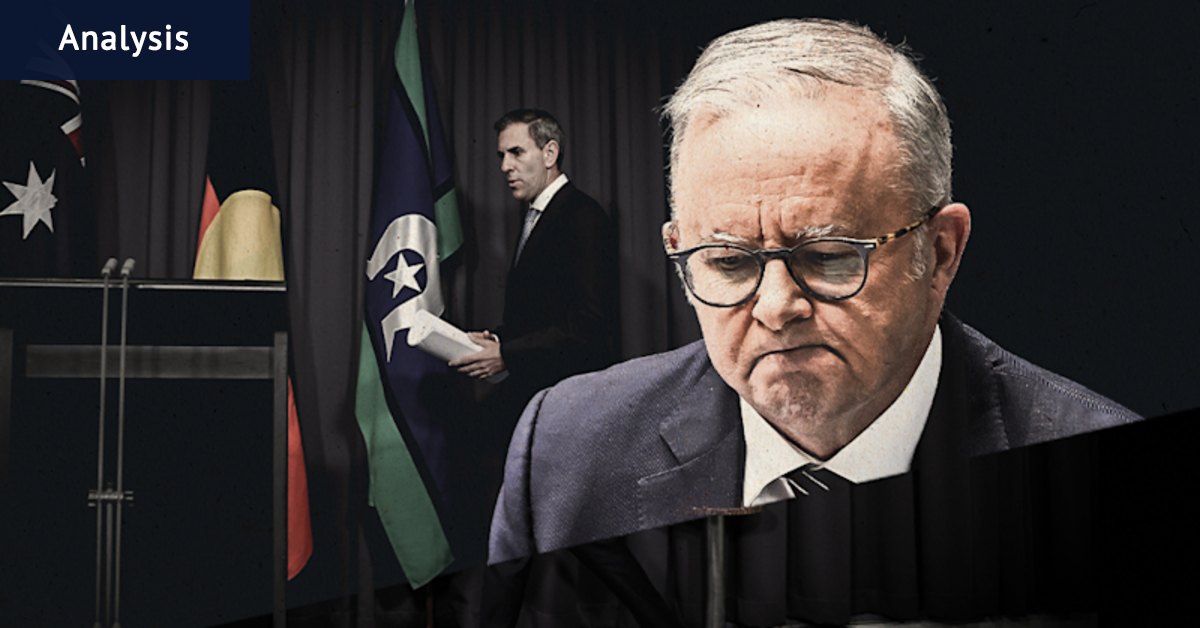
Anthony Albanese and his cabinet really couldn’t have chosen a worse moment to undertake the sweeping tax changes in its most recent budget.
asserted
Albanese → choose → budget
House prices across the country have fallen significantly since the budget, and home owners, even though they typically buy and sell in the same market, are watching the value of their home fall while the cost of just about everything else rises with inflation.
asserted
cost → fall → inflation
Tuesday’s decision delivered the fifth rate rise in 2026 alone, and home mortgage rates are at their highest level since 2008.
asserted
rates → deliver → 2008
It’s a perfect storm of poor economic conditions, and voters are blaming Albanese for it and deserting Labor (and the Coalition) in droves, parking a protest vote with One Nation.
asserted
voters → ’ → Nation
In February, when the United States and Israel first attacked Iran, it was foreseeable that this fight, combined with the war in Ukraine and the Oval Office’s many unpredictable moves, would damage the global economy and play havoc with fuel prices.
asserted
fight → attack → prices
Labor gambled and pressed ahead with most of what it wanted to do in the May budget, and it is paying the price for that gamble.
uncertain
it → gamble → gamble
But few would have predicted the Iran war would be unresolved nine months later, keeping oil prices uncomfortably high, while the Reserve Bank admits it misjudged the extent to which domestic capacity pressures such as the AI construction boom have contributed to inflation.
asserted
pressures → predict → inflation
While the government should be given some credit for courage, it’s looking more like the sort of political bravery that Sir Humphrey Appleby used to advise against in the 1980s TV comedy Yes, Minister.
Reserve Bank governor Michele Bullock didn’t mince her words as she declared on Tuesday that “I don’t tell them [the federal government] what do to with fiscal policy; they don’t tell me what to do with interest rates”.
asserted
they → give → rates
The bank has been indicating for some time that government spending at federal and state levels is a contributing factor to rising inflation.
asserted
spending → indicate → inflation
More seriously, Bullock was asked at least three times at her post-rates conference on Tuesday about the prospect of a recession in Australia.
asserted
Bullock → ask → Australia
Chalmers also faced questions about recession.
asserted
Chalmers → face → recession
Both suggested they did not expect one, but the fact everyone keeps asking should set off alarms in the ministerial wing of Parliament House.
uncertain
everyone → suggest → House
Bullock, who as governor now holds a press conference after each RBA meeting under changes introduced by Chalmers, gave the sort of answer that makes the prime minister tear his hair out.
asserted
minister → hold → hair
“We are not looking to tip the economy into recession, if we can avoid it.
asserted
we → look → it
But we do need to get inflation down, and we do have excess demand at the moment,” she said, adding that some people might feel like Australia is in a recession already “because they feel poorer”.
uncertain
they → need → recession
That’s not a reassuring message and not one the prime minister could parry instantly, given he is half a world away at a Commonwealth Heads of Government Meeting in the Caribbean.
uncertain
he → ’ → Caribbean
Albanese’s transparent attempt to distance his government from the Reserve Bank last week, describing rate rises as a “blunt instrument”, would not have convinced many people that the federal government wasn’t at least partly to blame.
asserted
government → distance → people
In the same interview, the prime minister said new savings would be found in next month’s mid-year budget update, but he refused to commit to a net savings package.
asserted
he → say → package
That’s a mistake, and blaming the RBA is not going to cut it, either.
asserted
blaming → ’ → it
The bank is clearly looking for the government to constrain spending – and it has been looking for some time.
asserted
it → look → time
At a minimum, Albanese and his economic team need to make some hard choices about where and how to cut federal spending, even if there’s a backlash from bleeding hearts in the Labor caucus.
asserted
Albanese → need → caucus
Chalmers has signalled he has further tax cuts planned before the next election.
asserted
he → signal → election
While it may be tempted to unveil them in the 2027 budget, rather than in the 2028 election as planned, to restore the government’s ailing popularity, that would be a mistake that could trigger further inflation.
uncertain
that → tempt → inflation
It would also be seen for what it is: a flagrant attempt at currying favour with the electorate which would be pocketed and promptly forgotten.
asserted
which → see → electorate
Nothing is sticking for the government, which lost control of the economic narrative soon after the budget was handed down.
asserted
budget → stick → narrative
It cannot make major changes to its budget measures, much of which have now passed, because doing so would be comparable to Kevin Rudd’s decision to abandon his carbon pollution reduction scheme.
asserted
doing → make → scheme
Albanese has only one choice: tough it out, much as Australians are having to do, and make some cuts.
asserted
Australians → have → cuts
Subscribers can sign up to our weekly Inside Politics newsletter
More:
asserted
Subscribers → sign → newsletter
 The Aporia