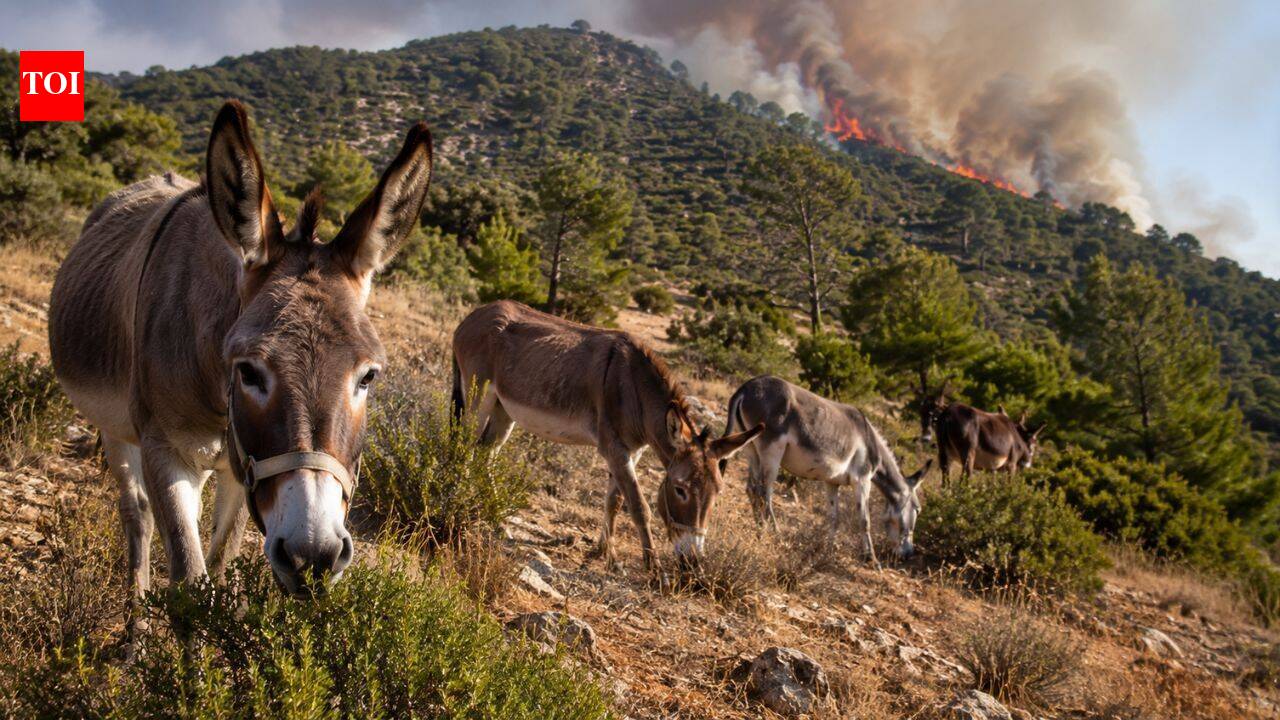
In the sun-drenched hills of Andalusia, Spain, an unlikely team of firefighters is making headlines.
asserted
team → drench → headlines
They don’t carry hoses, wear helmets, or race to blazes in red trucks.
asserted
They → carry → trucks
Instead, they have four legs, long ears and a simple mission: eat grass.
asserted
they → have → grass
Since 2014, these donkeys have been grazing for up to seven hours a day, clearing dry vegetation and creating natural firebreaks that help prevent wildfires before they start, according to a report by Good News Network.
uncertain
they → graze → Network
story begins with Luis Manuel Bejarano, president of the association El Burrito Feliz (“The Happy Little Donkey”).
asserted
story → begin → association
What started as a rescue mission for abandoned and mistreated donkeys has evolved into one of Spain’s most innovative wildfire prevention projects.
asserted
started → start → projects
The donkeys, once destined for neglect or slaughter, now patrol the outskirts of Doñana National Park, a UNESCO World Heritage site and one of Europe’s most important wetland reserves.
asserted
donkeys → destine → reserves
Every day between March and November, the donkeys spend around seven hours grazing through carefully selected sections of land around the park.
asserted
donkeys → spend → park
As they feed, they consume dry grasses, shrubs, weeds, and other vegetation that would otherwise become highly flammable during Spain’s scorching summer months.
asserted
that → feed → months
Each donkey is given a plot of land 40 meters long and 15 meters wide, forming a system of cleared corridors which serve as natural firebreaks.
asserted
which → give → firebreaks
The donkey solution: an ancient answer to a modern problemWildfires are an increasing threat throughout southern Europe.
asserted
solution → increase → Europe
Climate change is resulting in hotter, drier conditions and longer fire seasons.
asserted
change → result → conditions
Mechanical clearing and controlled burns are prevention methods that work, but they are expensive and labour-intensive.
asserted
they → control → ?
Donkeys in mountainous and rural areas eat fire-prone grasses, creating natural firebreaks in the dry Mediterranean landscape.
asserted
Donkeys → eat → landscape
This reduces the risk of fires and benefits biodiversity by maintaining open habitats and preventing the spread of invasive species.
asserted
This → reduce → species
It’s a win-win for both conservation and animal welfare.
asserted
It → ’ → conservation
results speak for themselves.
asserted
results → speak → themselves
In the 12 years since the project began, the donkeys have carved out a network of clear areas that stop fires from spreading once they start.
asserted
they → begin → fires
According to Bejarano, the park has remained largely free of wildfires thanks to the donkeys’ tireless work.
uncertain
park → accord → work
“In 12 years, these animals have carved out a network of clear areas that stop fires from spreading once they start,” he said, as per the report.
asserted
he → carve → report
The donkeys’ work begins early in the morning, around 7:00, and lasts for approximately seven hours.
asserted
work → begin → hours
They consume grass and scrub, effectively reducing potential fuel for wildfires.
asserted
They → consume → wildfires
After a long day of grazing, they drink some 8 gallons of water and rest until the next morning.
asserted
they → drink → morning
success of the “firefighting donkeys” has inspired similar projects across Spain and beyond.
asserted
success → inspire → Spain
In Catalonia, another group of 62 rescued donkeys is being used to clear forests and reduce plant fuel.
asserted
group → rescue → fuel
These initiatives highlight how traditional knowledge paired with modern conservation objectives can be solutions to today’s environmental issues.
asserted
knowledge → highlight → issues
The donkeys are guided into mobile fenced firebreaks, sections approximately 30 to 40 metres long and 15 metres wide, where they clear undergrowth, creating vital barriers to fire spread.
asserted
they → guide → spread
This method, known as “grazing firebreaks,” has been shown to slash fuel loads by up to 40% while creating animal conservation jobs in rural regions.
asserted
method → know → regions
, this project is about more than just preventing fires.
asserted
project → prevent → fires
It’s about giving them a second chance at life.
asserted
It → ’ → life
Each animal is rescued, treated by veterinarians and released into controlled grazing areas, where they spend their days munching on vegetation that would otherwise accumulate on Mediterranean hillsides.
asserted
that → rescue → hillsides
And so, the project has become a symbol of hope for local communities.
asserted
project → become → communities
It shows that conservation and animal welfare can go hand in hand.
asserted
conservation → show → hand
It’s also proof that the simplest solutions are sometimes the best; and that even the most overlooked animals can play an important role in protecting our planet.
asserted
animals → ’ → planet
 The Aporia