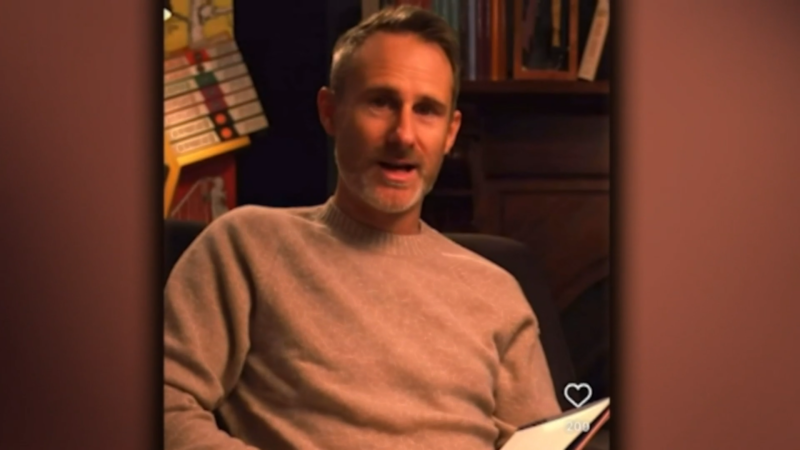
Disgraced author Craig Silvey has published a 9,000 word apology explaining what he says led to his offending.
asserted
he → publish → offending
Silvey was jailed for seven months for possessing and distributing child exploitation material.
But child protection advocates have rejected it as a true apology, saying it's more about him than his victims.
asserted
it → jail → victims
An apology published online by disgraced author Craig Silvey in the wake of his sentencing for child sex offences fails to address the victims of his crimes, a leading child protection organisation says.
asserted
organisation → publish → crimes
WARNING: The following story contains details some readers may find distressing.
uncertain
readers → follow → details
Silvey was sentenced on Monday to seven months' prison for possessing and distributing images and videos of prepubescent children being sexually abused.
asserted
Silvey → sentence → children
In a 9,000-word essay called "My Apology" published after his sentencing, Silvey explained what led to his offending.
asserted
what → call → offending
It starts with him describing how difficult it was for him to write about his offences, and ends with his belief in redemption and hope.
'Begins and ends with him'
Bravehearts CEO Alison Geale said Silvey's apology was more about him than the victim-survivors at the centre of his crime.
"It begins and ends with him, even in the title," she said.
asserted
she → start → title
"I don't think Mr Silvey has appropriately addressed the victims of the crime that he committed … but there is an exhaustive amount of material about Mr Silvey's plans for redemption."
asserted
he → think → redemption
The once acclaimed author's books were removed from school curricula around Australia after police first laid charges in January, and theatre adaptations were also halted.
asserted
adaptations → acclaim → January
WA Creative Industries Minister Simone McGurk said she doubted Silvey's literature would regain popularity after his offending.
"
asserted
literature → say → offending
Craig Silvey has lost any sort of credibility at all," she said.
asserted
she → lose → credibility
"His books were loved and they were very popular, but knowing that this person who wrote them is now guilty of these sorts of offences is completely unacceptable."
asserted
who → love → offences
'Horrified and aghast'
Silvey dedicated 41 words in his letter to the children in the explicit images and videos he accessed and shared.
"
asserted
he → dedicate → images
I want to acknowledge that my engagement with this material is reprehensible and indefensible.
asserted
engagement → want → material
It is re-traumatising to victims, and perpetuates a cycle of harm," he said.
asserted
he → traumatise → harm
"I am horrified and aghast that I have caused further suffering by contributing to this scourge."
asserted
I → cause → scourge
Silvey said he had blindsided friends and family, and betrayed the trust of thousands who supported him and his work.
asserted
who → say → him
I am appalled and mortified by my conduct, and I am deeply, profoundly sorry," he said.
asserted
he → appal → conduct
The 44-year-old then preludes the next 8,000 words — a "comprehensive explanation" for his behaviour — by saying he took "full responsibility" for his actions, and was not intending to minimise his conduct but provide "context and clarity".
asserted
he → prelude → context
Silvey wrote that he experienced "emotional neglect, violence and sexual abuse" as a child, and as an adult struggled with the pressures of his fame and reputation.
asserted
he → write → fame
He also detailed family ruptures, including losing his life savings and falling into debt after entrusting his financial affairs to his brother, who was jailed last year for 12 years for fraud, and a "deeply painful betrayal involving my father".
asserted
who → detail → father
But Judge Cormann did not accept those pressures caused Silvey's offending, and said his psychological health "isn't causative of the offences that you have committed".
Ms Geale said the letter was not a "true apology".
"It is a lot about his regret.
asserted
It → accept → regret
He speaks in euphemisms.
asserted
He → speak → euphemisms
He doesn't name the actual crime, he minimises that," she said.
asserted
she → name → that
"The children whose images that he accessed ... are the victims, not Mr Silvey."
asserted
he → access → that
Phil Doorgachurn, the interim CEO of the National Centre — a support organisation established out of the Royal Commission into child sexual abuse — said Silvey's letter should have put the victims at the centre.
asserted
letter → establish → centre
"Even the word 'material', sometimes people can forget and community can forget what that means," he said.
asserted
he → forget → what
Silvey's defence lawyer had told the court he did not have a specific sexual attraction to children — a point Silvey alludes to in his letter.
asserted
Silvey → tell → letter
Rather, he said he sought out increasingly depraved material in order to "numb himself", the court heard.
asserted
court → say → himself
But District Court Judge Hayley Cormann dismissed that claim in her sentencing remarks on Monday.
uncertain
Cormann → dismiss → Monday
"That material that you possessed and those communications in which you engaged, which I have read, they are repulsive and they are degrading and they are offensive," she said.
asserted
she → possess → which
"Yet you spoke about those things, about your desires and that abuse of children persistently in those chats."
asserted
you → speak → chats
The court heard Silvey initiated conversations about child exploitation, and described in explicit detail how he wanted to abuse them.
asserted
he → hear → them
Judge Cormann said Silvey's fantasies perpetuated harm against real children.
asserted
fantasies → say → children
"The world you went into to escape from something, you say, was a type of roleplay, and intended to be only ever in an online world or a fantasy world," she said.
asserted
she → go → world
She said Silvey's personal circumstances were not an excuse for his behaviour, but did "accept that you take full responsibility for your offending and that you are appalled and you are mortified by your own conduct".
asserted
you → say → conduct
 The Aporia