Claims extracted
18
sentences that state something as happening or true
Uncertain
22%
4 of 18 hedged
("reportedly", "may", "according to")
Leaning
Leans left
of the writing, not the subject · beta estimate
Publisher signals
72/100
Dawn's corrections and
hedging, across everything collected from it. Not a measure of accuracy.
Outlets on this story
2
Environment
Same framing elsewhere
1
articles that frame the event the way this one does
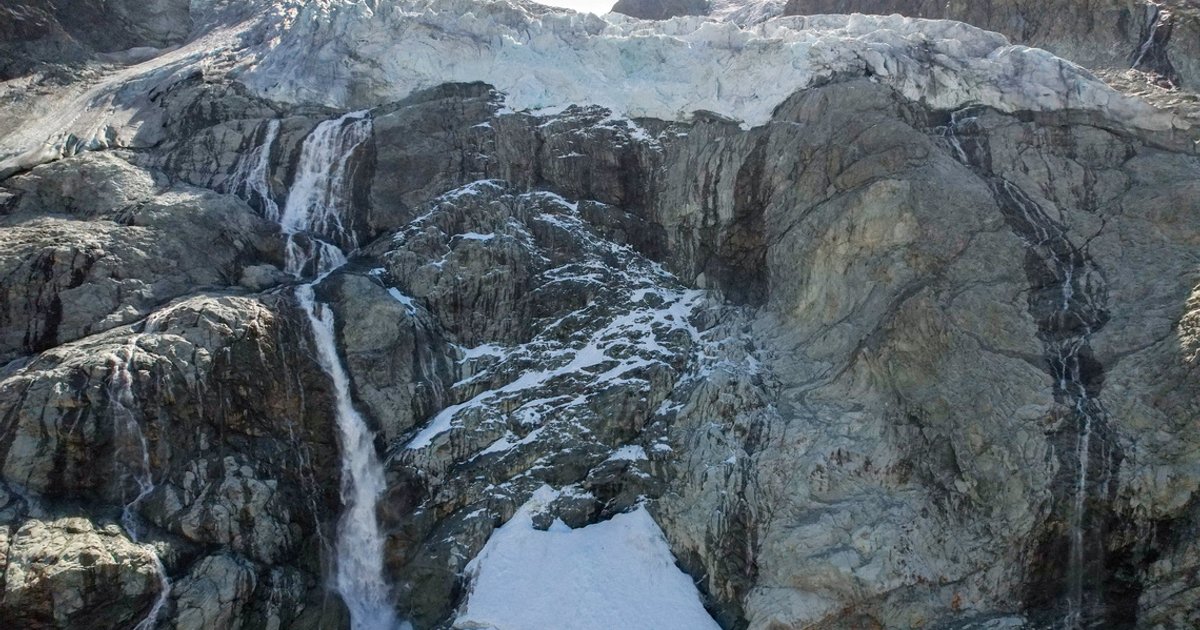
PARIS: Exceeding 1.5C of global warming will have “irreversible” consequences for glaciers, sea ice and the Earth’s frozen regions, two UN reports warned on Monday, calling for urgent action.
asserted
reports → exceed → action
The landmark 2015 Paris Agreement commits the world to limiting warming to well below 2C and pursuing efforts to hold it at 1.5C to try to avoid the worst effects of climate change.
asserted
Agreement → commit → change
One of the reports said overshooting the 1.5C target “will bring large-scale and in many cases irreversible impacts” for the cryosphere — Earth’s ice in all its forms.
asserted
overshooting → say → forms
Melting of glaciers and sea ice, the thawing of permafrost and the accelerating rise in sea levels, will have widespread repercussions, from flooding to water shortages.
asserted
Melting → accelerate → shortages
But even if the 1.5C target remains relevant, it is already too high for the cryosphere, as current levels of warming were “already unsafe” for the Arctic, Antarctic, mountain glaciers and polar oceans, the UN warned.
asserted
UN → remain → Arctic
“Although returning to 1.5 C will slow ice loss, a truly ‘safe’ temperature for Earth’s ice is now thought to be closer to 1C or even below over the coming centuries,” it added.
asserted
it → return → centuries
Global warming has already reached 1.37C above pre-industrial levels and according to the European Copernicus network, the 1.5C threshold could be exceeded around 2030.
uncertain
threshold → reach → 2030
“There are no good outcomes in exceeding 1.5C,” said glaciologist James Kirkham, lead author of one of the reports, entitled “Overshoot and the Cryosphere”, which was written with 80 scientists.
asserted
which → be → scientists
“To contain the global fallout and damage from ice loss in the world’s polar and mountain regions, overshoot needs to be kept to the absolute minimum,” he said.
asserted
he → contain → minimum
“Every extra fraction of a degree and every year spent in overshoot means more devastating impacts.”
asserted
fraction → spend → impacts
Scientists warn in particular about the risks of crossing certain tipping points and say that, even if temperatures were to return to below the 1.5C threshold, recovery would be very slow.
asserted
recovery → warn → threshold
Reducing warming to under 1.5C and even 1C could see some glaciers partially regenerate, while there could also be benefits for sea ice.
uncertain
glaciers → reduce → ice
But Matthew England, an oceanographer and climatologist at the University of New South Wales in Australia, said recovery could take “decades to centuries”.
uncertain
recovery → say → centuries
The second report — “State of the Cryosphere 2026. The Cost of Overshoot” — shows that exceeding 2.8C into the next century would have significant consequences.
asserted
exceeding → show → consequences
Sea levels could rise by up to five centimetres a year by 2150, compared to the current 0.45 centimetres while the thawing of permafrost could release as much carbon dioxide each year as the United States, the world’s second-largest polluter.
uncertain
thawing → rise → States
A worst-case but not-so-improbable scenario is that the world is heading towards warming of 2.6C by 2100 even if countries meet their climate commitments.
asserted
countries → head → commitments
“Temporarily exceeding 1.5C does not mean that the goals of the Paris Agreement are irrelevant but instead makes them more urgent,” argued Kirkham.
asserted
Kirkham → exceed → Agreement
“Returning to 1.5C or below by 2100 remains possible with sufficient political ambition and urgency, specifically by speeding the transition away from fossil fuel use to reach net zero by mid-century,” he said.
asserted
he → return → century
 The Aporia