How the name of a forgotten founder lives on in the word 'gerrymander'
asserted
name → forget → word
You've heard of Samuel Adams and John Hancock, the Massachusetts patriots who signed both the Declaration of Independence and the Articles of Confederation.
asserted
who → hear → Confederation
He unwittingly gave us "gerrymander," our Word of the Week — part of NPR's series examining the origin and etymology of common words.
asserted
He → give → words
As Founding Fathers go, it's safe to say that Gerry (pronounced "Gary") is not the most prominent, even though he was among the earliest and most vocal supporters of American independence from Great Britain.
asserted
he → go → Britain
Later, Gerry was one of only three delegates to the Constitutional Convention who refused to put his name on the document in part because at the time it lacked a Bill of Rights — those first 10 amendments that lay down basic freedoms and protections.
asserted
that → refuse → freedoms
He even became President James Madison's second vice president, although he died in office less than two years later.
asserted
he → become → office
"Gerry was important, particularly in the early years during the Revolutionary War," says historian and author David O. Stewart.
asserted
Stewart → say → War
Stewart says Gerry was "a fiery guy," though he was also "small and skinny," with a "squint and a stutter."
asserted
he → say → squint
His 20th-century biographer, George Athan Billias, described him as a "nervous, birdlike little person."
asserted
biographer → describe → person
John Adams, meanwhile, saw in Gerry a stubborn streak that made him willing to fight over minor matters, writing that he "will risk great things to secure small ones."
Alas, Gerry never got a beer named after him.
asserted
Gerry → see → him
Nor is he remembered for a signature so famous as to become synonymous with an autograph itself.
asserted
he → remember → autograph
You can put your John Hancock on that.
asserted
You → put → that
But his name lives on in "gerrymandering" — the practice of manipulating voting-district boundaries to give one political party or group an unfair electoral advantage.
asserted
name → live → advantage
It's a word that has become inescapable as redistricting fights rage across the U.S. before midterm elections.
asserted
fights → become → elections
To understand, we need to go back to 1812, when Gerry was the governor of Massachusetts.
asserted
Gerry → understand → Massachusetts
He signed a redistricting bill that created a sprawling, contorted state senate district designed to benefit his own party, the Democratic-Republican Party, in elections against rival Federalists.
asserted
that → sign → Federalists
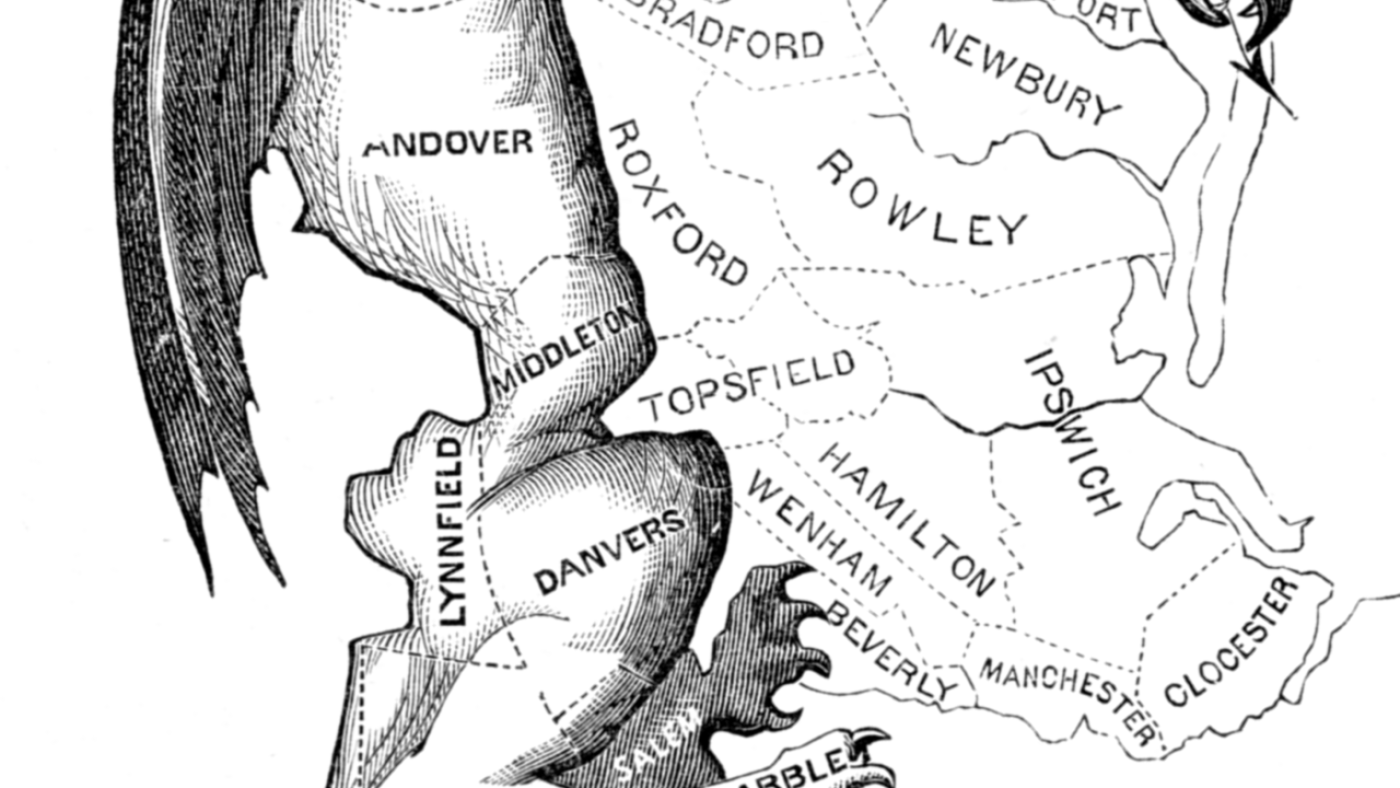
A newspaper published a cartoon depicting the misshapen district as a winged, clawed monster, seemingly poised to strike the neighboring Federalist-dominated districts.
asserted
newspaper → publish → districts
It was termed a "Gerry-mander": a portmanteau of "Gerry" and "salamander."
asserted
It → term → Gerry
"What's curious to me about it is that it's a word, but it comes out of a visual image," says Doug Harper, the founder of the etymology dictionary etymonline.com.
asserted
Harper → come → dictionary
"Someone actually drew the picture and published it in the newspaper, along with the coining of the word," he says, but adds, "It doesn't look like a salamander."
It wasn't the first time a district had been manipulated for electoral advantage, nor would it be the last.
asserted
it → draw → advantage
And that electoral monster was just the first of a number of amusingly shaped districts, thanks largely to the public's tendency toward pareidolia.
asserted
monster → shape → pareidolia
There's Pennsylvania's "Goofy kicking Donald Duck," Illinois' "earmuffs" and still others that meander for miles in an effort to encircle specific groups of voters — known as "bug splat" districts.
asserted
that → be → districts
In etymology and lexicography, the term for "gerrymander" and similar words is "eponym," from the ancient Greek epōnymos, meaning "giving one's name to something."
asserted
term → mean → something
Harper says other examples include "boycott," "shrapnel" and "leotard," as well as fairly recent entrants, such as the verb "MacGyver," or "to make, form, or repair (something) with what is conveniently on hand," according to Merriam-Webster.
uncertain
what → say → Webster
It's named after Angus MacGyver, the fictional character from the eponymous television show that began airing in 1985.
asserted
that → name → 1985
If anyone in the year 2126 is still making hang gliders out of duct tape and a parachute, they're unlikely to remember that their "MacGyvering" has anything to do with an old television show, Harper agrees.
asserted
Harper → make → show
The same goes for Gerry and "gerrymandering."
asserted
same → go → Gerry
"If you ask people on the street today, they'd wonder if it was Jerry Seinfeld we were talking about," Harper says.
asserted
Harper → ask → street
The mispronunciation of Gerry's surname that gave us the first part of "gerrymander" doesn't help either, he says.
asserted
he → give → gerrymander
Despite the important part that Elbridge Gerry played in America's independence, it is his role in a minor and mostly forgotten fight over state legislative districts that keeps his name alive 250 years later.
asserted
that → play → name
"None of us picks how we're going to be remembered in the world if we're going to be remembered at all," Stewart, the historian, says.
asserted
Stewart → pick → world
"So being remembered is, I suppose, better than not."
asserted
I → remember → ?
 The Aporia