Donald Trump has “the concept” of a trade deal with Canada.
asserted
Trump → have → Canada
Canada has its own concept of a closer economic relationship with the European Union.
asserted
Canada → have → Union
Those “concepts” could produce even more trade friction.
uncertain
concepts → produce → friction
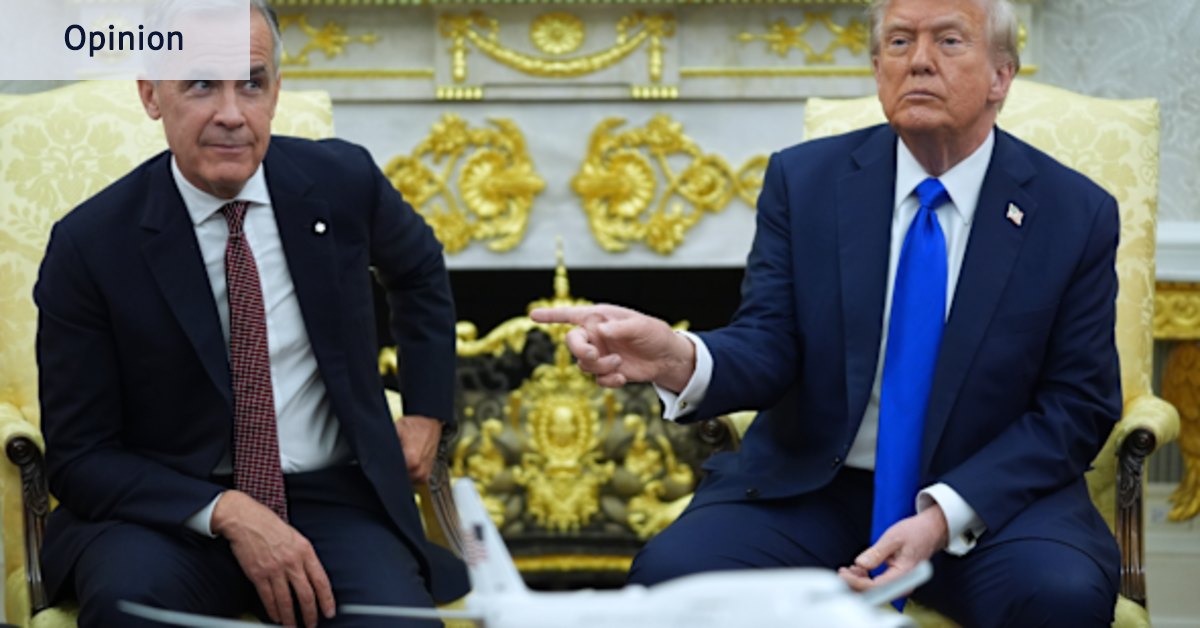
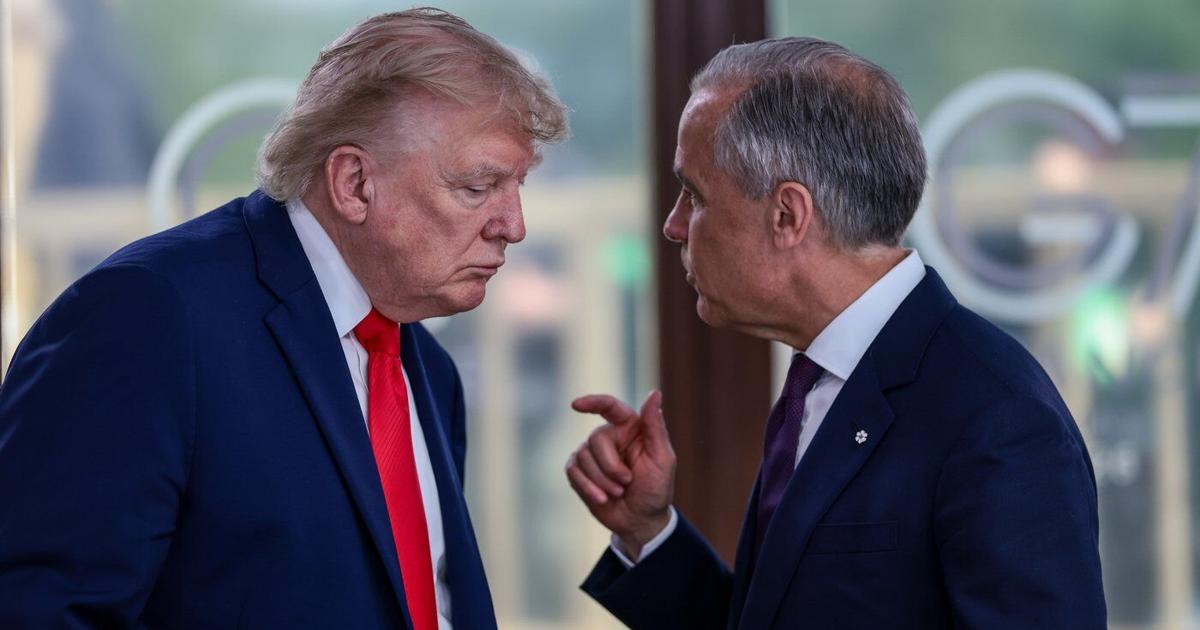
Trump said at the weekend that, after speaking to Canadian prime minister Mark Carney, that there was a concept of a deal “that’s going to be great for our farmers, great for our country, and it will be fine for Canada.”
asserted
it → say → Canada
Carney referred on social media to “constructive” discussions on a “mutually beneficial” trade deal that would create jobs, improve affordability and “fully respect Canada’s languages, culture and sovereignty.”
asserted
that → refer → languages
The warmer tone from both leaders suggests a thawing of a relationship that fractured in September when earlier trade talks broke down and the US slapped new tariffs on about $US20 billion ($29 billion) of Canada’s exports to the US.
uncertain
US → suggest → US
Canada responded immediately with tariffs on a similar value of imports from the US, making it the only country other than China to stand up to Trump’s trade bullying.
asserted
it → respond → bullying
Since that tit-for-tat exchange, there has been some shift in the composition of the US tariffs, albeit not their value, as Trump lowered some and raised others to try to limit the damage they were doing to the Republican causes in border states with deep economic links with Canada, like Michigan and Maine, which were trending Democrat in the lead up to this week’s midterm elections.
The trade negotiations earlier this year broke down at the eleventh hour after last-minute demands from the US negotiators – abolishing Canada’s French language local content rules and quotas, gaining exclusive access to Canadian minerals and restrictions on its ability to strike trade deals with other countries – caused Carney to end the talks and the US to immediately impose its tariffs.
asserted
US → lower → tariffs
Those tariffs, along with Trump’s regular verbal assaults on Canada, his quips about making it America’s 51st state and his purported renaming of Lake Ontario as “Lake America” have been a talking point in the midterms, and not one favourable to the Republicans, which may explain why the Americans reopened the negotiations.
uncertain
Americans → make → negotiations
The negotiations weren’t, however, concluded in time for the midterms and, it appears, the parties are still some distance from an agreement.
asserted
parties → conclude → agreement
Trump’s notion of a fair trade deal, of course, is one tilted massively in America’s favour, so there is no certainty there will be an agreement.
asserted
notion → tilt → agreement
In the meantime, Carney has said he is prepared to wait for a new US president if necessary to finalise a new deal.
asserted
he → say → deal
“We’ll have to, if that’s what it takes, and American families, American businesses, will lose out because of that.
asserted
families → have → that
They’re not winners in this circumstance.”
asserted
They → ’re → circumstance
Carney isn’t sitting on his hands, waiting for 2029 and a new president.
asserted
Carney → sit → 2029
Last Friday Canada and the European Union held a summit in Montreal at which they signed agreements on investment, digital trade, competition, computing and border security and agreed to negotiate a broader and deeper partnership next year.
asserted
they → hold → partnership
The European Commission president, Ursula von der Leyen, has talked about Canada becoming an “associate member” of the EU, although pushback from some EU members, notably Germany, that term – for which there is neither precedent nor definition – has been quietly dropped from public discussions about the possible future relationship.
asserted
pushback → talk → relationship
What they are talking about isn’t Canada joining the EU – Canada’s economic integration with the US, the destination for 70 per cent of its exports, and geography rules that out – but greater integration of the economies and their policies.
asserted
geography → talk → economies
The matters being canvassed include a new bank payments system that would bypass the US dominance of the current global system, more co-operation on digital and national security, science and space programs, greater trade and investment and more student exchanges and freedoms for young Canadians and Europeans to live and work in the two economies.
asserted
Canadians → canvass → economies
New fibre optic cables linking Canada, Europe and Asia that would reduce dependence on US cable infrastructure are also being canvassed.
asserted
that → link → infrastructure
The discussions with the US fit with Carney’s ambition of doubling Canadian exports to non-US markets by 2035 and reducing Canada’s over-dependence on the US and the vulnerabilities that Trump’s trade wars and threats to Canada’s sovereignty have exposed.
asserted
wars → fit → sovereignty
Trump, naturally, isn’t happy about the prospect of deeper economic ties between Canada and the EU, threatening more tariffs – “very heavy tariffs” – on the EU, or even a complete cessation of trade, if an agreement is struck with “bad intentions.”
asserted
agreement → threaten → intentions
He has dismissed the idea of Canadian associate membership of the EU as “laughable,” while labelling Canada – historically America’s closest trading partner and ally – as “a terrible trading partner.”
asserted
He → dismiss → partner
Carney has shown courage in standing up to Trump, given that he doesn’t have China’s dominance of strategic minerals to use as leverage against Trump’s trade threats and that he knows that the relative sizes of the two economies – America’s dwarfs Canada’s – means that the fallout from the trade war is asymmetrically painful for his economy.
asserted
fallout → show → economy
He has the support of a majority of Canadians in his efforts to diversify his country’s trading relationships and build a coalition of middle powers to blunt the impact of America’s newfound belligerence towards its traditional trading partners and allies on trade and other issues.
asserted
He → have → trade
He has been crisscrossing the world to try to strike new trade deals with the EU, India, Japan, Türkiye and others.
asserted
He → crisscross → EU
The envisaged relationship with the EU, which he says would form “the closest association between any country and the European in the world,” is at the centre of Canada’s new trade strategy.
asserted
he → envisage → strategy
Trump’s notion of a fair trade deal, of course, is one tilted massively in America’s favour, so there is no certainty there will be an agreement.
asserted
notion → tilt → favour
At the same time, he has seized the moment provided by Trump to make significant changes within Canada, including the fast-tracking of major infrastructure and resource projects, particularly oil and gas projects and pipelines.
asserted
he → seize → projects
His priority is the construction of a new pipeline from Canada’s massive oil sands resources in Alberta to the west coast, which would carry a million barrels of oil a day and open up Asia and other markets for the first time.
asserted
which → carry → time
’s also fast-tracking gas projects that could see Canada exports to non-US markets double by 2030.
uncertain
exports → track → 2030
At present, about 90 per cent of Canada’s oil exports go to US refineries in the mid-West that have been set up especially to handle Canada’s heavy sour crude.
asserted
that → go → crude
Most of its gas exports also go to the US.
asserted
Most → go → US
In a world where energy importers – and even Middle East refiners – want to diversify their supplies of oil and gas away from the Middle East after the US-Israel attacks on Iran and America’s ongoing war have destabilised the region, Canada has, Carney said last month, the potential to be “an energy superpower.”
asserted
Carney → want → potential
Even if hostilities in the Middle East were to end tomorrow, the energy markets would have been fundamentally and permanently changed by the conflict and the vulnerabilities it exposed to an over-reliance on Middle East oil and safe passage through the Strait of Hormuz.
asserted
it → end → Hormuz
Similarly, even if Trump is eventually replaced by a trade “dove” who unwinds most of the tariffs imposed during his second term, Canadians, Europeans, Australians and others will have permanently lost faith and trust in the US to deal fairly with them and honour its traditional leadership of a global economic, trade and security system that it played such a central role in creating.
asserted
it → replace → role
Canada, the EU and China aren’t alone in wanting to escape, or at least dilute, the brutish and coercive economic power of Trump’s America, even if China and Canada have been the most assertive.
asserted
China → want → America
The Business Briefing newsletter delivers major stories, exclusive coverage and expert opinion.
asserted
newsletter → deliver → stories
 The Aporia