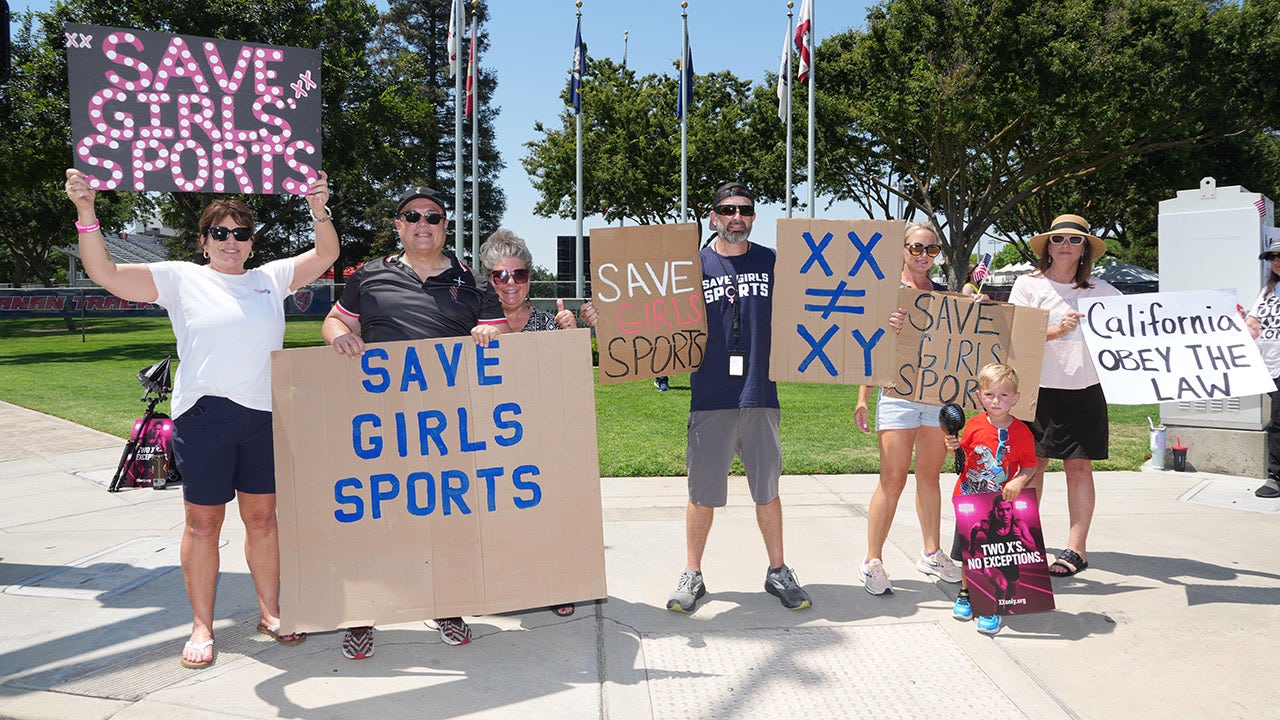
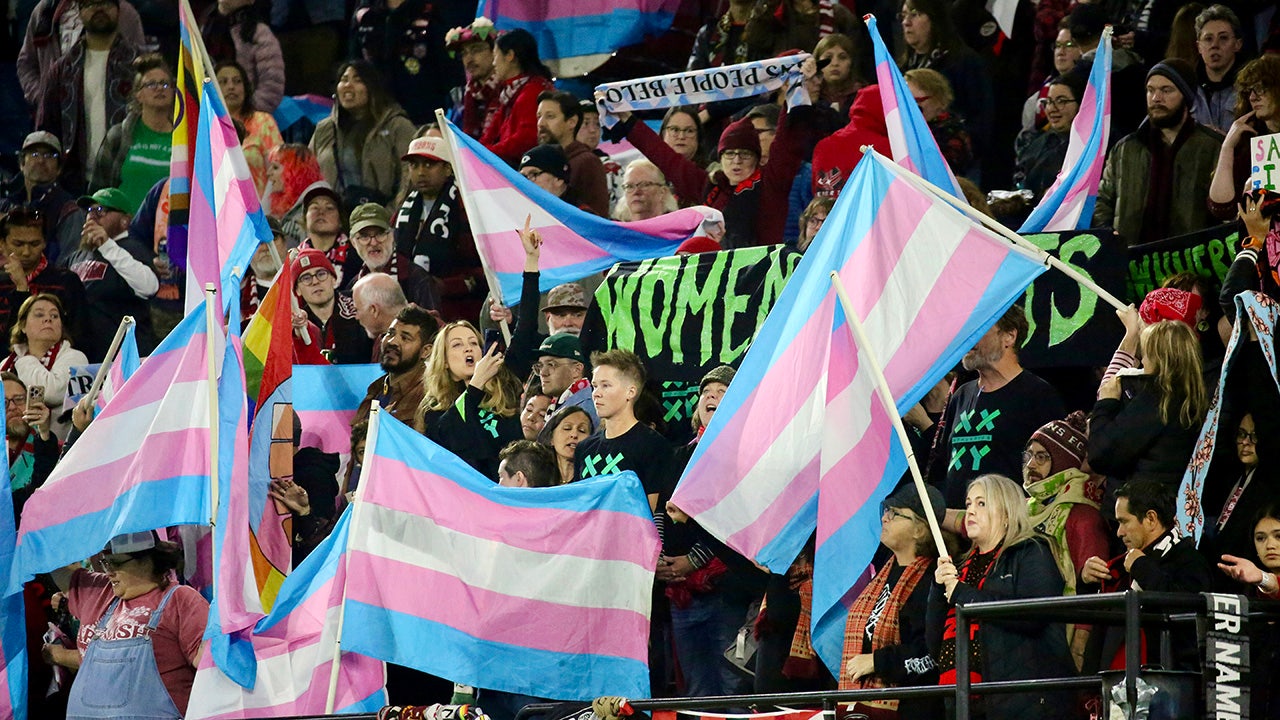
Four states have measures on Tuesday's ballot that could change who gets to compete in girls' and women's sports — and, in some cases, who gets to use their locker rooms.
uncertain
who → have → rooms
Arizona and Nebraska already have laws restricting biological males from competing in female sports.
asserted
Arizona → have → sports
A "yes" vote in either state would expand or strengthen those existing restrictions.
asserted
vote → expand → restrictions
Neither currently has the statewide sex-based restrictions proposed by these measures.
asserted
Neither → have → measures
If voters approve them, both states would establish statewide sex-based restrictions for school sports — a significant change in two traditionally Democratic states.
asserted
states → approve → states
Here's a state-by-state breakdown of what the measures would do, what opponents are saying, how supporters are responding and what the betting markets are predicting.
asserted
markets → do → what
Washington: Initiative 638
What a yes vote would do: Prohibit students defined as biologically male from competing in girls' K-12 interscholastic sports.
asserted
vote → do → sports
Girls seeking to participate would have to provide documentation from a healthcare professional verifying biological sex based on "reproductive anatomy, genetic makeup, or normal endogenously produced testosterone levels."
asserted
Girls → seek → anatomy
As it stands, K-12 athletes in Washington can compete based on their gender identity under current eligibility rules, which allowed a boy in Camas, WA, to switch to the girls' team mid-season earlier this year.
asserted
boy → stand → team
What a no vote would do: Keep the current eligibility rules in place, without adding the initiative's new sex-verification requirements.
What opponents say: Organizations such as No Hate in Washington State argue that the initiative would discriminate against transgender students and could subject girls to invasive genital examinations.
uncertain
initiative → do → examinations
Proponents call the "invasive exam" argument fearmongering, saying that biological sex can be verified as part of a routine sports physical — something high school athletes have been undergoing for years.
asserted
athletes → call → years
They also point to a simple cheek swab, which collects DNA from inside the mouth, as another possible way to verify biological sex.
asserted
which → point → sex
Colorado: Proposition 134
What a yes vote would do: Establish statewide sex-based participation requirements for school sports from K-12 through the college level.
asserted
vote → do → level
Athletes would generally compete on teams matching their biological sex, with exceptions for coed sports and girls joining boys' teams when no equivalent girls' team exists.
asserted
team → compete → teams
The measure covers public, charter and private schools, as well as colleges and universities.
asserted
measure → cover → schools
It applies to interscholastic and intramural athletics, including school-sponsored club sports.
asserted
It → apply → sports
Proposition 134 defines females as "a person whose biological reproductive system is organized around the production of ova" and males as "a person whose biological reproductive system is organized around the production of sperm."
asserted
system → define → sperm
Unlike Washington's initiative, Colorado's measure doesn't specifically require a doctor's note or medical examination to verify biological sex.
asserted
measure → require → sex
Instead, schools would have to establish their own eligibility policies, with no verification method specified in the measure.
asserted
schools → have → measure
The state education commissioner could take action against school districts that intentionally refuse to comply.
uncertain
that → take → districts
What a no vote would do: Maintain the existing eligibility system, allowing schools, districts and athletic associations to continue setting their own participation policies, subject to state and federal law.
asserted
schools → maintain → law
What opponents say: Planned Parenthood and other opponents echo the concerns raised in Washington, arguing that Proposition 134 amounts to government overreach and "risks invasive gender checks for girls."
asserted
Proposition → say → girls
But as XX-XY Athletics founder Jennifer Sey — who chairs the campaign supporting Proposition 134 — has pointed out, 27 states already have restrictions on biological males competing in girls' sports.
asserted
states → chair → sports
Sey argues that the invasive examinations opponents warn about aren't happening in those states.
asserted
opponents → argue → states
Arizona: Proposition 318
What a yes vote would do: Build on Arizona's existing public school sports rules by expanding restrictions to private schools and athletic associations, including those overseeing youth and college sports.
asserted
vote → do → sports
It would also require schools and athletic associations to restrict access to restrooms, locker rooms and other private spaces connected to athletics based on biological sex as recorded on an original birth certificate.
asserted
It → require → certificate
The measure would also allow athletes to sue schools and athletic associations that knowingly violate the law.
asserted
that → allow → law
It would retain protections for athletes competing on coed teams and would not categorically prohibit girls from participating on boys' teams.
asserted
It → retain → teams
What a no vote would do: Leave existing laws in place, keeping Arizona's current public school sports restrictions without expanding them to additional institutions or adding the measure's new requirements for private spaces.
What opponents say: Civil rights groups such as the ACLU argue that Proposition 318 singles out transgender students, could subject girls to intrusive questioning about their biological sex and opens schools up to expensive lawsuits.
uncertain
Proposition → do → lawsuits
Supporters counter that the measure closes loopholes in existing law, protects privacy and safety in locker rooms and bathrooms, and establishes consistent rules for fair athletic competition across the state.
asserted
measure → counter → state
Nebraska: Initiative 442
What a yes vote would do: Amend Nebraska's Constitution to prohibit biological males from competing in girls' and women's school sports, from K-12 through college.
asserted
do → amend → college
Schools would have to designate teams as male, female or coed, with female teams reserved for biological females.
asserted
teams → have → females
The measure would apply to public schools and colleges, as well as private institutions whose teams compete against public schools.
asserted
teams → apply → schools
Unlike Washington and Colorado, Nebraska already has a law restricting biological males from competing in girls' and women's sports.
asserted
Nebraska → have → sports
Gov. Jim Pillen signed the Stand With Women Act in June 2025.
asserted
Pillen → sign → June
Arizona also has an existing law, but Nebraska's ballot measure would go a step further by putting its restrictions into the state constitution, making them harder for future lawmakers to overturn.
asserted
lawmakers → have → constitution
What a no vote would do: Leave Nebraska's Constitution unchanged.
asserted
do → leave → Constitution
The existing law restricting biological males from competing in girls' and women's sports would remain in effect.
asserted
law → exist → effect
What opponents say: Groups such as OutNebraska and the Fairness for All campaign argue that the amendment would discriminate against transgender students and unnecessarily write restrictions into the state constitution when a law already exists.
asserted
law → say → constitution
Opponents also point out that transgender athletes make up a tiny percentage of the state's population.
asserted
athletes → point → population
…and 2 more, not listed.
 The Aporia