Photo via Times of India

Mammal Reintroductions At Sturt: six native species return; project expands beyond fences

Read the original at Times of India ↗
Cite

TOI World Desk. (2026, November 2). Mammal Reintroductions At Sturt: six native species return; project expands beyond fences. Times of India. https://timesofindia.indiatimes.com/world/uk/in-2017-a-couple-moved-to-a-remote-outback-station-in-new-south-wales-fenced-off-4000-hectares-and-cleared-it-of-rabbits-cats-foxes-10-years-later-bilbies-bandicoots-bettongs-gone-for-over-100-years-are-back-and-breeding/articleshow/135453124.cms

Dated from the outlet's own feed. Check the original for its byline.

Times of India · collected 2026-11-02 · by TOI World Desk analysis

Quick Summary

Ecologists Rebecca West and Reece Pedler have successfully reintroduced six native mammal species to Sturt National Park in north-western New South Wales as part of the Wild Deserts project. Since 2017, they have established predator-proof enclosures covering about 4,000 hectares, removing introduced pests like rabbits, cats, and foxes. The reintroduced species include greater bilbies, crest-tailed mulgaras, Shark Bay bandicoots, golden bandicoots, western quolls, and burrowing bettongs. These animals are now breeding outside the enclosures, indicating a broader recovery of native wildlife populations in the area.
Written by AI on 2026-11-03, from this article's own text only (the story summary below draws on all the coverage).

AI analysis

Story summary

Ecologists Rebecca West and Reece Pedler have successfully reintroduced six native mammal species to Sturt National Park in north-western New South Wales, as part of their conservation project called Wild Deserts. Since moving to Fort Grey station in 2017 from Adelaide, the couple has worked to reverse damage caused by introduced predators and grazing animals. According to a September 2026 report by ABC Landline journalist Bill Ormonde, some reintroduced species are now breeding and expanding their populations beyond the project's predator-proof enclosures. The Wild Deserts project, which operates in the remote Corner Country near the borders of New South Wales, South Australia, and Queensland, has been supported by UNSW and the NSW Government.

Written for “Mammal Reintroduction Project Expands” on 2026-11-03, grounded in this article and the 0 other(s) covering the same event.
Why this leaning score
This article does not take a side on a contested political question, so it has no leaning score. That is an answer rather than a gap: a match report or a rescue can be warmly or critically written without being left or right, and scoring it anyway is how approval of a subject gets recorded as a political position.
No political leaning scored for article 124298 · logged 2026-11-03

Story

📰 Mammal Reintroduction Project Expands
Environment · 1 article(s) covering the same event.

Compared with similar articles

Nothing to compare against. No article is close enough to this one for the pipeline to have linked or judged the pair.
How this article was measured signals, leaning charts, publisher record, byline, topics and claims

Signals How these are calculated →

Claims extracted
32
sentences that state something as happening or true
Uncertain
9%
3 of 32 hedged ("reportedly", "may", "according to")
Leaning
not political
takes no side on a contested political question
Publisher signals
59/100
Times of India's corrections and hedging, across everything collected from it. Not a measure of accuracy.
Outlets on this story
1
Environment
Same framing elsewhere
1
articles that frame the event the way this one does
Analyzed 2026-11-03 · how these are computed

How this is being covered How these are calculated →

Article leaning vs. publisher reliability
Source leaning vs. consistency

Publisher

Times of India · 3984 article(s) · 3 correction(s) detected
Running correction rate · 3 correction(s)

Who wrote this

TOI World Desk
1381 article(s) here · 1 carrying a prediction
🔮 The restored property will take time to develop into a mature habitat, but the project offers an example of how privately owned agricultural land can contribute to biodiversity recovery.
🔮 The return of these mammals is therefore expected to benefit more than just the animals themselves.
🔮 Origins of the emergency relief campaign The project started in early 2020 when Dozier realised that federal emergency support money could take months to reach low-income workers who were at immediate risk of losing their homes.
🔮 Before that, visitors could participate in organised activities such as guided hikes, birdwatching, educational programmes and public hunts.
🔮 While their decision to buy an abandoned French hamlet might appear like an unexpected adventure, Yip and Paul's official website reveals that their story together began decades earlier.
🔮 Hundreds of polar bears are expected to gather near the Canadian town of Churchill in Manitoba as temperatures fall and the animals wait for Hudson Bay to freeze.
🔮 Together they would support the reforestation of Mutuba trees in Uganda for three years.
🔮 In the letter, he apologised for forgetting to send his greetings earlier and expressed hope that they would meet the following year again.
🔮 Meeker told Signal Akron that the sculpture contained details that people could continue discovering over time.
🔮 The possibility that the farm could eventually reach another generation now seems less remote.
Wire or desk byline, not an individual reporter.
Also by TOI World Desk
Nothing else under this byline is closely related to this article, so these are simply their most recent.
All 1381 articles by TOI World Desk →

Topics

ABC Landline Australia New South Wales UNSW the University of New South Wales

Subjects

Australia GPE · 2× New South Wales GPE · 2× UNSW ORG · 2× the NSW Government ORG · 2× ABC Landline ORG · 1× Bill Ormonde PERSON · 1× Rebecca West PERSON · 1× Reece Pedler PERSON · 1× West PERSON · 1× the University of New South Wales ORG · 1×

Narrative

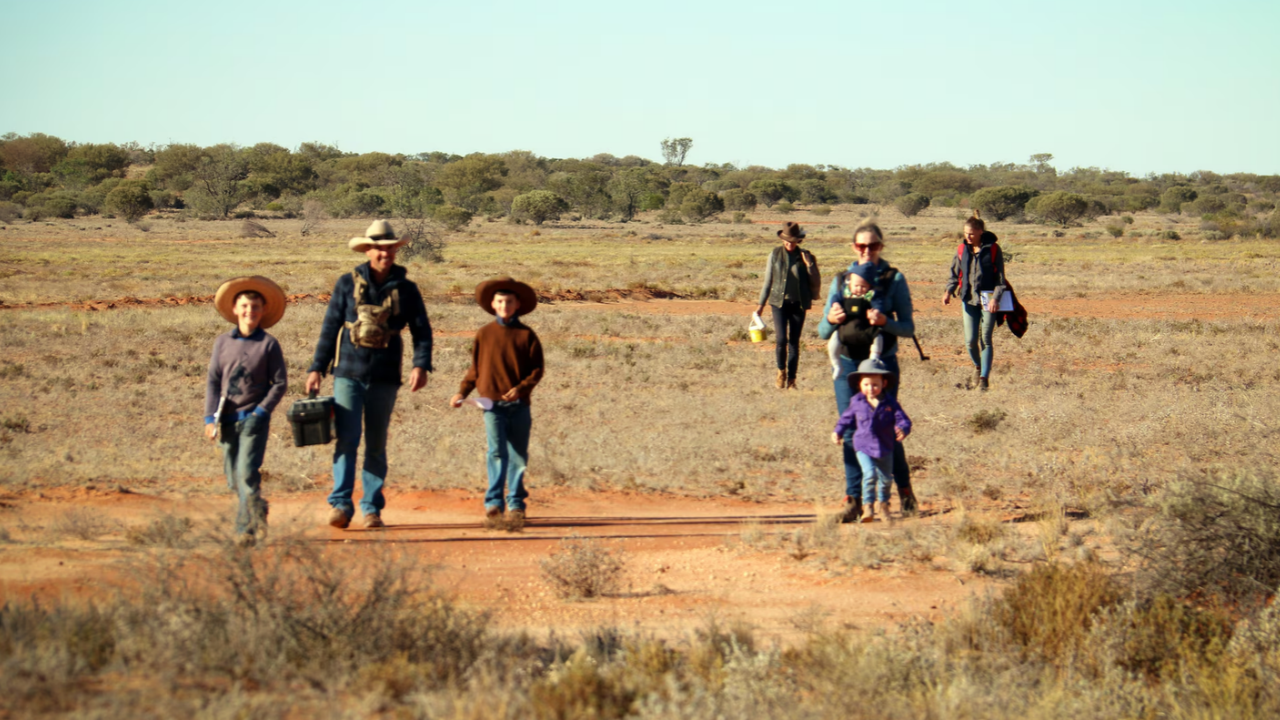
A remote home with an ambitious mission West and Pedler moved to Fort Grey in 2017, leaving behind their lives in Adelaide to work on a conservation programme designed to reverse the damage caused by introduced predators and grazing animals.
framing: assertive · carried by 1 article(s) · first seen 2026-11-03
🔮 The return of these mammals is therefore expected to benefit more than just the animals themselves.

Claims (32 extracted, 3 hedged)

What began as an ambitious conservation experiment in one of Australia's most isolated landscapes has grown into a remarkable wildlife recovery effort. asserted
began → begin → effort
Nearly a decade after moving to a remote station in north-western New South Wales, ecologists Rebecca West and Reece Pedler are witnessing the return of native mammals that had disappeared from the region for morqe than a century. asserted
that → move → century
According to a September 2026 report by ABC Landline journalist Bill Ormonde, alongside updates from the University of New South Wales (UNSW) and the NSW Government, the couple's work through the Wild Deserts project has helped reintroduce six native mammal species to Sturt National Park. uncertain
work → accord → Park
More significantly, some of these animals are now breeding and establishing populations beyond the project's predator-proof enclosures. asserted
some → breed → enclosures
A remote home with an ambitious mission West and Pedler moved to Fort Grey in 2017, leaving behind their lives in Adelaide to work on a conservation programme designed to reverse the damage caused by introduced predators and grazing animals. asserted
West → move → predators
The former sheep and cattle station, located in the remote Corner Country near the meeting point of New South Wales, South Australia and Queensland, became the headquarters of the Wild Deserts initiative. asserted
station → locate → initiative
The project, which began in 2016, is a partnership involving UNSW Sydney, the NSW National Parks and Wildlife Service and conservation specialists Ecological Horizons. asserted
which → begin → Sydney
Its central objective was to bring back native mammals that once played an important role in Australia's desert ecosystems but had vanished following European settlement. asserted
that → bring → settlement
Introduced rabbits damaged vegetation and competed with native wildlife for food, while feral cats and foxes preyed on smaller mammals, contributing to their disappearance. asserted
cats → introduce → disappearance
The team established two large fenced areas, each covering approximately 2,000 hectares. asserted
team → establish → hectares
Together, the enclosures protect around 4,000 hectares from feral predators and grazing pressures. asserted
enclosures → protect → predators
Rabbits, cats and foxes were removed to create safer conditions for native animals to establish breeding populations. asserted
animals → remove → populations
Bringing back animals that disappeared The first reintroductions began in 2020, with greater bilbies, crest-tailed mulgaras and Shark Bay bandicoots among the earliest arrivals. asserted
reintroductions → bring → arrivals
Golden bandicoots followed in 2022, while western quolls and burrowing bettongs were subsequently introduced. asserted
quolls → follow → 2022
These animals were selected not simply because they had disappeared from the landscape, but because of the ecological roles they perform. asserted
they → select → roles
Their burrows and feeding activities turn over the soil, improve water infiltration and create conditions that help native plants regenerate. asserted
plants → turn → conditions
The return of these mammals is therefore expected to benefit more than just the animals themselves. asserted
return → expect → animals
It could gradually help restore the natural processes that once sustained the desert ecosystem. uncertain
that → help → ecosystem
Taking conservation beyond the fences One of the project's biggest achievements has been its move beyond predator-free enclosures. asserted
One → take → enclosures
While protected areas offer native mammals a safe environment to reproduce, conservationists ultimately want them to survive in the wider Australian landscape, where feral predators are still present. asserted
predators → protect → landscape
To work towards that goal, the team established a 100-square-kilometre Wild Training Zone surrounding the protected enclosures. asserted
team → work → enclosures
Here, feral cat populations are kept at lower levels, allowing reintroduced animals to gradually adapt to living alongside predators. asserted
animals → keep → predators
The approach is showing encouraging results. asserted
approach → show → results
By September 2026, researchers had recorded survival, breeding and the arrival of new individuals among populations of bilbies, bettongs, golden bandicoots and western quolls released beyond the fences. asserted
researchers → record → fences
The project had also established the largest rabbit-free area of its kind, covering approximately 4,000 hectares. asserted
project → establish → hectares
A decade of conservation begins a new chapter The progress has been significant enough for the NSW Government and UNSW to extend their partnership for another 10 years, announced in June 2026. asserted
Government → begin → June
The next phase will focus on improving predator management, monitoring animal populations and finding ways to expand successful reintroductions across larger landscapes. asserted
phase → focus → landscapes
The work is particularly important for Australia's native mammals, which have experienced some of the world's highest rates of mammal extinction since European settlement. asserted
which → experience → settlement
According to the NSW Government, several species being restored through conservation programmes across the state had not been seen in the wild in New South Wales for more than 100 years. uncertain
species → accord → years
For West and Pedler, the transformation of Sturt National Park represents more than the return of individual species. asserted
transformation → represent → species
It is an attempt to rebuild an ecosystem in which native animals, vegetation and natural processes can once again support one another. asserted
animals → rebuild → one
After years of research, predator control and carefully monitored releases, the desert is showing signs of life that had been missing for generations. asserted
that → monitor → generations

💬Give feedback
🕘History 🎫Support