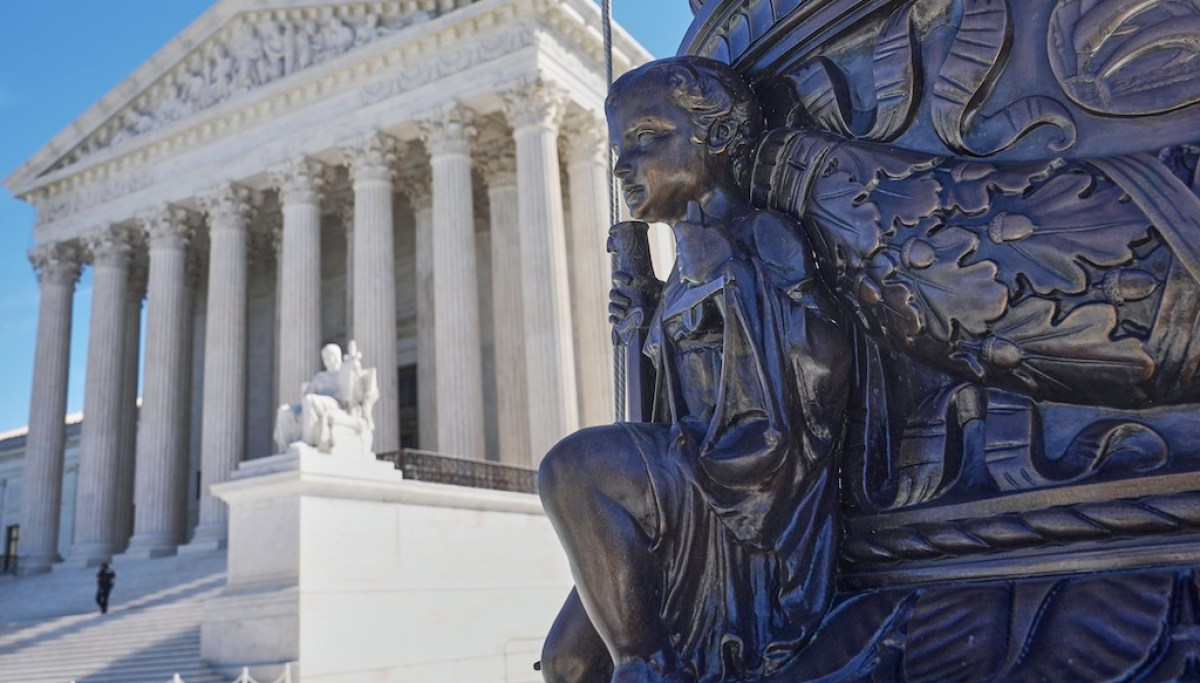
Photo via Washington Examiner

Supreme Court grapples with prisoner pushing for earlier transfer to halfway house under First Step Act

Read the original at Washington Examiner ↗
Cite

Birle, J. (2026, November 2). Supreme Court grapples with prisoner pushing for earlier transfer to halfway house under First Step Act. Washington Examiner. https://www.washingtonexaminer.com/news/supreme-court/4787725/maxwell-v-dinis-first-step-act-criminal-justice-reform/

Dated from the outlet's own feed. Check the original for its byline.

Washington Examiner · collected 2026-11-02 · by Jack Birle

Quick Summary

On Monday, the Supreme Court heard arguments in Maxwell v. Dinis regarding William Maxwell’s request to transfer to a lower-security facility under the First Step Act. Maxwell, serving time for organized crime and mortgage fraud in Texas, is challenging his continued imprisonment through a habeas corpus petition. The case centers on whether inmates can use the First Step Act’s provisions to earn credits that allow early release into halfway houses or home confinement, thereby questioning the scope of legal challenges available under this act.
Written by AI on 2026-11-03, from this article's own text only (the story summary below draws on all the coverage).

AI analysis

Story summary

The Supreme Court heard oral arguments on Monday in Maxwell v. Dinis, a case involving prisoner William Maxwell's attempt to challenge his imprisonment under the First Step Act. Maxwell is serving time in a low-security prison in Texas for his involvement in organized crime and taking over a mortgage-loan company. He seeks to use habeas corpus to be transferred to a halfway house or home confinement, which he argues is possible under provisions of the 2018 criminal justice reform law known as the First Step Act. This act allows inmates to earn time credits for participating in programs aimed at reducing recidivism or engaging in productive activities, enabling them to secure early release from higher security settings into less restrictive environments.
Written for “Supreme Court Hearing On Prisoner Transfer” on 2026-11-03, grounded in this article and the 0 other(s) covering the same event.
Why this leaning score
This article does not take a side on a contested political question, so it has no leaning score. That is an answer rather than a gap: a match report or a rescue can be warmly or critically written without being left or right, and scoring it anyway is how approval of a subject gets recorded as a political position.
No political leaning scored for article 123968 · logged 2026-11-03

Story

📰 Supreme Court Hearing On Prisoner Transfer
Politics · 1 article(s) covering the same event.

Compared with similar articles

Nothing to compare against. No article is close enough to this one for the pipeline to have linked or judged the pair.
How this article was measured signals, leaning charts, publisher record, byline, topics and claims

Signals How these are calculated →

Claims extracted
3
sentences that state something as happening or true
Uncertain
0%
0 of 3 hedged ("reportedly", "may", "according to")
Leaning
not political
takes no side on a contested political question
Publisher signals
70/100
Washington Examiner's corrections and hedging, across everything collected from it. Not a measure of accuracy.
Outlets on this story
1
Politics
Same framing elsewhere
1
articles that frame the event the way this one does
Analyzed 2026-11-03 · how these are computed

How this is being covered How these are calculated →

Article leaning vs. publisher reliability
Source leaning vs. consistency

Publisher

Washington Examiner · 3986 article(s) · 7 correction(s) detected
Running correction rate · 7 correction(s)

Who wrote this

Jack Birle
36 article(s) here · 1 carrying a prediction
🔮 In Gwinnett and Cobb counties, officials have said they will contact voters who have not received the absentee ballots they requested after a pair of lawsuits in the past week claimed that nearly 5,000 residents in both counties did not receive their requested absentee ballots.
🔮 The high court began its November sitting on Monday with oral arguments in Maxwell v. Dinis over whether William Maxwell, who is serving a sentence in a low-security prison in Texas for his role in organized crime and taking over a mortgage-loan company, can file a habeas corpus challenge to be transferred to a halfway house or home confinement under the First Step Act.
🔮 As same-day voters go to the polls for the midterm elections next week, the Supreme Court will hear a major religious liberty case over a Colorado universal preschool program with implications beyond the Centennial State.
🔮 A trio of cases involving property rights and personal freedoms set to be argued this term illustrates the role of the Supreme Court as the last line of defense for people fighting what they see as government overreach.
🔮 The Supreme Court will hear a pair of cases over the legality of sweeping “assault weapons” bans later this year, and the local governments at the center of the lawsuits are urging the high court this week to let them ban the firearms they claim are responsible for the “most tragic and frightening crimes.”
🔮 The Supreme Court handed the Trump administration a loss on its emergency docket on Wednesday, declining to lift a lower court’s block on a new regulation for federal prisons that would stop providing inmates with transgender surgeries and procedures.
🔮 The high court announced in an order list that because they lacked a quorum in BMG Rights Management v. Vetter, the lower court’s ruling would be affirmed as if the justices never took up the case, the same way that a deadlock at the Supreme Court would affirm a lower court’s ruling.
🔮 The Supreme Court announced Monday that it will hear a challenge to a federal law barring the distilling of alcohol at home, weighing whether it oversteps the federal government’s powers.
🔮 Justice Samuel Alito began his 22nd Supreme Court term last week, but even as he insists he will remain on the bench, speculation has grown over whether it could be his final one on the high court.
🔮 The high court ruled 7-2 to halt a ruling by the U.S. Court of Appeals for the 4th Circuit that would have forced the FCC to issue a final ruling on a revised rule allowing political parties and joint fundraising committees to access the same, more favorable television advertisement rates that are typically reserved for political candidates.
Also by Jack Birle
Nothing else under this byline is closely related to this article, so these are simply their most recent.
All 36 articles by Jack Birle →

Topics

Texas The Supreme Court the First Step Act

Subjects

Dinis PERSON · 1× Maxwell PERSON · 1× Texas GPE · 1× The Supreme Court ORG · 1× William Maxwell PERSON · 1×

Narrative

The high court began its November sitting on Monday with oral arguments in Maxwell v. Dinis over whether William Maxwell, who is serving a sentence in a low-security prison in Texas for his role in organized crime and taking over a mortgage-loan company, can file a habeas corpus challenge to be transferred to a halfway house or home confinement under the First Step Act.
framing: assertive · carried by 1 article(s) · first seen 2026-11-03
🔮 The high court began its November sitting on Monday with oral arguments in Maxwell v. Dinis over whether William Maxwell, who is serving a sentence in a low-security prison in Texas for his role in organized crime and taking over a mortgage-loan company, can file a habeas corpus challenge to be transferred to a halfway house or home confinement under the First Step Act.

Claims (3 extracted, 0 hedged)

The Supreme Court waded into a prisoner’s challenge on Monday to his imprisonment under the First Step Act as he seeks a transfer to lower-security confinement, such as a halfway house, in the latest high court case over the 2018 criminal justice reform law. asserted
he → wad → law
The high court began its November sitting on Monday with oral arguments in Maxwell v. Dinis over whether William Maxwell, who is serving a sentence in a low-security prison in Texas for his role in organized crime and taking over a mortgage-loan company, can file a habeas corpus challenge to be transferred to a halfway house or home confinement under the First Step Act. asserted
who → begin → Act
A habeas corpus petition is a way for someone to challenge the legality of their imprisonment, while the First Step Act, signed into law in 2018, allows inmates to earn time credits for recidivism-reduction programming or productive activities, which can be used to secure early release from secure custody into halfway houses or home confinement. asserted
which → challenge → houses
💬Give feedback
🕘History 🎫Support