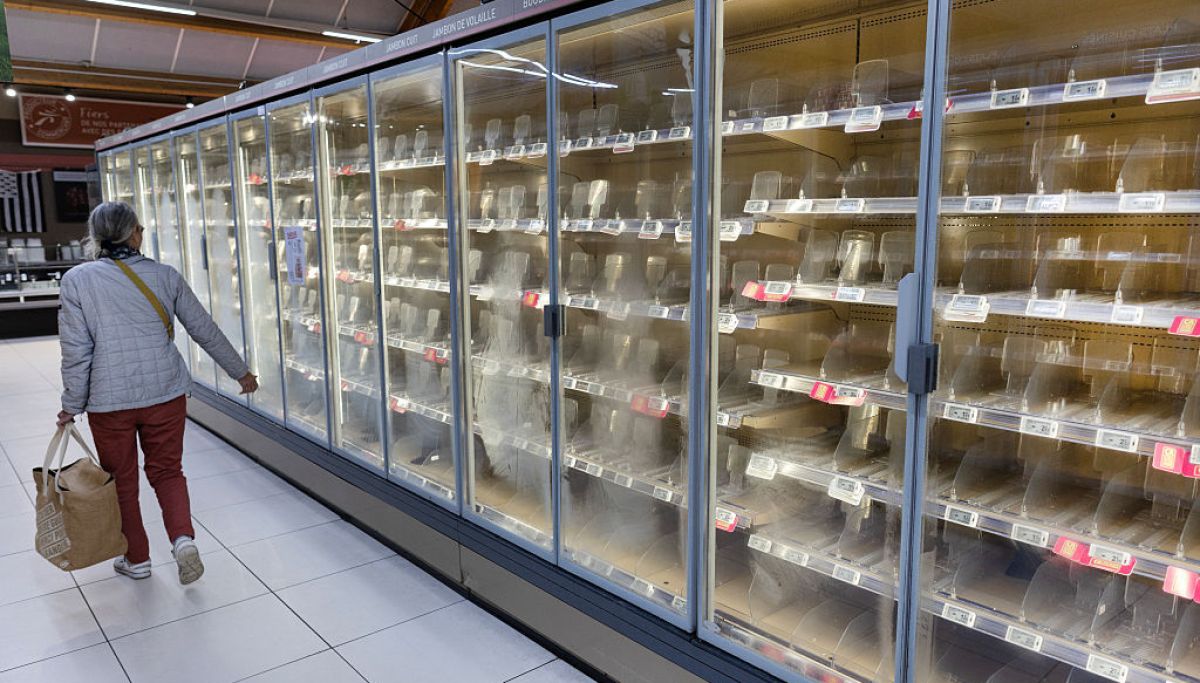
Photo via BBC News

If hackers can take control of a supermarket freezer, how vulnerable is other tech?

Read the original at BBC News ↗
Cite

McCallum, S. (2026, November 2). If hackers can take control of a supermarket freezer, how vulnerable is other tech? BBC News. https://www.bbc.co.uk/news/articles/ckpqg8lve73go?at_medium=RSS&at_campaign=rss

Dated from the outlet's own feed. Check the original for its byline.

BBC News · collected 2026-11-02 · by Shiona McCallum

Quick Summary

European supermarkets recently faced a suspected cyber-attack affecting their refrigeration systems, highlighting concerns over internet-connected devices' vulnerabilities. Ciaran Martin, former CEO of the UK’s National Cyber Security Centre, emphasizes the need for manufacturers to enhance security measures in smart devices. Researchers found that more than 800 refrigeration interfaces associated with British retailers can be accessed publicly online, though it is unclear if they are hackable due to weak passwords or software vulnerabilities. The article explores how manufacturers and retailers must improve cybersecurity standards to protect against potential disruptions in food supply chains.
Written by AI on 2026-11-02, from this article's own text only (the story summary below draws on all the coverage).

AI analysis

Story summary

On November 2, 2026, temperatures in refrigerators and freezers at multiple grocery stores across Sweden, Belgium, Luxembourg, the Netherlands, Ireland, Estonia, and potentially other European countries soared, with some reaching 50 degrees Celsius (122 F). This incident follows a similar large-scale cyberattack last month that affected hundreds of supermarkets in France, causing food spoilage and fires. Swedish retailers ICA and Coop reported being impacted, with at least one ICA store explicitly blaming the rise in temperatures on hackers via social media. The National Cyber Security Centre (NCSC) in Sweden confirmed multiple incidents and is responding to them. While authorities have not identified who could be behind these attacks or their motives, the EU has condemned what it called a deliberate attempt to disrupt food supply chains and erode consumer confidence.

Written for “Fridge Cyberattacks Hit European Supermarkets” on 2026-11-03, grounded in this article and the 19 other(s) covering the same event.
Why this leaning score
This article does not take a side on a contested political question, so it has no leaning score. That is an answer rather than a gap: a match report or a rescue can be warmly or critically written without being left or right, and scoring it anyway is how approval of a subject gets recorded as a political position.
No political leaning scored for article 123823 · logged 2026-11-02

Story

📰 Fridge Cyberattacks Hit European Supermarkets
Technology · 20 article(s) covering the same event. Compare every outlet's account →

Compared with similar articles

This article reads unscored and hedges 17% of its claims. Each row says how that neighbour differs.
Euronews
Hedges 1 of 4 claims Outlet record 60/100
Al Jazeera
Hedges 0 of 11 claims Outlet record 60/100
Times of India
Hedges 3 of 28 claims Outlet record 59/100
ABC News (AU)
Hedges 2 of 24 claims Outlet record 68/100
South China Morning Post
Hedges 0 of 4 claims Outlet record 63/100
Dawn
Hedges 2 of 28 claims Outlet record 72/100
ABC News (US)
Hedges 5 of 13 claims Outlet record 70/100
BBC News
Hedges 0 of 4 claims Outlet record 68/100
The Guardian
Hedges 0 of 1 claims Outlet record 66/100
Washington Examiner
Hedges 0 of 2 claims Outlet record 70/100
“Article A discusses a cyberattack investigation at U.S. military commissaries, while Article B refers to suspected cyber-attacks affecting supermarkets across Europe.”
How this article was measured signals, leaning charts, publisher record, byline, topics and claims

Signals How these are calculated →

Claims extracted
29
sentences that state something as happening or true
Uncertain
17%
5 of 29 hedged ("reportedly", "may", "according to")
Leaning
not political
takes no side on a contested political question
Publisher signals
68/100
BBC News's corrections and hedging, across everything collected from it. Not a measure of accuracy.
Outlets on this story
20
Technology
Same framing elsewhere
1
articles that frame the event the way this one does
Analyzed 2026-11-02 · how these are computed

How this is being covered How these are calculated →

Article leaning vs. publisher reliability
Source leaning vs. consistency

Publisher

BBC News · 4926 article(s) · 6 correction(s) detected
Running correction rate · 6 correction(s)

Who wrote this

Shiona McCallum
2 article(s) here · 1 carrying a prediction
🔮 In 2015, researchers demonstrated how a vulnerability in a Samsung smart fridge could allow them to intercept internet traffic.
🔮 He'd graduated from university just over a decade before, but the only jobs he could find were south of the border.
Also by Shiona McCallum
Nothing else under this byline is closely related to this article, so these are simply their most recent.

Topics

British NCSC National Cyber Security Centre Samsung UK Cyber Defence

Subjects

NCSC ORG · 3× British NORP · 1× Ciaran Martin PERSON · 1× Helen Dickinson PERSON · 1× M&S ORG · 1× National Cyber Security Centre ORG · 1× Samsung ORG · 1× Tom Hegel PERSON · 1× UK Cyber Defence ORG · 1× the British Retail Consortium ORG · 1×

Narrative

- Published Supermarkets across Europe have been hit by a suspected cyber-attack affecting their fridges and freezers, and raising concern about the vulnerabilities of internet-connected hardware from industrial machinery to humble domestic appliances. Smart devices which are connected to the internet can include fridges, central heating, and even washing machines.
framing: assertive · carried by 1 article(s) · first seen 2026-11-02
🔮 In 2015, researchers demonstrated how a vulnerability in a Samsung smart fridge could allow them to intercept internet traffic.

Claims (29 extracted, 5 hedged)

- Published Supermarkets across Europe have been hit by a suspected cyber-attack affecting their fridges and freezers, and raising concern about the vulnerabilities of internet-connected hardware from industrial machinery to humble domestic appliances. Smart devices which are connected to the internet can include fridges, central heating, and even washing machines. asserted
which → publish → fridges
And while that makes them easier to control remotely, in theory, any device which goes online can potentially be exploited by malicious actors. asserted
which → make → actors
However, that doesn't mean hackers can easily take control of it, and big brands generally go to great lengths to make sure their tech is secure. asserted
tech → mean → lengths
Exploits have been found before in some devices. asserted
Exploits → find → devices
In 2015, researchers demonstrated how a vulnerability in a Samsung smart fridge could allow them to intercept internet traffic. uncertain
them → demonstrate → traffic
But there's no evidence domestic appliances are being targeted in the cyber-attacks which targeted supermarkets in November. asserted
which → be → November
Ciaran Martin, former chief executive of the UK's National Cyber Security Centre (NCSC) says manufacturers needed to do more to make connected devices secure. asserted
devices → say → more
"There's a lot more that we need to demand of big tech to give us safer devices and products in the first place," he said. asserted
he → be → place
He advised consumers to keep devices updated and enable multi-factor authentication wherever possible. asserted
devices → advise → authentication
"I know it's a pain, but it only takes a few seconds," he said. asserted
he → know → seconds
Since April 2024, UK law has required manufacturers of certain consumer smart devices to meet minimum cyber security standards, including requirements around passwords and security updates. asserted
law → require → passwords
The NCSC said it was working with international partners and industry to understand the supermarket incidents, but it was unaware of any impact on the UK. asserted
it → say → UK
However, researchers from UK Cyber Defence have identified more than 800 refrigeration and building-control interfaces associated with British retailers that can be accessed over the public internet. asserted
that → identify → internet
That doesn't necessarily mean they can be hacked, but it could leave them exposed to attackers exploiting weak passwords or software vulnerabilities. uncertain
it → mean → passwords
The government has already held talks with senior food retailers about cyber resilience, following earlier attacks on supermarkets. asserted
government → hold → supermarkets
Helen Dickinson, chief executive of the British Retail Consortium, has said cyber incidents are a major concern for retailers, with businesses working alongside the NCSC to share intelligence and strengthen their defences. asserted
businesses → say → defences
It would not be the first time that hacks have raised concern about impact on food supply. asserted
hacks → raise → supply
When UK supermarkets M&S and the Co-op were targeted by ransomware hackers in May 2025, the retailers struggled to stock some shop shelves with fresh deliveries. uncertain
retailers → target → deliveries
Customers across the UK complained of empty shelves in the days following the attack. asserted
Customers → complain → attack
Tom Hegel, a researcher at cyber-security firm SentinelOne, said retailers must be clearer about responsibility. asserted
retailers → say → responsibility
"The question retailers need to answer is who owns the security of that equipment, not just who repairs it," he said. asserted
he → need → it
He said internet connectivity can make everyday technology more convenient, but security needed to keep pace. asserted
security → say → pace
"Once an attacker can operate those controls, legitimate functions such as defrosting become tools for disruption," he said. "Changing a setting can destroy physical stock, not just interrupt a computer system. asserted
Changing → operate → system
Outside of the home, connected tech is used to remotely manage industrial machinery and vehicles. asserted
tech → connect → machinery
Cyber security expert Ken Munro pointed to a 2015 demonstration in which researchers remotely hacked a Jeep through its internet-connected entertainment system, prompting improvements in vehicle security. "Fortunately, the vehicle industry woke up to this and fixed the problem," he said. asserted
he → point → problem
Mobile connections are also widely used to monitor equipment in power plants and water networks, allowing engineers to manage systems remotely. asserted
engineers → use → systems
Munro said UK utilities were generally good at securing these connections, but standards varied around the world. asserted
standards → say → world
His biggest concern was smaller, poorly funded utility companies which may still be relying on older, vulnerable equipment. uncertain
which → fund → equipment
Without proper protections, "any factory or equipment" connected to the internet - ranging from carmakers to electricity or transport infrastructure - could face similar risks, said Olivier Daloy, a cybersecurity expert at Zscaler. uncertain
Daloy → connect → Zscaler

💬Give feedback
🕘History 🎫Support