Photo via NBC News

Storms expected to hit parts of Texas and Kansas on election day

Read the original at NBC News ↗
Cite

Bush, E. (2026, November 2). Storms expected to hit parts of Texas and Kansas on election day. NBC News. https://www.nbcnews.com/weather/storms/storms-expected-hit-parts-texas-kansas-election-day-rcna606418

Dated from the outlet's own feed. Check the original for its byline.

NBC News · collected 2026-11-02 · by Evan Bush

Quick Summary

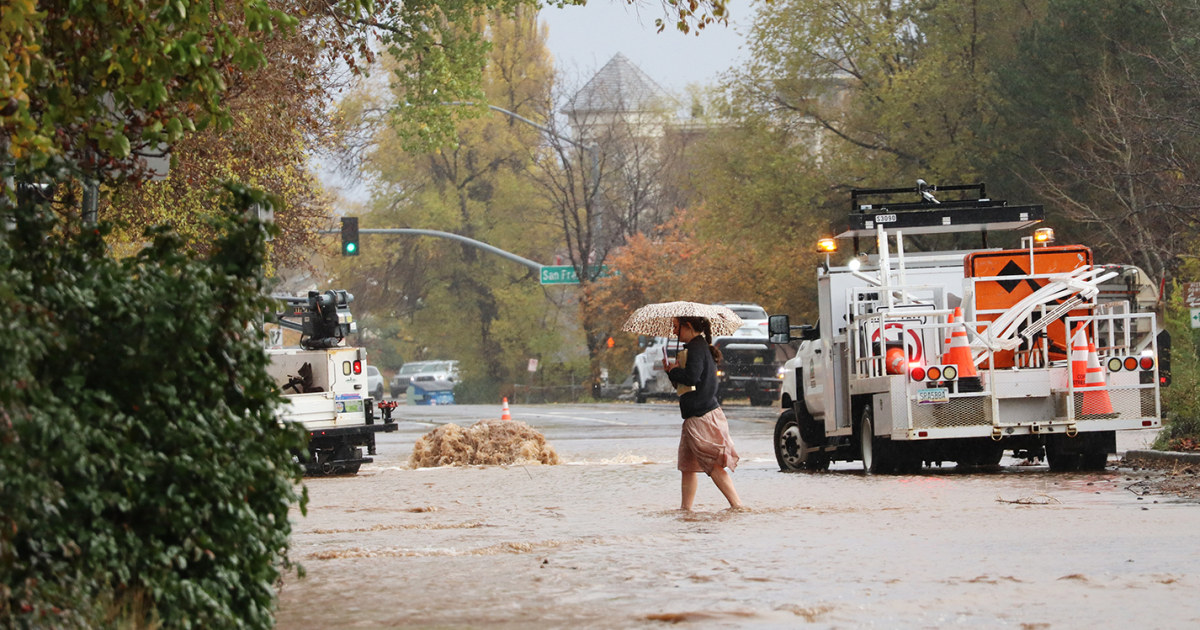
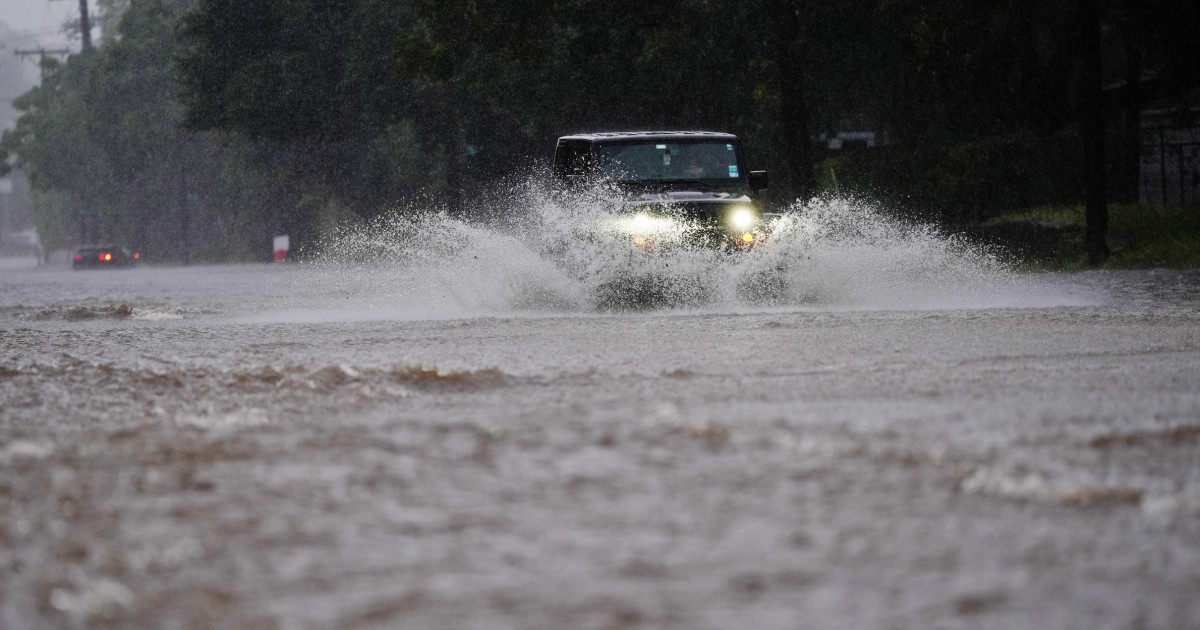
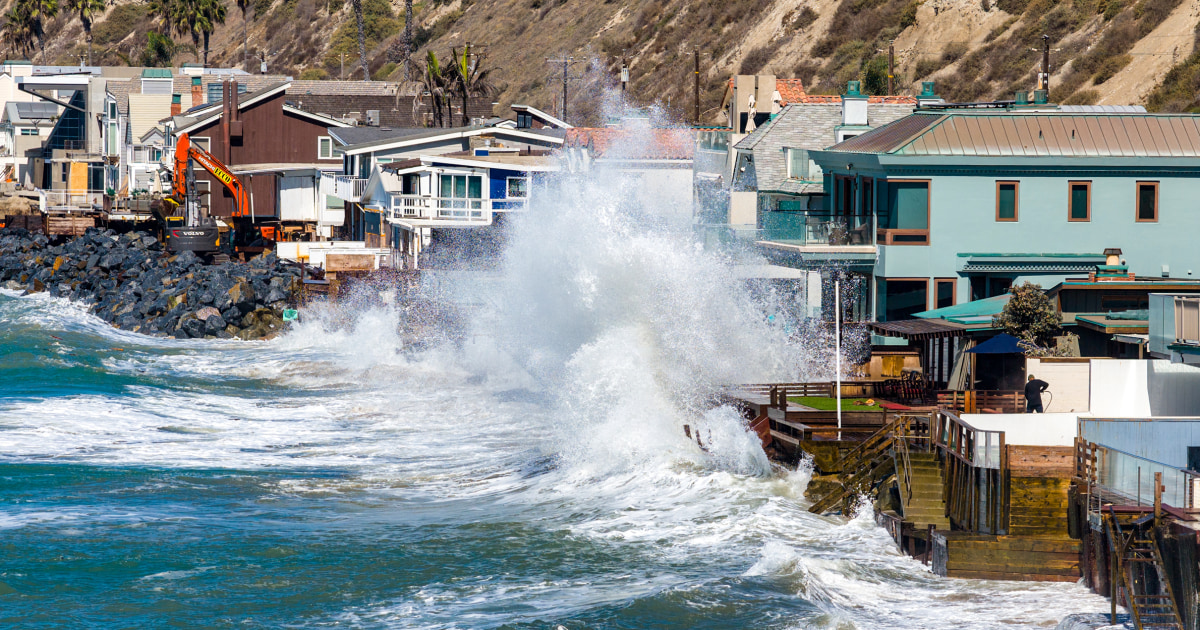
A storm system bringing severe weather including hurricane-strength winds and the risk of tornadoes is expected to hit parts of Texas, Kansas, Oklahoma, and Missouri on Monday, continuing with heavy rainfall across areas like Mississippi, Missouri, and western Tennessee on Election Day. Evan Bentley from the National Weather Service Storm Prediction Center warned about potential power outages due to wind speeds exceeding 75 mph in North Texas and Oklahoma. The weather could affect voter turnout, especially in states with tight Senate races, though experts suggest that while rain can modestly reduce turnout, its impact is likely minimal compared to institutional voting changes over time.
Written by AI on 2026-11-03, from this article's own text only (the story summary below draws on all the coverage).

AI analysis

Story summary

Forecasters predict severe storms with thunderstorms, heavy rainfall, and possible tornadoes will hit parts of Texas and Kansas on Election Day, potentially affecting voter turnout in critical races. Bob Oravec from the National Weather Service’s Weather Prediction Center warns that north central Texas could face severe conditions, impacting the U.S. Senate race between Democrat James Talarico and Republican Ken Paxton. While the impact of weather on election outcomes is expected to be minimal, concerns remain about infrastructure damage and power outages from hurricane-strength winds exceeding 75 mph in North Texas and Oklahoma.

Written for “Storms Expected for Election Day” on 2026-11-03, grounded in this article and the 1 other(s) covering the same event.
Why this leaning score
This article does not take a side on a contested political question, so it has no leaning score. That is an answer rather than a gap: a match report or a rescue can be warmly or critically written without being left or right, and scoring it anyway is how approval of a subject gets recorded as a political position.
No political leaning scored for article 123819 · logged 2026-11-03

Story

📰 Storms Expected for Election Day
Politics · 2 article(s) covering the same event. See how they differ ↓

Compared with similar articles

This article reads unscored and hedges 21% of its claims. Each row says how that neighbour differs.
NBC News
Hedges 7 of 21 claims Outlet record 60/100
The Independent
Hedges 7 of 30 claims Outlet record 59/100
“Both articles discuss weather conditions for election day in the central U.S., but they are general forecasts rather than reports on a single, specific storm incident.”
How this article was measured signals, leaning charts, publisher record, byline, topics and claims

Signals How these are calculated →

Claims extracted
29
sentences that state something as happening or true
Uncertain
21%
6 of 29 hedged ("reportedly", "may", "according to")
Leaning
not political
takes no side on a contested political question
Publisher signals
60/100
NBC News's corrections and hedging, across everything collected from it. Not a measure of accuracy.
Outlets on this story
2
Politics
Same framing elsewhere
1
articles that frame the event the way this one does
Analyzed 2026-11-03 · how these are computed

How this is being covered How these are calculated →

Article leaning vs. publisher reliability
Source leaning vs. consistency

Publisher

NBC News · 2025 article(s) · 1 correction(s) detected
Running correction rate · 1 correction(s)

Who wrote this

Evan Bush
7 article(s) here · 1 carrying a prediction
🔮 Soggy, dreary weather is expected to hit the central U.S. as voters head to the polls Tuesday, but experts said the impact on the electoral outcome is expected to be minimal.
🔮 Stormy, wet weather is expected to hammer the central U.S. on Election Day, with the spiciest forecasts for states with some of the hottest races — including Texas, Kansas and Iowa.
🔮 The low-producing wells the rollback would affect (also called stripper wells) produce about 7% to 8% of U.S. natural gas, but they could account for about 50% of the methane that leaks into the atmosphere, research suggests.
🔮 The children’s aid organization UNICEF on Tuesday said its analysis suggests hundreds of millions of children could be exposed to dangerous conditions as a result of the climate pattern, which raises the risk of intense precipitation in some areas and drought in others.
🔮 “Calls came in faster than dispatch could manage or assign them.”
🔮 Leopardus tilcayo might have continued to escape notice if not for Nogales-Ascarrunz’s sharp eyes.
🔮 The Environmental Protection Agency announced Monday that it will roll back emissions limits on coal- and gas-fired power plants — one of the Trump administration’s most significant moves yet to undo the climate policies enacted under Presidents Joe Biden and Barack Obama.
Also by Evan Bush
Nothing else under this byline is closely related to this article, so these are simply their most recent.
All 7 articles by Evan Bush →

Topics

Kansas Missouri Oklahoma Texas U.S.

Subjects

Gomez PERSON · 4× Kansas GPE · 3× Oklahoma GPE · 3× Texas GPE · 3× U.S. GPE · 3× Bentley PERSON · 2× Missouri GPE · 2× Evan Bentley PERSON · 1× Norman GPE · 1× the National Weather Service Storm Prediction Center ORG · 1×

Narrative

“We’ve got some moisture that’s moving up into parts of Texas and Oklahoma and up into Kansas and Missouri, and with that moisture, we’re going to have a chance of storms,” said Evan Bentley, the warning coordination meteorologist for the National Weather Service Storm Prediction Center in Norman, Oklahoma.
framing: mixed · carried by 1 article(s) · first seen 2026-11-03
🔮 Soggy, dreary weather is expected to hit the central U.S. as voters head to the polls Tuesday, but experts said the impact on the electoral outcome is expected to be minimal.

Claims (29 extracted, 6 hedged)

Soggy, dreary weather is expected to hit the central U.S. as voters head to the polls Tuesday, but experts said the impact on the electoral outcome is expected to be minimal. asserted
impact → expect → outcome
Still, weather could become a closely watched factor in a few tight races in Texas and the Midwest. uncertain
weather → become → Texas
On Monday, a storm system is expected to move through the central U.S., with hurricane-strength winds, the risk of tornadoes, hail and heavy rainfall. asserted
system → expect → tornadoes
“We’ve got some moisture that’s moving up into parts of Texas and Oklahoma and up into Kansas and Missouri, and with that moisture, we’re going to have a chance of storms,” said Evan Bentley, the warning coordination meteorologist for the National Weather Service Storm Prediction Center in Norman, Oklahoma. asserted
Bentley → get → Norman
“We have plenty of energy available to support severe weather, including damaging winds and perhaps a few tornadoes.” asserted
We → have → winds
Bentley said North Texas and Oklahoma could see straight-line winds in excess of 75 mph on Monday, raising some concern about power outages. “There’s always concern, when we have the potential for winds of 70 to 80 miles per hour, of having impacts on infrastructure, such as power lines,” Bentley said, though he added that this type of weather was not uncommon in the region. uncertain
type → say → region
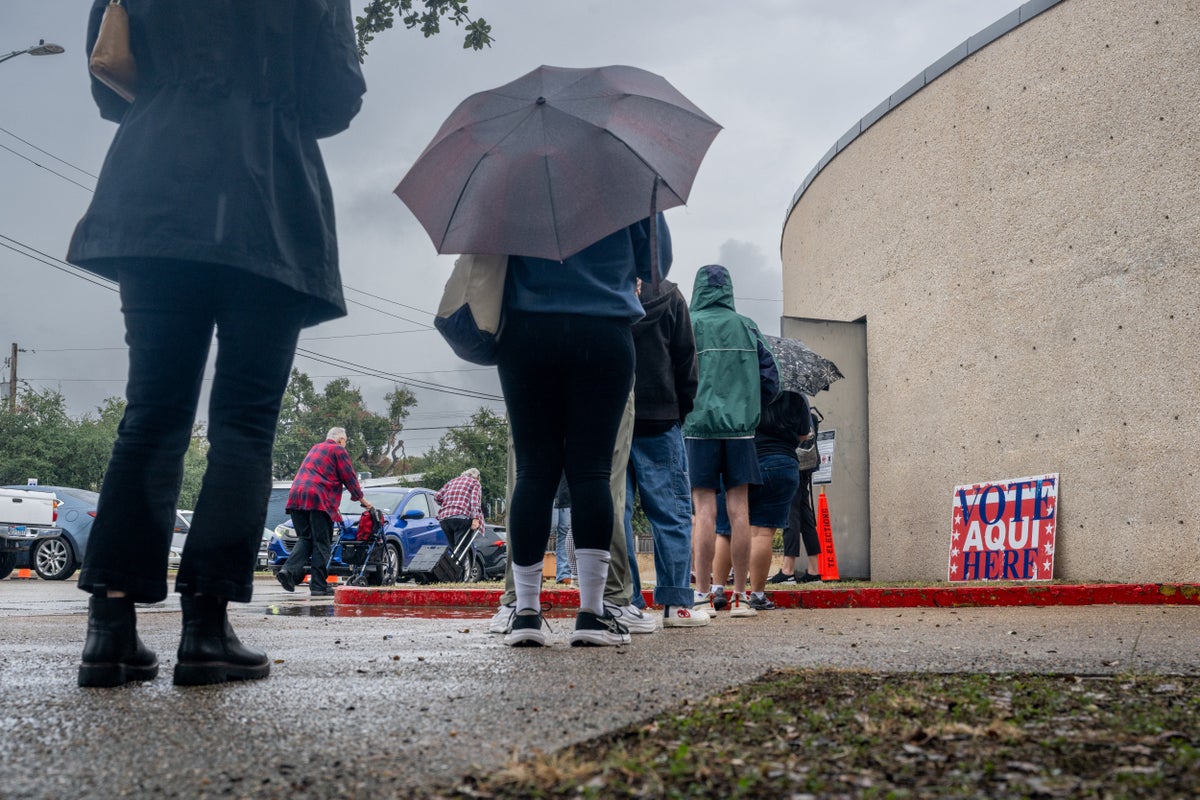
The weather’s effect on voter turnout will be watched closely by campaigns seeking to draw as many supporters as possible to polling places. asserted
effect → watch → places
Kansas and Texas, which could both be affected by the storms Monday, have hotly contested Senate races. uncertain
which → affect → races
The storm system will move east Tuesday, with heavy rainfall possible in Mississippi, Missouri and western Tennessee. asserted
rainfall → move → Mississippi
On Election Day, “scattered flash floods are possible” in the lower Mississippi River valley and into areas such as Memphis, said Jennifer Tate, a meteorologist with the National Weather Service Weather Prediction Center in College Park, Maryland. asserted
Tate → say → Park
Much of the rest of the central U.S. — from East Texas to the Midwest — can expect wet, dreary weather on Election Day. asserted
Much → expect → Day
“There still could be some locally heavy amounts in Iowa,” Tate said of rainfall. uncertain
Tate → say → rainfall
“Hopefully not anything that would impact travel too much.” asserted
that → impact → travel
Election Day weather on the West Coast looks fairly pleasant, with pockets of rainfall in Northern California. asserted
weather → look → California
The East Coast looks clear, also, with some rainfall expected in Florida and Maine. asserted
rainfall → look → Florida
Rainfall has been shown to have a modest effect on voter turnout in analyses of voting data. asserted
Rainfall → show → data
Researchers have analyzed past elections for trends in how unusually heavy rainfall might have suppressed voter turnout in historical elections. uncertain
rainfall → analyze → elections
Brad Gomez, an associate professor of political science at Florida State University, was part of a team that analyzed presidential elections from 1948 to 2000. asserted
that → analyze → 2000
“What we found was that for every inch of rain that a county received above its average amount of rainfall, voter turnout went down about eight-tenths of 1 percentage point,” Gomez said. asserted
Gomez → find → rainfall
But Gomez said there have been institutional changes in voting that make it hard to estimate whether that effect will carry through today. asserted
effect → say → today
“Many states started to adopt early voting, and, of course, some states, like Washington and Oregon, started to adopt mail-in voting,” Gomez said. asserted
Gomez → start → voting
“Nationally, the U.S. Election Assistance Commission estimates that today only about 37% of Americans actually vote on Election Day.” asserted
% → estimate → Day
That means weather disruptions affect a much smaller slice of voters now than they did before the year 2000. asserted
they → mean → year
Early voting trends could mean weather disruptions are more impactful in some states than others. uncertain
disruptions → mean → others
Gomez said only about 20% of Texans cast their ballots in person on Election Day in the 2024 election. asserted
% → say → election
Thomas Fujiwara, an associate professor of economics at Princeton University who has studied the issue and written about it in academic papers, said the effect of rainfall on turnout has decreased over time. asserted
effect → study → time
“It was stronger in the ’50s and ’60s, and it’s weaker now,” Fujiwara said. asserted
Fujiwara → ’ → 60s
“We shouldn’t think of rain being a major driver.” asserted
rain → think → ?
Both Fujiwara and Gomez said it would be hard to predict which party stands to gain from rain, given the relatively recent changes to how people vote. asserted
people → say → changes

💬Give feedback
🕘History 🎫Support