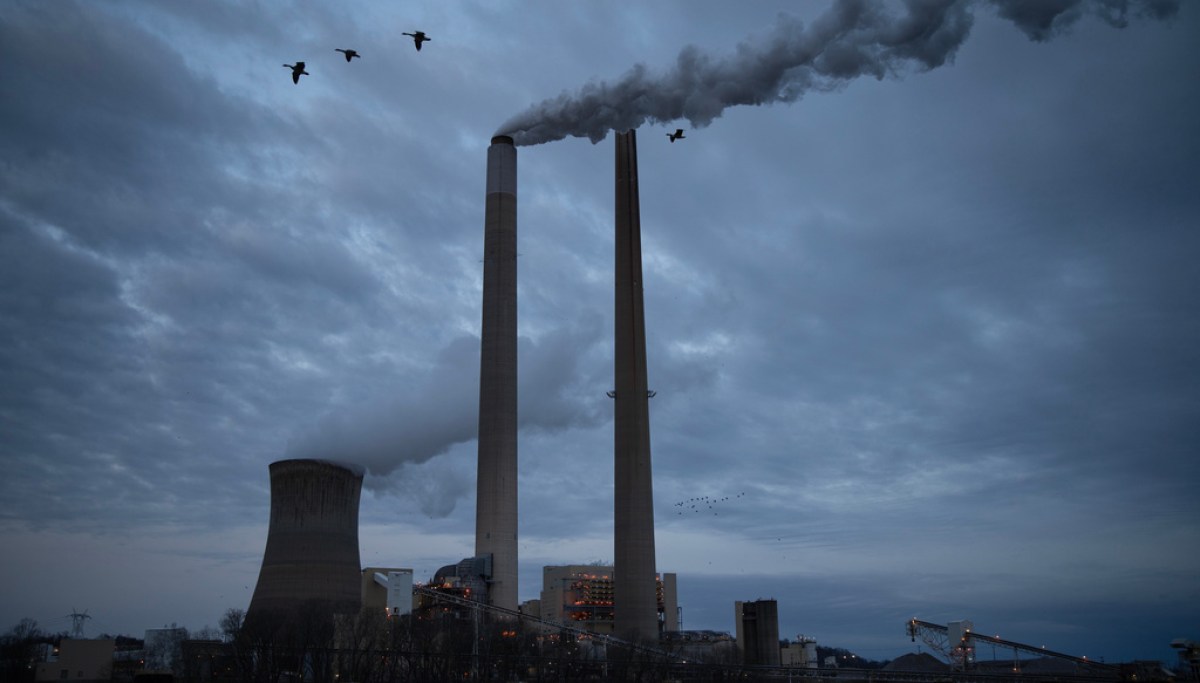
Photo via Washington Examiner

We won World War II faster than we can plug in a power plant

Read the original at Washington Examiner ↗
Cite

Bond, D. (2026, November 2). We won World War II faster than we can plug in a power plant. Washington Examiner. https://www.washingtonexaminer.com/op-eds/4785980/energy-permitting-reform-affordability-act-power-plants/

Dated from the outlet's own feed. Check the original for its byline.

Washington Examiner · collected 2026-11-02 · by Drew Bond

Quick Summary

The article discusses historical energy sources in the United States, highlighting how timber, coal, and oil fueled development from pre-colonial times through the Industrial Revolution. It emphasizes the rapid progress made during World War II as a comparison to current energy infrastructure projects, suggesting that today’s energy developments are notably slower despite technological advancements.
Written by AI on 2026-11-02, from this article's own text only (the story summary below draws on all the coverage).

AI analysis

Story summary

The United States has a long history of leading in energy development, starting with timber reserves before the country's formation, which were used for ship masts, housing logs, and fuel. Coal and petroleum, abundant and far from exhausted, then powered an industrial revolution that drove economic growth across expanding U.S. territories. The Washington Examiner highlights this narrative to underscore America’s enduring energy resources and their historical impact on economic development.

Written for “World War II Analogies” on 2026-11-02, grounded in this article and the 0 other(s) covering the same event.
Why this leaning score
This article does not take a side on a contested political question, so it has no leaning score. That is an answer rather than a gap: a match report or a rescue can be warmly or critically written without being left or right, and scoring it anyway is how approval of a subject gets recorded as a political position.
No political leaning scored for article 123484 · logged 2026-11-02

Story

📰 World War II Analogies
Politics · 1 article(s) covering the same event.

Compared with similar articles

Nothing to compare against. No article is close enough to this one for the pipeline to have linked or judged the pair.
How this article was measured signals, leaning charts, publisher record, byline, topics and claims

Signals How these are calculated →

Claims extracted
2
sentences that state something as happening or true
Uncertain
0%
0 of 2 hedged ("reportedly", "may", "according to")
Leaning
not political
takes no side on a contested political question
Publisher signals
70/100
Washington Examiner's corrections and hedging, across everything collected from it. Not a measure of accuracy.
Outlets on this story
1
Politics
Same framing elsewhere
1
articles that frame the event the way this one does
Analyzed 2026-11-02 · how these are computed

How this is being covered How these are calculated →

Article leaning vs. publisher reliability
Source leaning vs. consistency

Publisher

Washington Examiner · 3951 article(s) · 7 correction(s) detected
Running correction rate · 7 correction(s)

Who wrote this

Drew Bond
1 article(s) here · 0 carrying a prediction
The only article under this byline in the corpus.

Topics

The United States U.S.

Subjects

The United States GPE · 1× U.S. GPE · 1×

Narrative

Later, our mountains of coal (which are still nowhere near exhausted) and oceans of petroleum powered an industrial revolution that drove economic growth throughout the expanding U.S.
framing: assertive · carried by 1 article(s) · first seen 2026-11-02
2026-11-02 · Washington Examiner
We won World War II faster than we can plug in a power plant · assertive framing

Claims (2 extracted, 0 hedged)

Before we were even a country, North America’s vast timber reserves provided masts for sailing ships, logs for housing, and fuel for heating and manufacturing. asserted
reserves → provide → heating
Later, our mountains of coal (which are still nowhere near exhausted) and oceans of petroleum powered an industrial revolution that drove economic growth throughout the expanding U.S. asserted
that → power → U.S.
💬Give feedback
🕘History 🎫Support