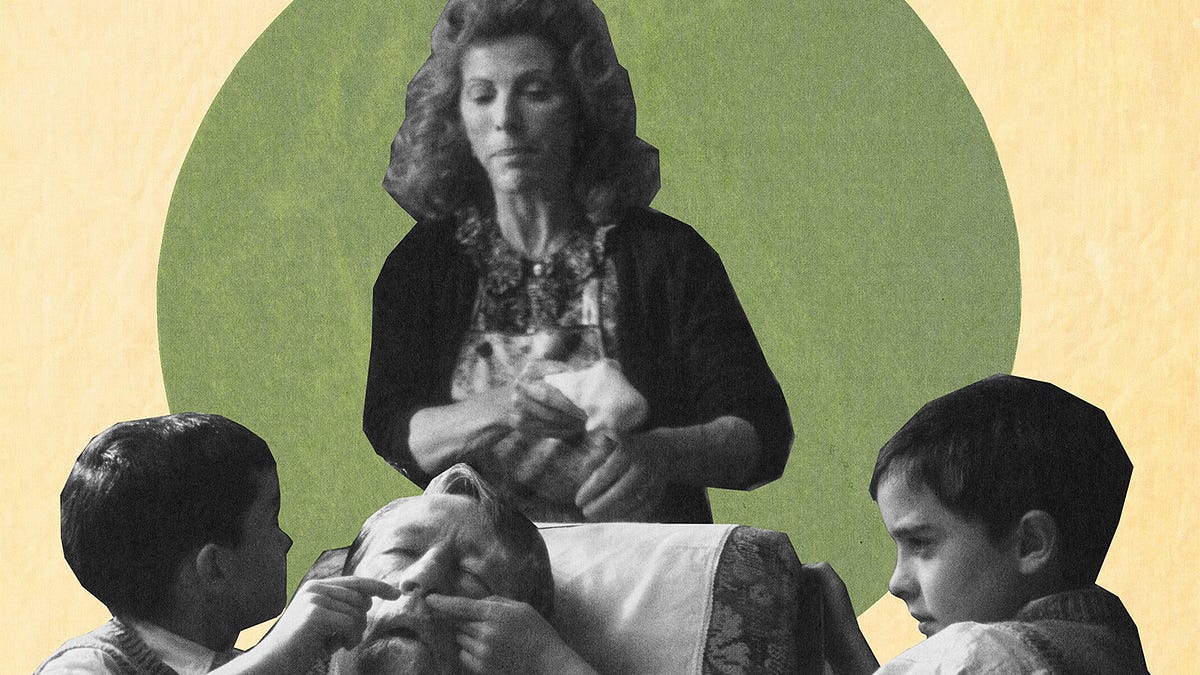
Photo via The Free Press

How to Raise a Reader

Read the original at The Free Press ↗
Cite

Brooks, A. (2026, November 2). How to Raise a Reader. The Free Press. https://www.thefp.com/p/how-to-raise-a-reader

Dated from the outlet's own feed. Check the original for its byline.

The Free Press · collected 2026-11-02 · by Arthur Brooks

Quick Summary

The author reflects on the tradition of nightly family readings from their childhood, emphasizing how it shaped a love for literature and learning. However, they argue that while today's children read extensively, primarily through digital means such as texts and social media posts, this form of reading is not contributing positively to their happiness or well-being, unlike the books and stories from previous generations.
Written by AI on 2026-11-02, from this article's own text only (the story summary below draws on all the coverage).

AI analysis

Story summary

Arthur Brooks, in a recent article, discusses the tradition of family reading which was believed to foster both literacy and happiness in children. This practice involved parents reading bedtime stories like Dr. Seuss and The Chronicles of Narnia to their kids, reinforcing values and knowledge through literature. However, Brooks argues that while today's youth are indeed reading more than ever before, the medium has shifted significantly from books to digital platforms such as texts, group chats, and websites. This change impacts how reading influences happiness and intelligence, with modern practices potentially diminishing rather than enhancing these qualities in young people.

Written for “How to Raise a Reader” on 2026-11-02, grounded in this article and the 0 other(s) covering the same event.
Why this leaning score
The model judged this article politically coded and scored it -0.45, but every quote it verified points right, so the score is not published.
Written under an earlier scoring contract, which gave a paragraph rather than checkable quotes. Re-analysing this article replaces it.
Leaning score withheld for article 123467: score contradicts its own evidence · logged 2026-11-02

Story

📰 How to Raise a Reader
Education · 1 article(s) covering the same event.

Compared with similar articles

Nothing to compare against. No article is close enough to this one for the pipeline to have linked or judged the pair.
How this article was measured signals, leaning charts, publisher record, byline, topics and claims

Signals How these are calculated →

Claims extracted
8
sentences that state something as happening or true
Uncertain
0%
0 of 8 hedged ("reportedly", "may", "according to")
Leaning
withheld
no quote in the article backed the model's score
Publisher signals
96/100
The Free Press's corrections and hedging, across everything collected from it. Not a measure of accuracy.
Outlets on this story
1
Education
Same framing elsewhere
1
articles that frame the event the way this one does
Analyzed 2026-11-02 · how these are computed

How this is being covered How these are calculated →

Article leaning vs. publisher reliability
Source leaning vs. consistency

Publisher

The Free Press · 415 article(s) · 0 correction(s) detected
No corrections detected for this publisher. That may mean careful reporting, or simply that nothing has been checked.

Who wrote this

Arthur Brooks
7 article(s) here · 1 carrying a prediction
🔮 This tradition of family reading was based on two assumptions: that our kids would grow up to be readers themselves, and that reading would make them happy and smart.
2026-11-02 · assertive framing · How to Raise a Reader
🔮 As a social scientist, I have quibbles about the experiment design: A proper study would compare different groups with varying degrees of power, in a treatment and control format.
2026-10-26 · assertive framing · Arthur Brooks: You Are Not the Victim
🔮 This column is named for the Declaration’s founding promise, so you’d hope that I would know something about exactly how to pursue happiness.
2026-10-11 · assertive framing · Arthur Brooks: Don’t Pursue Happiness
🔮 At the time, I wondered less about his decision, and more about how someone could possibly do a job like that for 19 grueling years and maintain his sanity.
🔮 And it was practical, as well: They are having children at an alarming rate, and could use some help with their kids.
🔮 For all the horror of that day, however, most of us will also remember something very positive that happened in the immediate aftermath: America came together.
2026-09-14 · assertive framing · Arthur Brooks: Why Americans No Longer Grieve Together
🔮 According to a survey of college grads by the National Association of Colleges and Employers in 2023, when asked if they would go to college again, 91 percent say they would.
2026-09-08 · assertive framing · Arthur Brooks: How to Be Happy at College
Also by Arthur Brooks
Arthur Brooks: You Are Not the Victim
2026-10-26 · The Free Press
Arthur Brooks: Don’t Pursue Happiness
2026-10-11 · The Free Press
Nothing else under this byline is closely related to this article, so these are simply their most recent.
All 7 articles by Arthur Brooks →

Topics

No topics tagged.

Subjects

Adolf Hitler PERSON · 1× Dr. Seuss PERSON · 1× Yertle PERSON · 1× Yertle the Turtle PERSON · 1×

Narrative

This tradition of family reading was based on two assumptions: that our kids would grow up to be readers themselves, and that reading would make them happy and smart.
framing: assertive · carried by 1 article(s) · first seen 2026-11-02
🔮 This tradition of family reading was based on two assumptions: that our kids would grow up to be readers themselves, and that reading would make them happy and smart.
2026-11-02 · The Free Press
How to Raise a Reader · assertive framing

Claims (8 extracted, 0 hedged)

When I was a kid, my dad read to my brother and me almost every night before bed. asserted
dad → read → bed
Dad literally knew Yertle the Turtle by heart. asserted
Dad → know → heart
When my kids were little, we read many of the same things together as a family, giving me a new perspective on these old stories. asserted
we → read → stories
Who knew that Yertle was actually a fable against Adolf Hitler? asserted
Yertle → know → Hitler
This tradition of family reading was based on two assumptions: that our kids would grow up to be readers themselves, and that reading would make them happy and smart. asserted
them → base → assumptions
Kids are reading a lot, but it is making their lives worse, not better. asserted
lives → read → lot
This is because of what they are reading: texts, group chats, captions, comments, posts, search results, and websites. asserted
they → read → texts
Thousands upon thousands of words of information harvested during multiple hours spent online every day. asserted
thousands → harvest → hours
💬Give feedback
🕘History 🎫Support