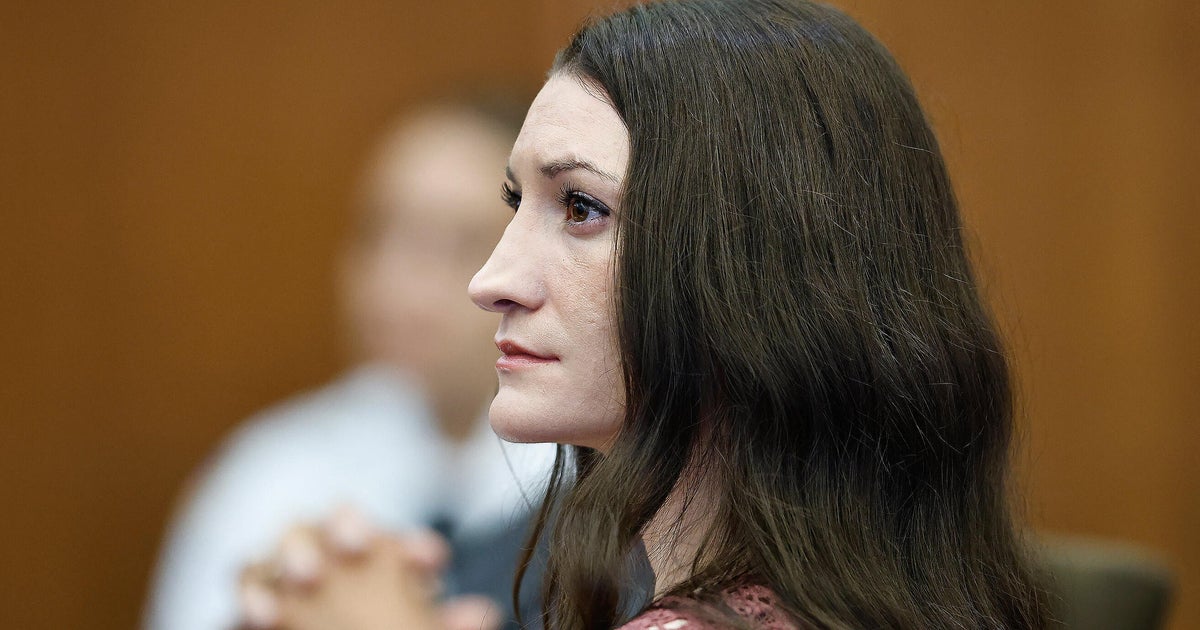
Lindsay Clancy returns to court Monday in a bid to dismiss the charges that she murdered her three young children.
asserted
she → return → children
The hearing Monday is the second time the Massachusetts mother has been in court since her trial ended with a deadlocked jury in September after jurors were unable to agree on a verdict.
asserted
jurors → end → verdict
Prosecutors have yet to announce whether they plan to retry Clancy.
asserted
they → have → Clancy
They could choose to retry her on first-degree murder charges or pursue lesser charges, including second-degree murder or manslaughter, or drop the case entirely.
uncertain
They → choose → case
Clancy has never disputed killing her three young children in 2023, but her lawyer has argued she had postpartum psychosis and was unable to control her behavior.
asserted
she → dispute → behavior
Prosecutors have acknowledged that the 36-year-old Clancy had mental health problems but said she acted deliberately and understood her actions were wrong.
asserted
actions → acknowledge → problems
EDITOR’S NOTE: This story includes discussion of suicide.
asserted
story → include → suicide
If you or someone you know needs help, the national suicide and crisis lifeline in the U.S. is available by calling or texting 988.
asserted
lifeline → know → 988
___
The focus at Monday's hearing in front of Judge William Sullivan is expected to be on a motion from the defense to dismiss the charges on double jeopardy grounds.
asserted
focus → expect → grounds
They argue that the court did not need to declare a mistrial.
asserted
court → argue → mistrial
Instead, it could have questioned the lone holdout juror Michael Desronvil, or the jury foreperson, regarding reports that he was refusing to follow court instructions with regards to reasonable doubt and failing to follow the law as he was instructed.
uncertain
he → question → law
That could have led to Desronvil being removed, thus avoiding the need for a mistrial.
uncertain
Desronvil → lead → mistrial
Since the trial ended, Desronvil said he was certain of Clancy's guilt but that no one would listen to him.
asserted
one → end → him
Prosecutors, in their motion to dismiss, argue that double jeopardy “does not bar the Commonwealth from seeking justice on behalf of the three victims.”
asserted
jeopardy → dismiss → victims
They argue it was unnecessary to investigate Desronvil, whom they don't name but describe as the dissenting juror, because the foreperson complaint did not allege “any personal issue, bias, or extraneous attributable to the dissenting juror.”
asserted
complaint → argue → juror
Singling that juror out, they argued, for an investigation “surely would have led to judicial coercion” and the “impermissible intrusion into the substance of the jury's private deliberations.”
asserted
they → single → deliberations
The other motion expected to be discussed is the Commonwealth's request for a gag order that would bar attorneys and their supporters “from making extrajudicial statements to the media that would have a substantial likelihood of materially prejudicing the criminal proceeding.”
asserted
that → expect → proceeding
Attorney Kevin Reddington has given a series of interviews since the mistrial and held walking news conferences almost every day during the proceedings.
asserted
Reddington → give → proceedings
Prosecutors, in contrast, never talked to reporters.
asserted
Prosecutors → talk → reporters
In response, Clancy's lawyers said this motion would amount to prior restraint since it is barring speech before it occurs.
asserted
it → say → speech
“The government bears a heavy burden to justify such an order,” Laura McConnell, who was hired by Clancy's defense team, wrote.
asserted
who → bear → team
“There is no jury and it is unknown whether one will ever be impaneled.
asserted
one → be → ?
The motion should be denied.”
asserted
motion → deny → ?
 The Aporia