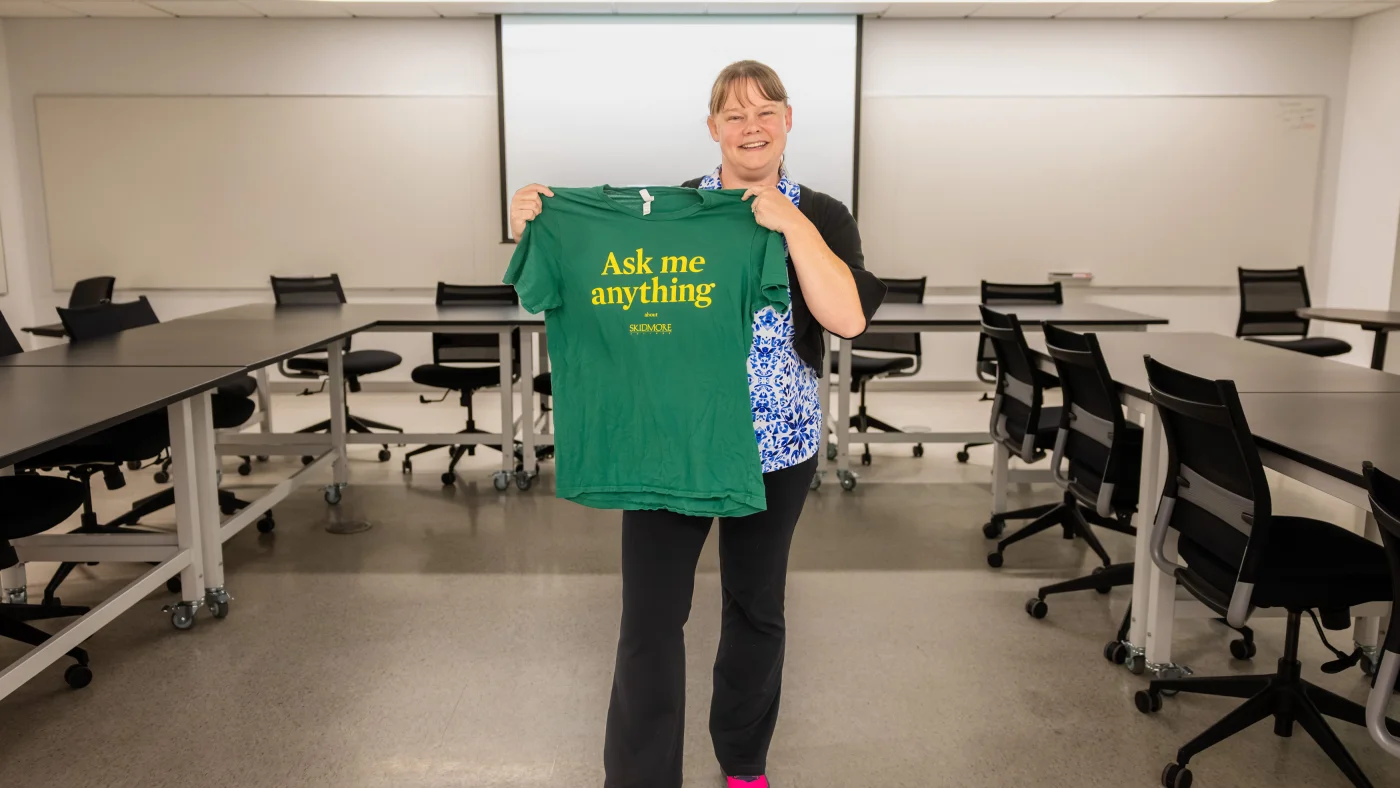
With students scarce, college admissions offices get friendlier, less intimidating
asserted
offices → get → ?
With students scarce, college admissions offices get friendlier, less intimidating
SARATOGA SPRINGS, N.Y. — Overwhelming.
asserted
offices → get → ?
That's how 17-year-old high school senior Alex Zaret described the college admissions process, during a tour of the Skidmore College campus — the fourth school Zaret had visited, with another half-dozen to go.
asserted
Zaret → describe → dozen
"It is kind of a full-time job," Zaret's father, Owen, said.
asserted
father → say → ?
He wasn't joking.
asserted
He → joke → ?
With research to do, visits to make and applications and financial forms to fill out, "it's a lot, and it's a lot on top of two full-time-employed parents and a very engaged high school student," Owen Zaret said.
asserted
Zaret → do → parents
But even in the year or so that the family has been doing this, the Zarets have detected a subtle shift.
asserted
Zarets → do → shift
At first, the process seemed to be what Owen Zaret called an ivory tower approach.
asserted
Zaret → seem → what
It signaled: "'You're lucky if you come here.'
asserted
you → signal → ?
And now, I think, for a variety of reasons, that's changed.
asserted
that → think → reasons
It's more like, 'We want you to be here.'
asserted
you → want → ?
Hurting for students, colleges are striving to transform an admissions process that has often been intimidating, secretive and stressful into an experience that's open, easier and downright friendly.
"
asserted
that → hurt → experience
It's one of those things that's in everybody's interest," said Marc Conner, president of Skidmore, which has been making a particular push to do this.
asserted
which → say → this
Even though application and enrollment data show his college is not among the many others having trouble filling seats, he said, "We depend on students coming to our campuses and, when they do come, getting them to enroll."
asserted
them → show → campuses
Some universities and colleges are waiving application fees and promising additional financial aid for students who show up for campus tours.
asserted
who → waive → tours
Public universities in 17 states now admit high school students who haven't even applied, according to the Education Commission of the States; more than 150 private colleges also make direct admissions offers to students who fill out the Common App, a standardized online application used by about 1,200 institutions.
uncertain
who → admit → institutions
And the overall odds of getting accepted to college are going up.
asserted
odds → accept → college
Now Skidmore and a small number of other institutions have taken a surprising next step: enlisting faculty to help recruit new students — a role they previously left entirely to the admissions office — by meeting with and opening their labs and classrooms to prospective and admitted applicants.
asserted
they → take → applicants
"It creates a feeling of what it would be like to be seen, valued and to find a place of belonging on a campus," said Jess Ricker, the college's vice president for enrollment.
asserted
Ricker → create → enrollment
And that, Ricker said, can help distinguish Skidmore from the other schools on students' lists.
asserted
Ricker → say → lists
Admissions leaders are looking for any advantage.
asserted
leaders → look → advantage
Two-thirds of them had trouble meeting their enrollment targets in at least one of the last two years, according to a survey by the ratings platform Niche.
uncertain
thirds → have → platform
Ninety-seven percent expect the competition to increase.
asserted
competition → expect → ?
The reality they face: The supply of traditional-age freshmen nationwide is projected to decline by 13 percent over the next 15 years, according to the Western Interstate Commission for Higher Education.
uncertain
supply → face → Education
The proportion of high school graduates choosing to go on to college is also down, from 70% in 2016 to 63% in 2024, the most recent year for which the figure is available, the Bureau of Labor Statistics reports.
asserted
Bureau → choose → Statistics
Good news for students, not colleges
One little-noticed result: Being accepted to college is generally easier than it has been in the past and than Americans seem to think it is.
asserted
it → notice → past
Nearly 8 in 10 first-year applicants for undergraduate admission to public and 7 in 10 to private colleges and universities get in, the National Association for College Admission Counseling, or NACAC, reports.
asserted
Association → get → Counseling
Nearly 9 in 10 private, nonprofit four-year universities and colleges admit half or more of applicants, according to separate research by the conservative think tank the American Enterprise Institute.
uncertain
universities → admit → tank
This news has been slow to trickle down to students.
asserted
news → trickle → students
More than 40% of 18- to 29-year-olds wrongly think it's harder to get into college than it was for people in their parents' generation, a Pew Research Center survey found.
asserted
survey → think → generation
"Most of the public actually doesn't understand that the majority of institutions in the United States actually accept the majority of students who apply," said Angel Pérez, NACAC's CEO.
asserted
Pérez → understand → students
He blamed an obsession with acceptance rates at institutions such as CalTech, Harvard, Princeton and Stanford, which each take about 1 applicant in 25.
asserted
which → blame → 25
In fact, only 33 colleges and universities in the country admit 10% or fewer of their undergraduate applicants, NACAC figures show.
asserted
figures → admit → applicants
The intensifying competition for them might be good for students, but it's bad for many colleges.
uncertain
it → intensify → colleges
At some, offices of admission are struggling to shake what Ricker joked is their historic reputation as "offices of rejection."
asserted
Ricker → struggle → rejection
A few, including Skidmore, are appealing to the faculty for help.
asserted
few → include → help
At Ohio Northern University, at least one member of the faculty now meets with every visiting applicant.
asserted
member → meet → applicant
Faculty at Washington College in Maryland sit down with visiting applicants on designated Fridays during the admissions season and at open houses.
asserted
Faculty → sit → houses
"Presidents and vice presidents of enrollment are telling people that every interaction counts." said Rob Springall, a consultant at the executive search firm WittKieffer and former executive director of undergraduate admissions at Pennsylvania State University.
asserted
Springall → tell → University
There's another reason for this that's less widely understood among consumers.
asserted
that → be → consumers
…and 28 more, not listed.
 The Aporia