Photo via Toronto Star

A brief ceasefire opens a perilous escape window from Kherson’s riverside kill zone

Read the original at Toronto Star ↗
Cite

Arhirova, H., & Yurchuk, V. (2026, November 2). A brief ceasefire opens a perilous escape window from Kherson’s riverside kill zone. Toronto Star. https://www.thestar.com/news/world/europe/a-brief-ceasefire-opens-a-perilous-escape-window-from-kherson-s-riverside-kill-zone/article_a233d7c1-b101-5dd0-a488-24781e7d4311.html

Dated from the outlet's own feed. Check the original for its byline.

Toronto Star · collected 2026-11-02 · by Hanna Arhirova, Volodymyr Yurchuk

Quick Summary

A brief ceasefire beginning on October 27 allowed Ukrainian civilians in the Kherson region to evacuate temporarily; it enabled Nataliia Diadiuk and other residents of Kozatske, a village near Russian-controlled territory, to escape their perilous conditions. During this period, about 180 people, including 23 children, were evacuated from riverside communities and the city of Kherson. With the ceasefire now over, residents face renewed threats from drones, artillery, glide bombs, and mines. The region, which was home to around one million people before the war, currently has approximately 140,000 remaining in areas still held by Ukraine, highlighting the ongoing humanitarian crisis.
Written by AI on 2026-11-02, from this article's own text only (the story summary below draws on all the coverage).

AI analysis

Story summary

As of November 2, 2026, a brief ceasefire that began on October 27 ended Sunday night in Kherson, Ukraine, offering temporary relief to civilians trapped in the conflict zone. Ukrainian resident Nataliia Diadiuk, 53, from the riverside village of Kozatske—located less than 1.2 miles from a Russian-controlled area—used white flags and towels to signal her civilian status to drone operators during this precarious lull in hostilities.

Diadiuk's daily existence is marked by basic survival needs: collecting rainwater for drinking, scavenging firewood, tuning into radio news, and occasionally receiving humanitarian aid that had not reached her in two years. With the ceasefire over, residents like Diadiuk will again face relentless attacks including drones, artillery, glide bombs, and airdropped mines.

Written for “Ceasefire Allows Escape From Kherson” on 2026-11-02, grounded in this article and the 0 other(s) covering the same event.
Why this leaning score
This article does not take a side on a contested political question, so it has no leaning score. That is an answer rather than a gap: a match report or a rescue can be warmly or critically written without being left or right, and scoring it anyway is how approval of a subject gets recorded as a political position.
No political leaning scored for article 122483 · logged 2026-11-02

Story

📰 Ceasefire Allows Escape From Kherson
World · 1 article(s) covering the same event.

Compared with similar articles

This article reads unscored and hedges 0% of its claims. Each row says how that neighbour differs.
The Independent
Hedges 2 of 24 claims Outlet record 59/100
“The articles describe different ceasefire situations in distinct Ukrainian locations, Oleshky and Kozatske/Kherson region.”
CBS News
⚖️ Leans left Hedges 2 of 34 claims Outlet record 66/100
“The articles describe different events happening in distinct locations and times, with Article A reporting Russian strikes on multiple Ukrainian cities resulting in casualties, while Article B focuses on a brief ceasefire allowing residents of Kozatske to have respite.”
CBC News
Hedges 2 of 35 claims Outlet record 60/100
“Article A describes the evacuation of civilians from Russian-occupied Oleshky to Belarus, while Article B focuses on a resident's experience during the ceasefire in Kozatske, another village in the Kherson region.”
New York Post
⚖️ Leans left Hedges 3 of 27 claims Outlet record 66/100
“The articles describe similar situations but are likely about different cities or villages within the Kherson region of Ukraine, with Article A focusing on Oleshky and Article B focusing on Kozatske.”
Toronto Star
Hedges 1 of 57 claims Outlet record 64/100
“While both articles discuss a ceasefire in Kherson, Article A focuses on the broader impact of the truce across the city, while Article B centers on a resident's experience in a specific village during the ceasefire.”
BBC News
⚖️ Leans left Hedges 4 of 43 claims Outlet record 68/100
“While both articles describe a temporary ceasefire in Kherson, they are reporting on different time periods and locations within the broader event.”
The Guardian
Hedges 2 of 26 claims Outlet record 66/100
“The articles describe different locations and circumstances: Oleshky for Article A and Kozatske near Kherson for Article B, with no indication that they are reporting on the same specific incident.”
Washington Examiner
⚖️ Leans left Hedges 0 of 4 claims Outlet record 70/100
“The articles describe different aspects of the situation in Kherson region, with Article A focusing on the evacuation of Oleshky and Article B detailing life in a nearby village during a brief ceasefire.”
Al Jazeera
Hedges 1 of 34 claims Outlet record 60/100
“The articles refer to a truce and evacuations in Kherson, but describe different aspects of the situation: one focuses on the general end of the truce and its impact, while the other details the experiences of individual civilians during a brief ceasefire.”
Toronto Star
Hedges 0 of 36 claims Outlet record 64/100
“The articles describe different phases of a broader ceasefire situation, but focus on distinct incidents and times — one on preparations as the ceasefire ends and another on civilian experiences during the ceasefire.”
How this article was measured signals, leaning charts, publisher record, byline, topics and claims

Signals How these are calculated →

Claims extracted
76
sentences that state something as happening or true
Uncertain
0%
0 of 76 hedged ("reportedly", "may", "according to")
Leaning
not political
takes no side on a contested political question
Publisher signals
64/100
Toronto Star's corrections and hedging, across everything collected from it. Not a measure of accuracy.
Outlets on this story
1
World
Same framing elsewhere
1
articles that frame the event the way this one does
Analyzed 2026-11-02 · how these are computed

How this is being covered How these are calculated →

Article leaning vs. publisher reliability
Source leaning vs. consistency

Publisher

Toronto Star · 11094 article(s) · 28 correction(s) detected
Running correction rate · 28 correction(s)
2026-10-26
Correction
2026-10-24
Correction
2026-10-07
Correction
2026-09-24
Correction

Who wrote this

Hanna Arhirova
17 article(s) here · 1 carrying a prediction
🔮 With the ceasefire over, residents will again face drones, artillery, glide bombs and airdropped mines.
🔮 The White House said U.S. first lady Melania Trump helped to broker the limited truce, which began early Tuesday and is expected to end Sunday evening.
🔮 Around half of the drones were heading to the Russian capital, Moscow Mayor Sergei Sobyanin said.
🔮 “It will be very hard if what we had comes back,” she said.
🔮 The localised truce in the devastated southern city of Oleshky began on Tuesday and is expected to run until Sunday.
🔮 He suggested, though, that the owner of the system — Musk — may have been involved.
🔮 Kushner, who is U.S. President Donald Trump’s son-in-law, will attend the meeting by videoconference.
🔮 The 40-year-old former hairdresser walked for 20 kilometres (12 miles) along the partially mined route, terrified that "every step could have been my last," she said.
🔮 So the 40-year-old former hairdresser walked — for 20 kilometers (12 miles), along the partially mined road — fearing that “every step could have been my last,” she said.
🔮 “How this will develop, who will make this decision, who influences these decisions, we can only guess,” he said.
Also by Hanna Arhirova
Nothing else under this byline is closely related to this article, so these are simply their most recent.
All 17 articles by Hanna Arhirova →
Volodymyr Yurchuk
4 article(s) here · 1 carrying a prediction
🔮 With the ceasefire over, residents will again face drones, artillery, glide bombs and airdropped mines.
🔮 The White House said U.S. first lady Melania Trump helped to broker the limited truce, which began early Tuesday and is expected to end Sunday evening.
🔮 Building the prototype interceptors in sufficient numbers, and training pilots to fly them, could take up to six months, manufacturers say.
🔮 Russian strikes killed three civilians and wounded dozens in Ukraine, local officials said Saturday, after Russian President Vladimir Putin warned that sending European troops into Ukraine would amount to direct conflict with Russia. Ukraine is under mounting pressure from Russia's intensifying air campaign that uses ballistic missiles and jet-powered drones to pierce defences.
Also by Volodymyr Yurchuk
Nothing else under this byline is closely related to this article, so these are simply their most recent.

Topics

KOZATSKE Kherson Russian Ukraine Ukrainian

Subjects

Diadiuk PERSON · 5× Russian NORP · 4× Ukrainian NORP · 4× KOZATSKE GPE · 3× Kherson GPE · 3× Oleshky GPE · 2× Ukraine GPE · 2× Nataliia Diadiuk PERSON · 1× The Associated Press ORG · 1× the Ukrainian Red Cross Society ORG · 1×

Narrative

Diadiuk’s life has been reduced to basic survival: rainwater to drink, firewood gathered around town for heat, a radio she tries to tune in to for news, and the remnants of humanitarian aid that had not reached her in two years until the brief ceasefire that ended Sunday night just days after it began.
framing: assertive · carried by 1 article(s) · first seen 2026-11-02
🔮 With the ceasefire over, residents will again face drones, artillery, glide bombs and airdropped mines.

Claims (76 extracted, 0 hedged)

KOZATSKE, Ukraine (AP) — A white towel on her gate and a white rag in her hand were Ukrainian Nataliia Diadiuk’s only ways to tell Russian drone operators she is a civilian. asserted
she → tell → operators
When a brief ceasefire kicked in on Oct. 27, she had a moment of respite. asserted
she → kick → respite
The 53-year-old is one of a handful of residents left in Kozatske, a riverside village located in the kill zone of Ukraine’s Kherson region less than 2 kilometers (1.2 miles) from a Russian-controlled area. asserted
old → leave → area
“I really want silence,” Diadiuk said, fighting back tears as she stood on an empty street lined with abandoned houses. asserted
she → want → houses
“And I want to see the people who left, all of them.” asserted
who → want → them
People left for both sides. asserted
People → leave → sides
Diadiuk’s life has been reduced to basic survival: rainwater to drink, firewood gathered around town for heat, a radio she tries to tune in to for news, and the remnants of humanitarian aid that had not reached her in two years until the brief ceasefire that ended Sunday night just days after it began. asserted
it → reduce → ceasefire
Going out means dodging every kind of weapon, including mines scattered everywhere. asserted
Going → go → mines
The neighbors she mentions are more often the dead than the few still living nearby. asserted
she → mention → few
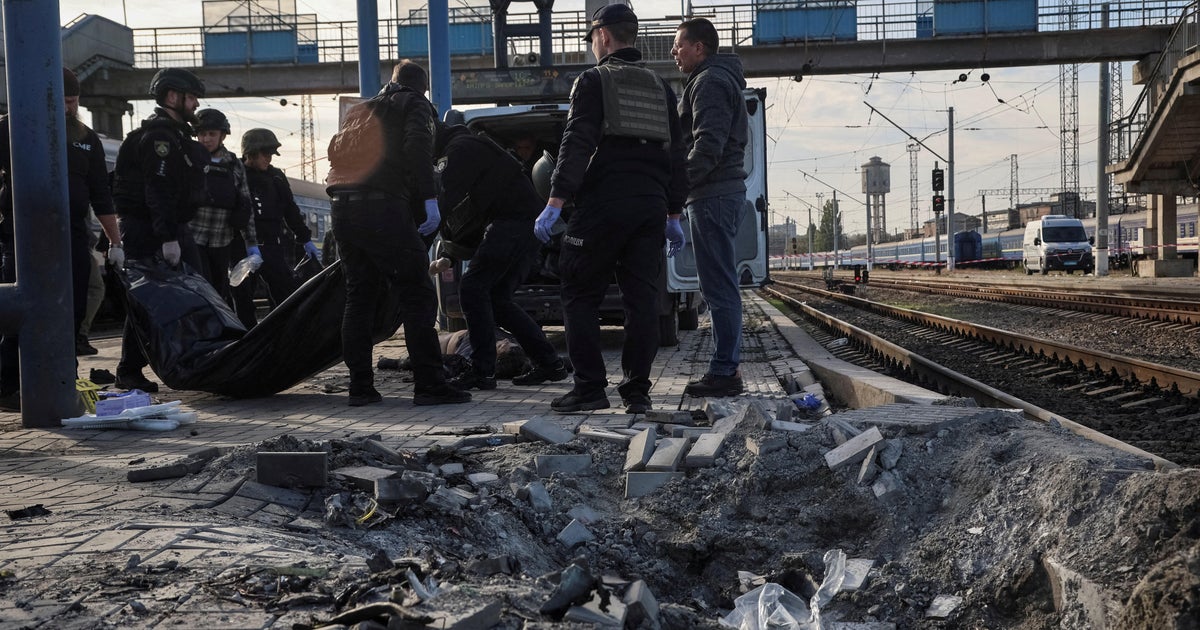
A team from The Associated Press gained rare access to a so-called red zone to see firsthand what life in the kill zone looks like, a visit made possible only because of a brief, localized ceasefire tied to the humanitarian aid mission in the Russian-occupied city of Oleshky. asserted
life → gain → Oleshky
Oleshky has drawn the world’s attention, but civilians are trapped in many more places on both sides of the front line. asserted
civilians → draw → line
During the mission, Ukrainian regional officials, police, the Ukrainian Red Cross Society and volunteers, with the facilitation of civil-military cooperation specialists, used the rare window of time to reach people on their side of the river, some of them cut off for nearly two years. asserted
some → use → years
In all, 180 people were evacuated from riverside communities and the city of Kherson, including 23 children, the regional administration said. asserted
administration → evacuate → children
About 140,000 people remain in the Ukrainian-held part of the Kherson region. asserted
people → remain → region
Before the war, the whole region, now nearly 70% under Russian control, had about 1 million residents. asserted
region → have → residents
The riverside is designated a red zone, the highest level of military danger. asserted
riverside → designate → danger
With the ceasefire over, residents will again face drones, artillery, glide bombs and airdropped mines. asserted
residents → face → drones
Still, many refuse to leave. asserted
many → refuse → ?
Some cannot afford to start over, and others will not abandon the places where they grew up. asserted
they → afford → places
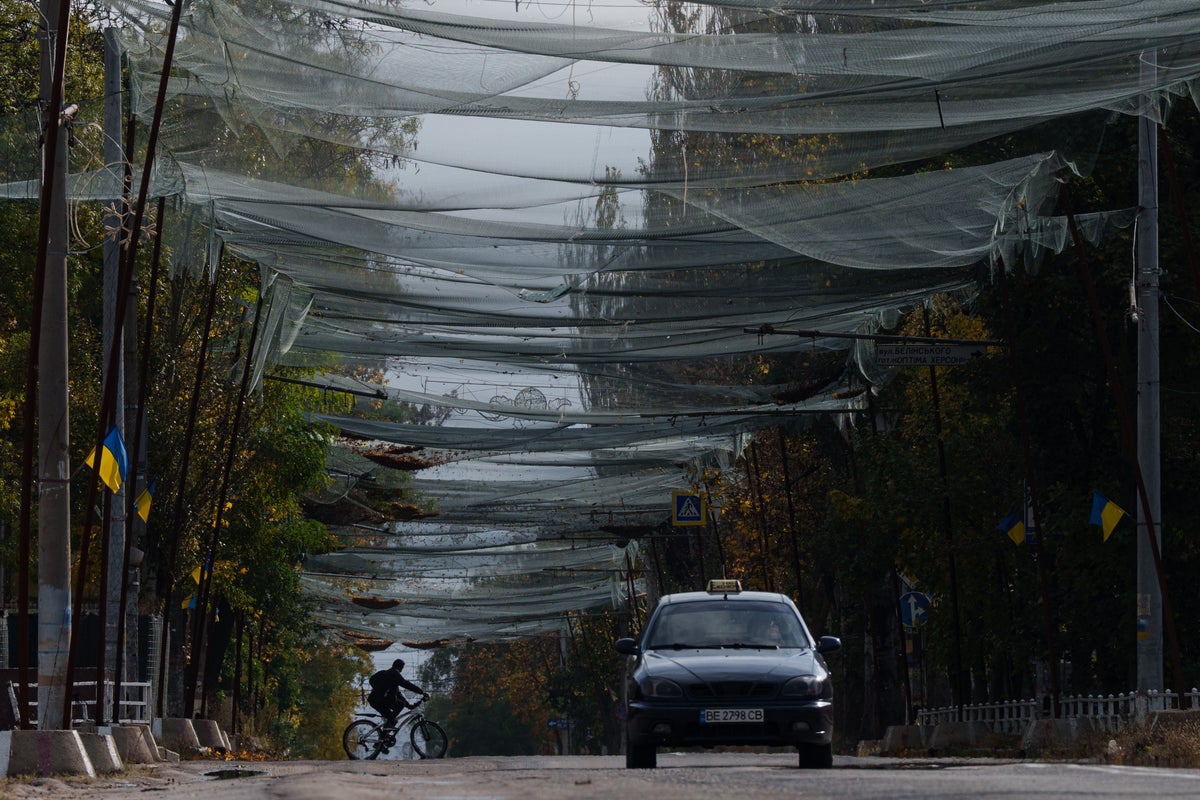
Life is grim in the kill zone On the road to Diadiuk’s village, burned-out cars sit abandoned where they were hit, alongside wrecked ground robots that Ukrainians try sending down roads too dangerous for people. asserted
Ukrainians → burn → people
A relic of peacetime still stands on that road: “Thank you for keeping the roadside clean.” asserted
relic → stand → roadside
In the village, many houses are reduced to burned walls. asserted
houses → reduce → walls
Glide bombs have left craters, and the tail fins of shells stick out of the asphalt like flowers. asserted
fins → leave → flowers
Mines dropped from drones lie everywhere, some petal-shaped, others improvised and wrapped in foil or plastic, so every step must be taken with care. asserted
step → drop → care
Thick vegetation swallows the ruins of empty houses. asserted
vegetation → swallow → houses
What Diadiuk finds hardest to bear is the howling of the dogs left behind in the houses, surviving much as she is. asserted
she → find → houses
“Even for the sake of these, I can’t leave them,” she says, pointing to two thin dogs that never stray far from her. asserted
that → leave → her
But she shares what little food she has with other dogs as well. asserted
she → share → dogs
Isolated and forced to fight for survival every day, she has lost track of time. asserted
she → isolate → time
“I turn on my phone only to see what day it is,” she says. asserted
she → turn → phone
She charges it with solar panels. asserted
She → charge → panels
Diadiuk collects rainwater, strains it through gauze, treats it with chlorine and boils it. asserted
Diadiuk → collect → it
“The water here is more or less all right,” she says. asserted
she → say → ?
“There are a lot of dead lying in the houses, so it’s good water only in a manner of speaking. asserted
it → be → manner
Why people stay The village’s ordeal began in the first days of Russia’s full-scale invasion, when it was occupied. asserted
it → stay → invasion
After Ukrainian forces liberated it, Kozatske gradually came under siege by drones as the war turned increasingly technological. asserted
war → liberate → drones
“Before, I’d just open the door and walk out,” said Oleksii Shavokin, 54, who lives a little farther down the street. asserted
who → open → street
“Now I open it a crack, stick my ear out and listen to the sky.” asserted
I → open → sky
His house burned down in early 2023 after a mortar attack, he said, but he patched it up and stays on there. asserted
he → burn → it
He lives off old humanitarian aid and eggs from the hens he still keeps. asserted
he → live → hens
…and 36 more, not listed.

💬Give feedback
🕘History 🎫Support