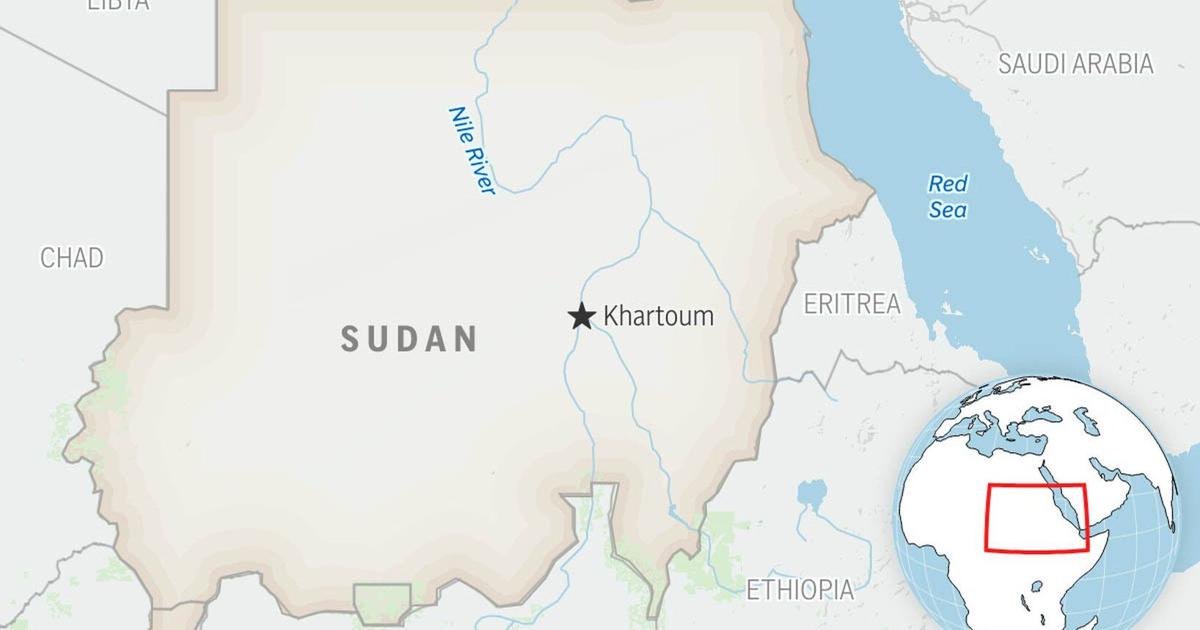
Photo via Toronto Star

Sudan’s power grid nears collapse as drone strikes blamed on RSF target electric stations

Read the original at Toronto Star ↗
Cite

Fahmy, H., & Abdullah, Y. (2026, November 1). Sudan’s power grid nears collapse as drone strikes blamed on RSF target electric stations. Toronto Star. https://www.thestar.com/news/world/africa/sudan-s-power-grid-nears-collapse-as-drone-strikes-blamed-on-rsf-target-electric-stations/article_ef8ed43c-68b4-5569-848a-0c00cc946e0d.html

Dated from the outlet's own feed. Check the original for its byline.

Toronto Star · collected 2026-11-01 · by Hamza Fahmy, Yassir Abdullah

Quick Summary

Drone strikes attributed to Sudan's Rapid Support Forces (RSF) targeted power substations in Al-Dabbah and Abu Hamad towns on Sunday morning, cutting off electricity and disrupting daily life for residents. The attacks have affected fifteen substations since early October, leaving the country’s electrical grid dependent on a few remaining operational plants. This latest wave of strikes has caused widespread blackouts and water shortages, threatening hospitals and agricultural activities.
Written by AI on 2026-11-02, from this article's own text only (the story summary below draws on all the coverage).

AI analysis

Story summary

As of November 1, 2026, drone strikes attributed to the Rapid Support Forces (RSF) have knocked out power substations in two northern Sudanese towns, Al-Dabbah and Abu Hamad, leaving both without electricity. These attacks are part of a series that targeted fifteen substations since early October, severely disrupting Sudan’s already fragile electrical grid. The strikes threaten to exacerbate humanitarian crises by cutting off essential services like water, health care, and refrigeration for medicines in hospitals and blood banks. In Abu Hamad, the drone strike destroyed the substation but caused no casualties. With diesel supplies dwindling, residents are struggling to find alternatives as businesses shut down due to power outages.

Written for “Sudan Power Grid Crisis” on 2026-11-02, grounded in this article and the 0 other(s) covering the same event.
Why this leaning score
The article's own words the score was based on. Each is quoted verbatim and was checked against the article text before being stored, so you can find it in the original.
Reading Leans left (beta estimate) Confidence high
Leaning: leans left for article 121688 (high confidence, 3 verified quotes) · logged 2026-11-02

Story

📰 Sudan Power Grid Crisis
World · 1 article(s) covering the same event.

Compared with similar articles

This article reads leans left and hedges 10% of its claims. Each row says how that neighbour differs.
The Hindu
Hedges 3 of 20 claims Outlet record 77/100
“Article A describes drone strikes in Darfur that killed 21 people on October 26th, while Article B reports on separate drone attacks targeting power substations in northern towns on November 1st.”
How this article was measured signals, leaning charts, publisher record, byline, topics and claims

Signals How these are calculated →

Claims extracted
30
sentences that state something as happening or true
Uncertain
10%
3 of 30 hedged ("reportedly", "may", "according to")
Leaning
Leans left
of the writing, not the subject · beta estimate
Publisher signals
64/100
Toronto Star's corrections and hedging, across everything collected from it. Not a measure of accuracy.
Outlets on this story
1
World
Same framing elsewhere
1
articles that frame the event the way this one does
Analyzed 2026-11-02 · how these are computed

How this is being covered How these are calculated →

Article leaning vs. publisher reliability
Source leaning vs. consistency

Publisher

Toronto Star · 11028 article(s) · 28 correction(s) detected
Running correction rate · 28 correction(s)
2026-10-26
Correction
2026-10-24
Correction
2026-10-07
Correction
2026-09-24
Correction

Who wrote this

Hamza Fahmy
3 article(s) here · 1 carrying a prediction
🔮 “We have a generator, but there’s no diesel in the city,” said Seif al-Rawasi, a baker in the city, who said he would eventually have to shut down his business without access to electricity.
Also by Hamza Fahmy
Nothing else under this byline is closely related to this article, so these are simply their most recent.
Yassir Abdullah
1 article(s) here · 1 carrying a prediction
🔮 “We have a generator, but there’s no diesel in the city,” said Seif al-Rawasi, a baker in the city, who said he would eventually have to shut down his business without access to electricity.
The only article under this byline in the corpus.

Topics

Abu Hamad Al-Dabbah RSF Sudanese White Nile

Subjects

RSF ORG · 5× Abu Hamad GPE · 3× Al-Dabbah GPE · 3× Sudan GPE · 3× Sudanese NORP · 3× White Nile GPE · 2× CAIRO GPE · 1× Emergency Lawyers ORG · 1× Rapid Support Forces ORG · 1× The Sudan Doctors Network ORG · 1×

Narrative

Farmers face an even bigger threat at the start of the winter growing season because irrigation depends on electricity and there is no diesel in the area to run pumps. In Abu Hamad, a drone strike the same day destroyed the substation and knocked it out of service but caused no casualties, the local security committee said.
framing: assertive · carried by 1 article(s) · first seen 2026-11-02
🔮 “We have a generator, but there’s no diesel in the city,” said Seif al-Rawasi, a baker in the city, who said he would eventually have to shut down his business without access to electricity.

Claims (30 extracted, 3 hedged)

Drone strikes knocked out power substations in two northern Sudanese towns on Sunday, the latest in a week of attacks on electricity stations across army-held areas that Sudan’s government and a rights group blamed on the paramilitary Rapid Support Forces. asserted
government → knock → Forces
The strikes on Al-Dabbah in Northern state and Abu Hamad in River Nile state left both towns without power. asserted
strikes → leave → power
The attacks have disrupted electricity and water supplies, halted business activity and forced residents to rely on costly alternatives, driving up prices. asserted
attacks → disrupt → prices
The Sudan Doctors Network warned the outages endanger hospitals, dialysis centers and blood banks, and threaten the cold storage needed for medicines and vaccines. asserted
outages → warn → medicines
Fifteen substations have been targeted since early October, Emergency Lawyers, a Sudanese rights group tracking the attacks, said, leaving the war-torn country’s grid dependent on a handful of plants. asserted
Lawyers → target → plants
Residents face shutdowns as diesel runs out In Al-Dabbah, residents woke to an explosion shortly after 4 a.m. Sunday. asserted
residents → face → Sunday
The town hosts thousands of people, many of whom fled after the RSF seized the city of Al Fasher last year. asserted
RSF → host → Fasher
“We heard a huge explosion that shook the houses, and then the power went out,” said Abbas Wadaa, a resident. asserted
Wadaa → hear → houses
When residents went to the substation after sunrise, they said they found it completely burned. asserted
it → go → sunrise
The station’s guard, Mohammed al-Nour, was killed, and a large crowd from the city attended his funeral, Wadaa said. asserted
Wadaa → kill → funeral
The outage has shut down markets, hospitals and bakeries. asserted
outage → shut → markets
“We have a generator, but there’s no diesel in the city,” said Seif al-Rawasi, a baker in the city, who said he would eventually have to shut down his business without access to electricity. asserted
he → have → electricity
“We don’t know why the RSF is targeting citizens by destroying power stations,” he added. asserted
he → know → stations
Farmers face an even bigger threat at the start of the winter growing season because irrigation depends on electricity and there is no diesel in the area to run pumps. In Abu Hamad, a drone strike the same day destroyed the substation and knocked it out of service but caused no casualties, the local security committee said. asserted
committee → face → casualties
Emergency Lawyers blamed the RSF for Sunday’s strikes on Al-Dabbah and Abu Hamad. asserted
Lawyers → blame → Dabbah
Merowe Dam now the last major power source The wave of attacks began late Wednesday, when drones hit the Um Dabakir thermal power station in White Nile state, the country’s largest thermal plant with a capacity of 500 megawatts, according to an employee at the Sudan Electric Holding Company, who spoke on condition of anonymity because he was not authorized to speak to the media. uncertain
he → begin → media
The attack destroyed four transformers and damaged three generating units, shutting down the station, its director said in a statement. asserted
director → destroy → statement
White Nile and North Kordofan states have been cut off from the grid, and the damage will be felt for months, the regional network director said. asserted
director → cut → months
Early on Friday, a drone carrying four missiles destroyed the transformers at Shendi’s main substation, the local security committee said. asserted
committee → carry → substation
The attack also hit a reserve depot and an army air defense hangar, wounding a soldier. asserted
attack → hit → soldier
The Merowe Dam, with a capacity of 1,250 megawatts, is now the last major source of electricity in the country, providing more than 70% of Sudan’s electricity, according to the Electricity Holding Company employee. uncertain
Dam → provide → employee
The country’s other hydroelectric dams produce no more than 100 megawatts combined, the employee said. asserted
employee → produce → megawatts
Even before the latest attacks, production had fallen from 4,400 megawatts before the war to 1,100. asserted
production → fall → 1,100
Many Sudanese who can afford it have turned to solar panels to cope with the blackout, but a typical household system costs nearly $5,000, far beyond the reach of most families, a solar business owner in Khartoum told The Associated Press earlier this year. asserted
owner → afford → Press
Sudan’s Foreign Ministry said Saturday the drones were supplied by the United Arab Emirates and launched from Ethiopia. asserted
drones → say → Ethiopia
The UAE has repeatedly denied arming the RSF. asserted
UAE → deny → RSF
The RSF did not immediately respond to a request for comment. asserted
RSF → respond → comment
The war has killed at least 59,000 people, though aid groups warn that the number could be much higher. uncertain
number → kill → people
The war has also displaced some 13 million people and pushed parts of the country into famine. asserted
war → displace → famine
___ Abdallah reported from Shendi, Sudan asserted
Abdallah → report → Shendi

💬Give feedback
🕘History 🎫Support