Sydney’s professional heartland is set to be reshaped by automation with hundreds of thousands of workers in the city’s inner suburbs more exposed to artificial intelligence-driven disruption than anywhere else in Australia.
asserted
thousands → set → Australia
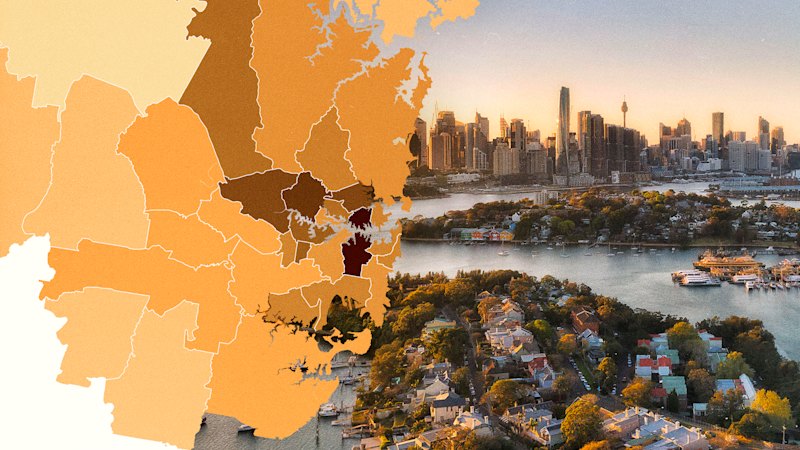
More than 45 per cent of the tasks performed by employees in City of Sydney and North Sydney council areas are vulnerable to AI automation, new analysis shows.
asserted
analysis → perform → automation
Other local government areas where workplaces have high exposure include Ryde, which takes in the Macquarie Park jobs hub (43 per cent), Willoughby (42 per cent), and Parramatta (42 per cent).
asserted
which → have → hub
About 43 per cent of tasks performed by workers who live in North Sydney, Willoughby, Ku-ring-gai and Lane Cove councils are exposed to AI automation.
asserted
who → perform → automation
This is a departure from previous waves of economic disruption, especially the automation and outsourcing of manufacturing activities in the 1980s and 1990s, which hit employment in outer suburbs and regional areas hardest.
asserted
which → hit → suburbs
The report by consultancy SGS Economics and Planning found city-based employees in finance, professional services, technology and business services are most likely to see their jobs change due to AI.
asserted
jobs → find → AI
Those workers and industries have been largely shielded from job displacements triggered by structural economic shifts in recent decades.
asserted
workers → shield → decades
Alison Holloway, a partner at SGS Economics and Planning and the report’s co-author, said the effects of AI automation would have a “different spatial pattern” to previous economic transitions caused by technological change.
asserted
effects → say → change
“Earlier waves of automation took on routine, manual tasks, so their effects were felt most in manufacturing suburbs and farming regions,” she said.
asserted
she → take → suburbs
“AI can now take on parts of the cognitive work done in offices, and those jobs are concentrated in the professional heart of our cities.
asserted
jobs → take → cities
The share of tasks vulnerable to AI automation declines with distance from Sydney’s central business district – to around 40 per cent in the Hills Shire, 37 per cent in Blacktown council and 35 per cent in Hawkesbury council.
asserted
share → decline → council
In parts of regional NSW, where a high share of work tasks require a physical presence, only about 30 per cent of work tasks are at risk of AI disruption.
asserted
cent → require → disruption
Federal Employment and Workplace Relations Minister Amanda Rishworth told this masthead there is no evidence, so far, of widespread AI-driven disruption to Australia’s labour market.
asserted
Rishworth → tell → market
“Workers need to have confidence that by adopting AI, they are not just training their own replacement,” she said.
asserted
she → need → replacement
“The Australian government is closely monitoring how AI affects jobs to ensure that workplace settings and supports for Australians impacted by changes in the labour market remain appropriate.”
asserted
settings → monitor → market
Rishworth said the Albanese government is promoting “safe AI adoption” in workplaces and that the AI Employment and Workplaces Forum, created earlier this year, had brought together government, employers and unions to discuss AI’s opportunities and challenges.
asserted
Forum → say → opportunities
The SGS Economics and Planning report found work tasks performed in inner-city Melbourne had a high exposure to AI automation, especially the City of Melbourne (44.5 per cent) and Port Philip (42.3 per cent).
asserted
tasks → find → Melbourne
Other urban areas with a relatively high share of work tasks vulnerable to AI automation include Adelaide City (43 per cent) City of Perth (43 per cent), Australian Capital Territory (41 per cent) and Brisbane City (40 per cent).
asserted
areas → include → Perth
For a century, automation has changed work on farms and in factories.
asserted
automation → change → factories
During the past 30 years the manufacturing sector’s share of economic output has fallen steadily amid the introduction of industrial robots, reduced trade barriers and low-cost overseas competition.
asserted
share → manufacture → robots
Federal and state governments have provided a range of support programs to assist manufacturing firms and workers affected by this transition which coincided with strong growth in knowledge-intensive services such as finance, professional services, and information technology.
asserted
which → provide → finance
The SGS Economics and Planning report, released on Monday, said the Australian economy “is transitioning again” as we enter an era where AI can perform an expanding range of tasks once reserved for highly skilled trades and professionals.
asserted
AI → release → trades
The analysis measured the exposure to AI automation of work tasks, not the probability of jobs disappearing altogether.
asserted
jobs → measure → tasks
But Holloway said the disruptions caused by AI could potentially require targeted programs to retrain employees and support for workers as they shift to different jobs.
uncertain
they → say → jobs
“In the past we’ve seen the closure of mines and things like car manufacturing which has impacted whole communities, but this is now a different part of the economy and different locations that will be more affected,” she said.
asserted
she → see → economy
“There is a lot we can learn from those previous economic transitions to think more strategically about what’s coming with AI automation.
asserted
what → be → automation
It is a question of who benefits from these changes and who struggles through these transitions.”
asserted
who → benefit → transitions
A spokesperson for the NSW government said AI will bring “opportunities and changes” to the state’s workforce.
asserted
AI → say → workforce
“We established an Office of AI this year to help government monitor and respond to the impacts of this technology,” the spokesperson said.
asserted
spokesperson → establish → technology
“Through the establishment of the Office of AI and ongoing investment in skills and training, we are working to navigate this technological change.
asserted
we → work → change
The NSW government wants to see the benefits of AI enjoyed by the many, not just the few.”
asserted
government → want → many
Research by the Department of Industry’s Office of the Chief Economist published in July found no evidence of broad labour market upheaval from AI in Australia, although employment in occupations more exposed to generative AI has grown more slowly than others.
asserted
employment → publish → others
Jeremy Gill, head of policy at advocacy group the Committee for Sydney, said the city needs to prepare for the ways AI automation will change work patterns.
asserted
automation → say → patterns
“This doesn’t mean people living and working in areas at risk of high levels of AI automation will have their jobs replaced,” he said.
asserted
he → mean → automation
“But it does mean the skills that they need, the kind of the tasks and the things they do in their jobs are going to change, and we need to make sure that they’re ready for that and Sydney is ready for it.”
asserted
Sydney → mean → it
Gill said assisting workers at the “beginning and the end of the work journey” would be crucial, especially education and skills development.
asserted
assisting → say → journey
“New graduates entering the marketplace will be an important place to start; so we don’t have generations entering the labour market that are not being prepared for it,” he said.
asserted
he → enter → it
“At the other end of the spectrum, how will we support workers for whom this might be very different technology, but they’ve still got 10 or 15 years left of work before they’re able to retire?
uncertain
they → support → work
There is a risk that they could be left behind if they’re not factored in and planned for.”
uncertain
they → be → ?
Gill said many hands-on jobs in sectors like manufacturing, health care and construction are likely to prove more resilient to AI disruption.
asserted
jobs → say → disruption
…and 5 more, not listed.
 The Aporia