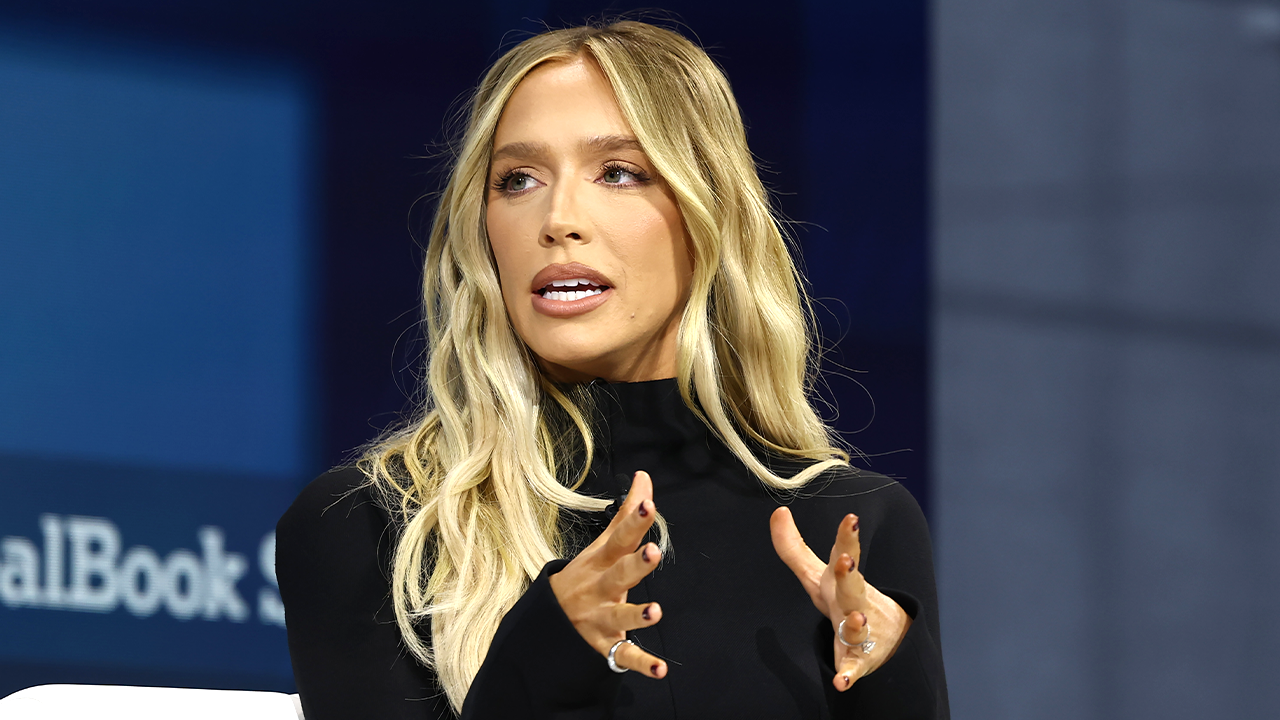
Photo via Fox News

Why people really stopped having kids: New study uncovers the surprising reasons families are shrinking

Read the original at Fox News ↗
Cite

Colombo, M. (2026, November 1). Why people really stopped having kids: New study uncovers the surprising reasons families are shrinking. Fox News. https://www.foxnews.com/media/why-people-really-stopped-having-kids-new-study-uncovers-surprising-reasons-families-shrinking

Dated from the outlet's own feed. Check the original for its byline.

Fox News · collected 2026-11-01 · by Madison Colombo

Quick Summary

A new study by the Institute for Family Studies and the Wheatley Institute reveals cultural factors as key reasons behind declining birth rates worldwide, challenging previous assumptions about economic pressures and household responsibilities. Surveying nearly 10,000 people across multiple countries, the report highlights the impact of peer pressure, future anxieties, and a preference for pet ownership on family planning decisions. For instance, respondents who believed their friends would support having more children were significantly more likely to intend further pregnancies compared to those with no such support network.
Written by AI on 2026-11-01, from this article's own text only (the story summary below draws on all the coverage).

AI analysis

Story summary

A new report from the Institute for Family Studies and the Wheatley Institute reveals that high housing costs and unequal chore loads do not fully explain the global decline in birth rates. The study surveyed nearly 10,000 respondents across more than a dozen countries and found that cultural factors such as peer pressure, anxiety about the future, and the trend of "pet parenting" significantly impact family growth decisions.

Lyman Stone, senior fellow at the Institute for Family Studies, noted an example from Brooklyn where Ultra-Orthodox Jews have on average six children each while their hipster neighbors have 1.6 children each, despite living in the same economy. The report also found no statistically significant relationship between fertility intentions and household chore division.

"There's been a lot of research asking if birth rates would increase if men did more laundry or helped out at home," Stone told Fox News Digital, "and the answer is basically no."

Written for “Reasons For Declining Birth Rates” on 2026-11-01, grounded in this article and the 0 other(s) covering the same event.
Why this leaning score
This article does not take a side on a contested political question, so it has no leaning score. That is an answer rather than a gap: a match report or a rescue can be warmly or critically written without being left or right, and scoring it anyway is how approval of a subject gets recorded as a political position.
No political leaning scored for article 121365 · logged 2026-11-01

Story

📰 Reasons For Declining Birth Rates
Health · 1 article(s) covering the same event.

Compared with similar articles

This article reads unscored and hedges 14% of its claims. Each row says how that neighbour differs.
Toronto Star
⚖️ Leans strongly left Hedges 2 of 32 claims Outlet record 64/100
“The articles discuss different aspects of fertility rates and reasons for declining birth rates but describe distinct events, one focusing on a new study with cultural influences and another highlighting Canada's low fertility rate statistics.”
How this article was measured signals, leaning charts, publisher record, byline, topics and claims

Signals How these are calculated →

Claims extracted
50
sentences that state something as happening or true
Uncertain
14%
7 of 50 hedged ("reportedly", "may", "according to")
Leaning
not political
takes no side on a contested political question
Publisher signals
69/100
Fox News's corrections and hedging, across everything collected from it. Not a measure of accuracy.
Outlets on this story
1
Health
Same framing elsewhere
1
articles that frame the event the way this one does
Analyzed 2026-11-01 · how these are computed

How this is being covered How these are calculated →

Article leaning vs. publisher reliability
Source leaning vs. consistency

Publisher

Fox News · 6225 article(s) · 11 correction(s) detected
Running correction rate · 11 correction(s)

Who wrote this

Madison Colombo
19 article(s) here · 1 carrying a prediction
🔮 High housing costs and unequal chore loads may not fully explain the drop in birth rates around the world, according to a new report from the Institute for Family Studies and the Wheatley Institute.
🔮 When "Everybody Loves Raymond" debuted 30 years ago, it showed how a stand-up comic from Queens and a series about suburban in-laws could thrive on primetime network television.
🔮 "Mary got in this race because Alaskans deserve a champion who is fighting to lower their costs and put Alaska first — and no threats from DC politicians or baseless investigations from a weaponized Department of Justice will keep her away from that fight."
🔮 "That's such a beautiful message to leave women with because I do think we can get really, really in our heads about, 'Oh my God, I feel like I'm, maybe I shouldn't leave this marriage because can I even get better?'" Cooper said.
🔮 The localized ceasefire is expected to begin Oct. 29, according to the White House.
🔮 So, whenever there's a big sea of people at a party, and I use the term loosely, you know, Rachel and I will gravitate and go, ‘How's it going? How's it going?’
🔮 Miltenberg told host Kayleigh McEnany, "We welcome an investigation, just not her, and I don't know how anyone could think at this point that she could be fair."
🔮 He also joked that he would find out how much the protesters paid for their tickets and send the money directly to Israel.
🔮 Incoming White House press secretary Katie Zacharia pledged to get to work immediately when she takes over the podium on Monday, defending President Donald Trump's recent diesel deal as a move she says will help lower gas and grocery prices.
🔮 He believes attending the execution could bring closure to survivors and grieving families.
Also by Madison Colombo
Nothing else under this byline is closely related to this article, so these are simply their most recent.
All 19 articles by Madison Colombo →

Topics

Brooklyn Fox News Digital Ultra-Orthodox Jews the Institute for Family Studies the Wheatley Institute

Subjects

Stone PERSON · 5× Fox News Digital ORG · 3× the Institute for Family Studies ORG · 2× Brooklyn GPE · 1× Lyman Stone PERSON · 1× Ultra-Orthodox Jews NORP · 1× the Pronatalism Initiative ORG · 1× the Wheatley Institute ORG · 1×

Narrative

Regular people can influence this just by being good friends, good neighbors, good parents, good leaders and good members of the community, and telling young families: 'We're here for you, we support you, we think this is a good and admirable thing to do.'"
framing: assertive · carried by 1 article(s) · first seen 2026-11-01
🔮 High housing costs and unequal chore loads may not fully explain the drop in birth rates around the world, according to a new report from the Institute for Family Studies and the Wheatley Institute.

Claims (50 extracted, 7 hedged)

High housing costs and unequal chore loads may not fully explain the drop in birth rates around the world, according to a new report from the Institute for Family Studies and the Wheatley Institute. uncertain
costs → explain → Studies
The survey of nearly 10,000 respondents across more than a dozen countries points to culture, finding that peer pressure, anxiety about the future and the rise of "pet parenting" strongly influence whether couples choose to start or grow a family. asserted
couples → point → family
"Ultra-Orthodox Jews in Brooklyn have six kids each. asserted
Jews → have → kids
Their hipster neighbors have 1.6 kids each," Lyman Stone, senior fellow and director of the Pronatalism Initiative at the Institute for Family Studies, told Fox News Digital. asserted
Stone → have → Digital
"They live in the same economy. asserted
They → live → economy
They have very different outcomes. asserted
They → have → outcomes
The report also tested whether sharing chores affects fertility intentions, finding no statistically significant relationship between family planning and either the division of household responsibilities or perceptions of fairness. asserted
sharing → test → fairness
"There's been a lot of research on, you know, 'If men did more laundry, would birth rates go up? asserted
rates → be → laundry
If men helped out more at home, would birth rates go up?' asserted
rates → help → home
And the answer is basically no," Stone said. asserted
Stone → say → ?
"The last 30 years have seen a revolution in involved fatherhood. asserted
years → see → fatherhood
Dads are doing more at home than ever before and fertility rates keep plummeting," he added to Fox News Digital. asserted
he → do → Digital
One of the strongest associations researchers identified was between fertility intentions and having a supportive circle of friends. asserted
researchers → identify → friends
Believing that one's friends would celebrate a new baby was linked to a 10% increase in desired family size and a 20% higher likelihood of intending to have another child. asserted
friends → believe → child
"All around the world, we just found that friends are really important," Stone said. asserted
Stone → find → world
"Where peer culture ratifies and encourages family life, family life is more successful." asserted
life → ratify → life
The association extended beyond friends to admired public figures. asserted
association → extend → figures
Respondents who admired a celebrity with more children than they had were 14% more likely to intend to have another child. asserted
they → admire → child
Researchers also identified a connection between attitudes toward pets and decisions about having children. asserted
Researchers → identify → children
Respondents who expressed a preference for being a "pet parent" rather than having children reported a 30% lower desired family size and showed a 50% drop in intentions to have more children. asserted
who → express → children
The problem is the attitude," Stone said. asserted
Stone → say → ?
"That says that, you know, changing a litter box is truly as meaningful as changing a diaper. asserted
changing → say → diaper
And I just have to tell you, it isn't." asserted
it → have → you
Researchers found that risk aversion, anxiety about the future and general pessimism were also associated with smaller desired families. asserted
aversion → find → families
Respondents who were more comfortable taking risks and optimistic about their futures tended to desire and have more children. asserted
who → take → children
"Some decline in fertility may just be because there's bad vibes," Stone said to Fox News Digital. uncertain
Stone → be → Digital
"There's just the internet constantly telling you that everything is bad, everything's getting worse and there’s a million things to be worried about and you shouldn't take any risks." asserted
you → be → risks
"I hate to tell you, but yeah, having children has a possibility of hurting you, both physically, financially and emotionally, in the long run, you know, a child who grows up to reject you is a very painful thing. asserted
who → hate → you
But there is also great reward," he added. asserted
he → be → ?
Encouragement from parents was another significant factor associated with fertility intentions. asserted
Encouragement → associate → intentions
According to the study, "Parental encouragement to have children is associated with an 11% increase in desired number of children and a 30% increase in the likelihood of intending to have another one." uncertain
encouragement → accord → one
Encouraging childless, cohabiting adult children to marry was also associated with a 14% higher likelihood of intending to have a child. asserted
children → encourage → child
But Stone cautioned that guilt-tripping adult children into having kids may be ineffective. uncertain
tripping → caution → kids
Instead, he suggested parents share the joy they experienced raising children and offer practical support. uncertain
they → suggest → support
"If you're a parent and you want grandbabies from your adult children, you probably won't get very far telling them that they owe you grandbabies," Stone said. asserted
Stone → want → grandbabies
"But you may get somewhere telling them stories of how much you enjoyed raising them and how much fun you think you're going to have helping them raise their children. uncertain
them → get → children
Religion was another factor linked to larger families. asserted
Religion → link → families
Respondents with the highest levels of religious devotion had 9% more children and were 12% more likely to intend to have another child. asserted
Respondents → have → child
But researchers found no statistically significant relationship between hearing clergy speak about family and family size. asserted
clergy → find → size
Instead, the findings suggest religious communities may be associated with fertility intentions through friendships and networks of practical support, including help with meals and celebrating the arrival of a new baby. uncertain
communities → suggest → baby
…and 10 more, not listed.

💬Give feedback
🕘History 🎫Support