The illicit drug supply has changed rapidly over the last few months, with nitazenes, medetomidine, cychlorphine, and other novel synthetic substances appearing in rapid succession.
asserted
nitazenes → change → succession
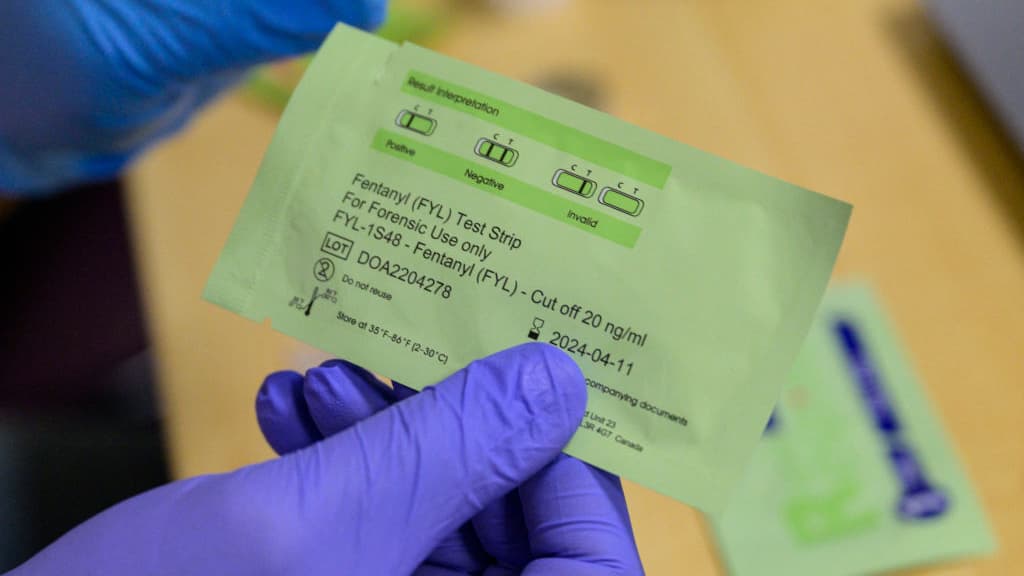
Rapid tests for emerging substances are being developed and marketed with impressive speed, and these can return results within minutes.
asserted
these → emerge → minutes
Law enforcement, medical examiners, employers, community organizations and even the general public can use them, if their states have decriminalized them.
asserted
states → use → them
Physicians treating overdoses cannot.
asserted
Physicians → treat → overdoses
The contrast is hard to ignore: A test can be used to fire someone or support a criminal case, yet it remains unavailable to the physician in an emergency room trying to save that person’s life, when minutes are essential.
asserted
minutes → ignore → life
Many tests for emerging drugs are labeled for forensic use only, and clinical tests for living patients require approval by the Food and Drug Administration (FDA) as a diagnostic tool.
asserted
tests → emerge → tool
As such, they cannot legally be used by medical clinics that adhere to federal law and funding policies.
asserted
that → use → law
Tests used in patient care must meet FDA requirements for clinical diagnostics.
asserted
Tests → use → diagnostics
Point-of-care testing—testing performed at or near the bedside—also requires an additional determination that the test is simple and low-risk enough to qualify for waived status under the Clinical Laboratory Improvement Amendments (CLIA).
asserted
test → perform → Amendments
Tests used to make medical decisions should be accurate, reliable, and interpreted appropriately.
asserted
Tests → use → decisions
A rapid screen is not definitive toxicology, and it should not be treated as such.
asserted
it → treat → ?
Fentanyl shows why speed matters.
asserted
speed → show → ?
In early 2023, we pointed out that rapid fentanyl tests already existed outside clinical medicine, yet hospitals relied on expensive spectrometry testing that could take an hour or longer, if the equipment was available onsite at all.
uncertain
equipment → point → hour
By the time FDA-cleared and CLIA-waived rapid fentanyl tests arrived, the illicit market had already changed again.
asserted
market → clear → time
Starting in 2020, xylazine spread through the fentanyl supply, introducing a new clinical hurdle: naloxone reverses opioids, but not xylazine.
asserted
naloxone → start → xylazine
Patients can remain dangerously sedated or unstable even after naloxone is given.
asserted
naloxone → remain → ?
Further, xylazine is associated with necrotic skin wounds that increase risk of sepsis, and withdrawal syndromes that are more complex to treat than opioids alone.
asserted
that → associate → opioids
Not long after, medetomidine overtook xylazine supplies.
asserted
medetomidine → overtake → supplies
It, too, does not react to naloxone, causes profound sedation and cardiovascular instability, and its withdrawal syndrome—which can come on just hours after someone stops using it—can trigger extreme hypertension and tachycardia that has been connected to heart attacks in younger people.
asserted
that → react → people
Knowing these facts could significantly alter a patient’s treatment or discharge plan.
uncertain
Knowing → know → plan
There are no point-of-care tests for either of these drugs or other alarming and novel chemicals like cychlorphine, an opioid that does not show up on fentanyl tests.
asserted
that → be → tests
Because of that, clinicians have to follow information from law-enforcement seizures, public-health alerts, and months-old fatality data rather than from tests at the bedside.
asserted
clinicians → have → bedside
These data are in siloes and not easy to access or combine.
asserted
data → access → siloes
The result is a system that can identify emerging drugs in seized samples and autopsies before clinicians can identify them in living patients.
asserted
clinicians → identify → patients
The FDA should establish an expedited pathway for clinical tests targeting emerging drug threats, triggered when agencies such as the U.S. Centers for Disease Control and Prevention (CDC) or the Office of National Drug Control Policy identify a substance of significant and growing public-health concern.
asserted
agencies → establish → concern
The agency already has a dual pathway through which manufacturers can seek a special clearance and a CLIA waiver together.
asserted
manufacturers → have → clearance
That framework could be prioritized and adapted for emerging drugs rather than forcing each new threat through the ordinary timeline.
uncertain
framework → prioritize → timeline
Federal agencies could also help fund independent validation.
uncertain
agencies → help → validation
The economics of emerging drugs are unusual: a substance can appear quickly, spread unevenly, and be replaced by something else before a manufacturer can justify the cost of extensive clinical studies.
asserted
manufacturer → emerge → studies
Federal and state agencies could make up this gap if the threat of the new drug is significant.
uncertain
threat → make → drug
A small market does not mean a small public health or public safety need.
asserted
market → mean → need
None of this requires pretending a test strip is mass spectrometry.
asserted
strip → require → this
Point-of-care testing should be explicitly treated as presumptive.
asserted
testing → treat → care
Positive results can be confirmed when necessary.
asserted
results → confirm → ?
Clinical care rarely rests on a single perfect source of information, anyway.
asserted
care → rest → information
Physicians already make decisions by combining an imperfect history, physical examination, vital signs, laboratory results, and response to treatment.
asserted
Physicians → make → treatment
A rapid drug screen would simply be another tool in that toolbox that helps dispel the fog of drug supply changes.
asserted
that → help → changes
Further, the value extends beyond the individual patient.
asserted
value → extend → patient
Better hospital data could become an early-warning system rather than a retrospective record of a crisis already underway.
uncertain
data → become → crisis
Emergency departments are on the front lines of the overdose crisis; they should have access to the most innovative testing tools at the bedside, when minutes can make a difference.
asserted
minutes → have → difference
 The Aporia