Photo via Al Jazeera

No, France is not ‘burning’

Read the original at Al Jazeera ↗
Cite

Bantigny, L. (2026, November 1). No, France is not ‘burning’. Al Jazeera. https://www.aljazeera.com/opinions/2026/11/1/no-france-is-not?traffic_source=rss

Dated from the outlet's own feed. Check the original for its byline.

Al Jazeera · collected 2026-11-01 · by Ludivine Bantigny
Content note This article describes violence described in detail.

Quick Summary

The article challenges the portrayal of current protests in France as widespread chaos and instead frames them within a historical context of social unrest driven by inequality. It draws parallels between contemporary student-led demonstrations demanding better education conditions and past revolutions like the French Revolution, highlighting how systemic injustice fuels violent reactions and state repression. The author argues that media coverage tends to equate different forms of violence, obscuring the underlying causes of societal upheaval.
Written by AI on 2026-11-01, from this article's own text only (the story summary below draws on all the coverage).

AI analysis

Story summary

Since mid-September 2026, youth-led protests have erupted across Europe, with particularly intense demonstrations occurring in France over three weeks. In Paris and other cities, protesters clashed with police, leading to violence including the hurling of Molotov cocktails. The French Interior Minister deployed 70,000 security forces ahead of Halloween weekend protests due to safety concerns. Initially sparked by student strikes over poor school conditions, the protests have since expanded to address broader issues like the cost-of-living crisis and deteriorating public services. With major European elections approaching, how governments respond will likely influence voter support, especially from older voters versus younger activists demanding policy changes.

Written for “France Protests Enter Third Week” on 2026-11-01, grounded in this article and the 35 other(s) covering the same event.
Why this leaning score
The article's own words the score was based on. Each is quoted verbatim and was checked against the article text before being stored, so you can find it in the original.
Reading Leans left (beta estimate) Confidence high
Leaning: leans left for article 120850 (high confidence, 3 verified quotes) · logged 2026-11-01

Story

📰 France Protests Enter Third Week
Politics · 36 article(s) covering the same event. Compare every outlet's account →

Compared with similar articles

This article reads leans left and hedges 2% of its claims. Each row says how that neighbour differs.
The Independent
Hedges 0 of 23 claims Outlet record 59/100
“The articles discuss different aspects of the protests in France; Article A focuses on the White House's political use of footage from the unrest, while Article B addresses media coverage and context of the student movement.”
South China Morning Post
⚖️ Leans right further right than this Hedges 1 of 5 claims Outlet record 64/100
“The articles discuss different aspects of the protests in France; Article A warns about the risks of violence defining the protests like Hong Kong's, while Article B specifically addresses the media portrayal and context of recent violent incidents.”
The Independent
⚖️ Leans left Hedges 0 of 24 claims Outlet record 59/100
“Article A describes the immediate events of the protests including police actions and march locations on a specific date, while Article B provides an analysis and critique of media coverage over several weeks, not focusing on one specific incident.”
Al Jazeera
⚖️ Leans left Hedges 0 of 2 claims Outlet record 60/100
Los Angeles Times
Hedges 2 of 60 claims Outlet record 95/100
“The articles discuss different aspects of unrest in France: one focuses on the ongoing riots and their impact on businesses and residents, while the other critiques the media portrayal of a peaceful student movement being overshadowed by violence.”
Washington Examiner
⚖️ Leans right further right than this Hedges 0 of 7 claims Outlet record 70/100
“Article A describes a specific attack on Limoges' town hall by ultra-left militants, while Article B discusses the overall framing of violence in the context of peaceful student protests and media coverage.”
NBC News
⚖️ Leans left Hedges 1 of 27 claims Outlet record 60/100
“Article A describes widespread protests across multiple European countries including France on Halloween, while Article B is an analysis of recent violent demonstrations specifically in France focusing on a student movement and media coverage.”
The Dispatch
Hedges 0 of 2 claims Outlet record 61/100
The Straits Times
⚖️ Leans right further right than this Hedges 1 of 24 claims Outlet record 66/100
“Article A describes the expected protests and government response on October 31st, while Article B provides a broader critique of media coverage and context for recent unrest without specifying the exact same event.”
South China Morning Post
⚖️ Leans left Hedges 0 of 4 claims Outlet record 64/100
“Article A describes the specific clashes and protests on Halloween in Paris and other cities, while Article B provides broader commentary on the use of 'violence' in reporting about the ongoing movement.”
How this article was measured signals, leaning charts, publisher record, byline, topics and claims

Signals How these are calculated →

Claims extracted
54
sentences that state something as happening or true
Uncertain
2%
1 of 54 hedged ("reportedly", "may", "according to")
Leaning
Leans left
of the writing, not the subject · beta estimate
Publisher signals
60/100
Al Jazeera's corrections and hedging, across everything collected from it. Not a measure of accuracy.
Outlets on this story
36
Politics
Same framing elsewhere
1
articles that frame the event the way this one does
Analyzed 2026-11-01 · how these are computed

How this is being covered How these are calculated →

Article leaning vs. publisher reliability
Source leaning vs. consistency

Publisher

Al Jazeera · 4594 article(s) · 2 correction(s) detected
Running correction rate · 2 correction(s)

Who wrote this

Ludivine Bantigny
1 article(s) here · 1 carrying a prediction
🔮 I would add one more form of violence: that of inequality, discrimination, social humiliation and precarious life.
2026-11-01 · assertive framing · No, France is not ‘burning’
The only article under this byline in the corpus.

Topics

Bastille Brazilian France French the French Revolution

Subjects

France GPE · 5× Parisians NORP · 2× Versailles GPE · 2× Bastille GPE · 1× Bernard-Rene Jourdan de Launay PERSON · 1× Brazilian NORP · 1× Catholic NORP · 1× Dom Helder Camara PERSON · 1× French NORP · 1× Swiss Guards ORG · 1×

Narrative

Brazilian archbishop Dom Helder Camara, an advocate of liberation theology, distinguished between three types of violence: the first, that of injustice that oppresses; the second, that of the revolt it provokes; and the third, that of repression.
framing: assertive · carried by 1 article(s) · first seen 2026-11-01
🔮 I would add one more form of violence: that of inequality, discrimination, social humiliation and precarious life.
2026-11-01 · Al Jazeera
No, France is not ‘burning’ · assertive framing

Claims (54 extracted, 1 hedged)

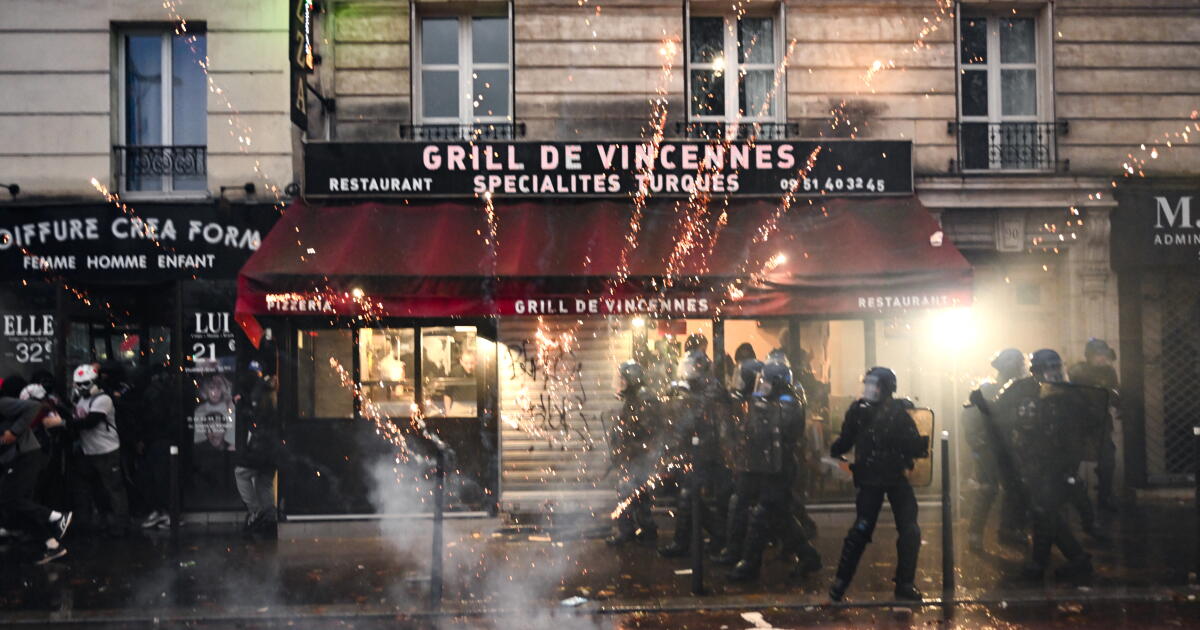
For the past few weeks, images of burning buildings and devastated shopping streets have dominated international media coverage of France. asserted
images → burn → France
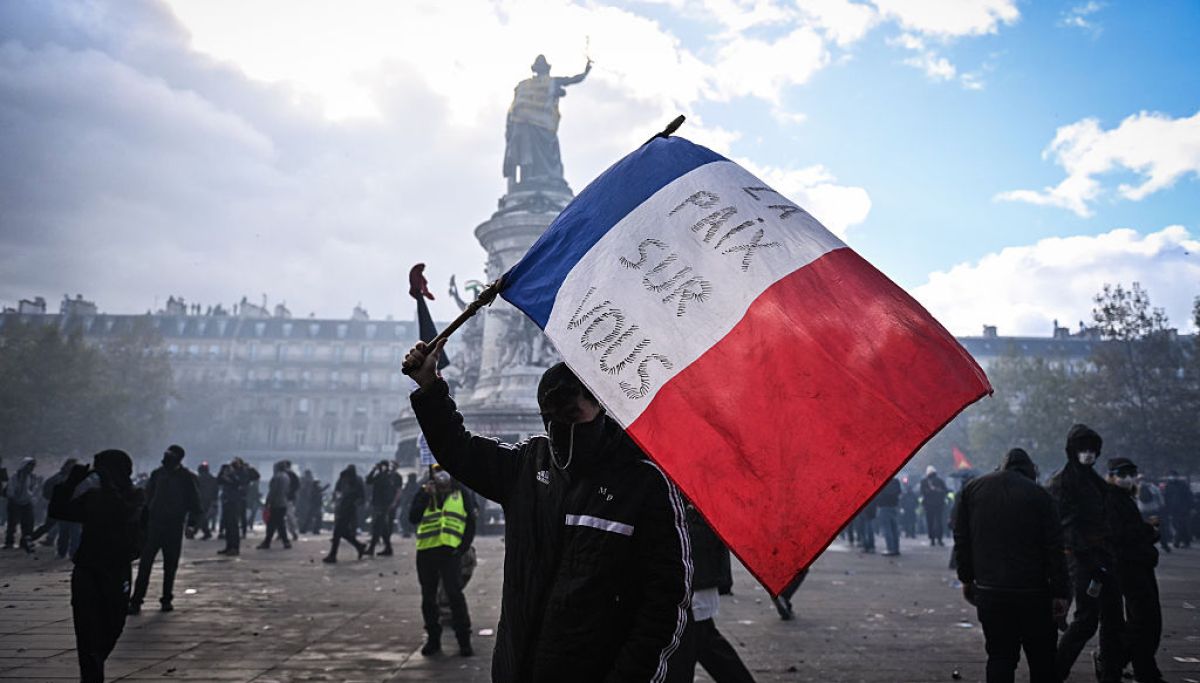
“France is burning”, “France in turmoil”, “Chaos in France”, the headlines have declared, focusing on the violent element of an otherwise peaceful student movement demanding better conditions for education. asserted
headlines → burn → education
To understand why this has happened in the past and is happening today, let us start by examining the word “violence”. asserted
us → understand → violence
In today’s context, it is used indiscriminately to refer to a broken shop window, a police officer injuring a demonstrator, a car set on fire, or shots fired at an unarmed crowd. asserted
it → use → crowd
This confusion tends to inaccurately place material damage and attacks on people, revolt and its repression, on the same level. asserted
confusion → tend → level
Brazilian archbishop Dom Helder Camara, an advocate of liberation theology, distinguished between three types of violence: the first, that of injustice that oppresses; the second, that of the revolt it provokes; and the third, that of repression. asserted
it → distinguish → repression
I would add one more form of violence: that of inequality, discrimination, social humiliation and precarious life. asserted
I → add → inequality
French history reminds us how often revolts, the injustices that fuel them and the repressions that answer them are closely intertwined. asserted
that → remind → them
It was an act of armed insurrection by revolutionaries who rejected an oppressive absolute monarchy and saw the prison as a symbol of its abuses. asserted
who → reject → abuses
The defenders of the fortress fired on the assailants, killing about 100 people. asserted
defenders → fire → people
After their capitulation, the Bastille governor, Bernard-Rene Jourdan de Launay, was killed, and his head impaled on a pike and paraded in the streets. asserted
head → kill → streets
In the following weeks, peasants started invading properties of the aristocracy, ransacking them and burning property deeds that recorded feudal rights. asserted
that → follow → rights
These documents embodied the feudal domination peasants were subjected to. asserted
peasants → embody → domination
Three years later, on August 10, 1792, revolutionaries stormed the royal residenceod the Tuileries Palace, which led to the deaths of hundreds of Swiss Guards. asserted
which → storm → Guards
In September, in a climate of panic in the face of foreign invasion, armed groups executed more than 1,000 prisoners, among them Catholic priests and criminals arrested for common crimes. asserted
groups → execute → crimes
These outbursts of popular anger were rooted in the systemic violence of the ancien regime: privileges of birth, feudal oppression, tax inequalities, arbitrariness in the use of force and repression. asserted
outbursts → root → force
Popular violence cannot be separated from that of a social order founded on domination. asserted
violence → separate → domination
Throughout the 19th century, the same driving forces — fear and anger against those in power — continued to fuel collective violence. asserted
forces → drive → violence
In February 1831, an anticlerical crowd sacked the archbishop’s palace in Paris and destroyed its furnishings, thus striking at a Church associated with the deposed monarch. asserted
crowd → sack → monarch
In 1871, following France’s defeat in the Franco-Prussian War, thousands of disaffected Parisians rebelled and established the Paris Commune. asserted
thousands → follow → Commune
They took hostages in an attempt to persuade the government in Versailles to stop bombarding them. asserted
They → take → them
The killing of the hostages ultimately took place during “Bloody Week”, as the Versailles army massacred Parisians by the thousands. asserted
army → take → thousands
Social violence, however, has not always taken the spectacular form of insurrection and its suppression. asserted
violence → take → insurrection
It has also been expressed in the form of labour mobilisation and the targeting of factories, machines and representatives of the employers. asserted
It → express → employers
On January 26, 1886, in Decazeville, engineer Jules Watrin, deputy director of the local mines, was beaten, thrown from a window, and killed by a crowd of miners angered by bad working conditions. asserted
Watrin → beat → conditions
His name gave rise to the neologism “watrinade” – the killing of a manager or a boss. asserted
name → give → manager
In Armentieres, in 1903, a textile strike degenerated into the ransacking of shops. asserted
strike → degenerate → shops
In Limoges, three years later, demonstrators forced open the gates of factories and destroyed porcelain in one plant. asserted
demonstrators → force → plant
Two gun shops were looted and an explosive device set off outside a director’s home. asserted
device → loot → home
In 1968, a student-led protest for better university conditions triggered a society-wide mobilisation, drawing in millions of workers who went on strike. asserted
who → lead → strike
The barricades in the Latin Quarter of Paris were accompanied by overturned or torched cars, the throwing of cobblestones and the use of Molotov cocktails. asserted
barricades → accompany → cocktails
In Nantes, the director of Sud Aviation was held captive in his factory for several days. asserted
director → hold → days
In the following years, the process of deindustrialisation put workers yet again in a precarious situation and drove yet another wave of labour protests. asserted
process → follow → protests
In 1979, the steelworkers of Longwy and Denain, faced with massive job cuts, took part in mobilisations that left behind broken doors and scattered files at the subprefecture of Briey, vehicles set on fire and shop windows smashed. asserted
windows → face → fire
In 2009, after the announcement of the closure of the Continental plant in Clairoix, employees ransacked the subprefecture of Compiegne. asserted
employees → ransack → Compiegne
In 2015, at Air France, two executives were attacked during a demonstration against job cuts. asserted
executives → attack → cuts
In 2016, during the protests against the labour law reforms, which allowed employers to fire workers more easily, storefronts were smashed and police vehicles were attacked. asserted
vehicles → allow → workers
Two years later, the demonstrations of the “yellow vests” over economic grievances brought an unprecedented level of visibility to such actions. asserted
demonstrations → bring → actions
In December 2018, the Arc de Triomphe was defaced and shops were looted. asserted
shops → deface → December
Yet, this movement was also notable for the serious injuries inflicted upon many protesters by law enforcement. asserted
movement → inflict → enforcement
…and 14 more, not listed.

💬Give feedback
🕘History 🎫Support