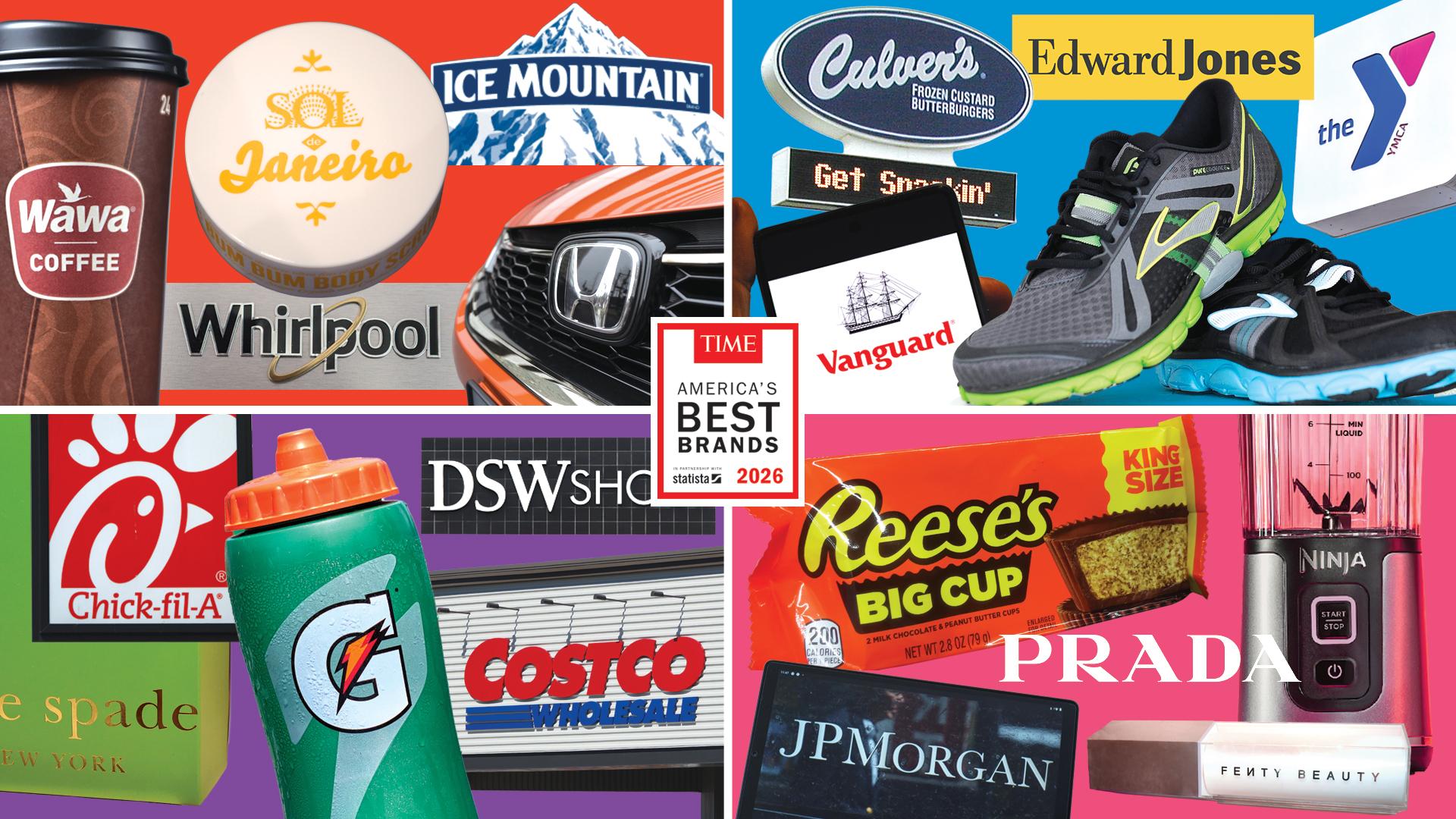
Photo via New York Post

Halloween candy, in this economy? Gen Z sours on the sweet stuff

Read the original at New York Post ↗
Cite

Landsel, D. (2026, October 31). Halloween candy, in this economy? Gen Z sours on the sweet stuff. New York Post. https://nypost.com/2026/10/31/lifestyle/best-candy-according-to-every-generation-national-survey/

Dated from the outlet's own feed. Check the original for its byline.

New York Post · collected 2026-10-31 · by David Landsel

Quick Summary

TIME’s America’s Best Brands report, based on a survey of over 33,000 Americans and compiled with Statista, reveals that Gen Z is losing interest in candy compared to older generations. While Baby Boomers favor high-end brands like Godiva, and Gen X and Millennials opt for budget-friendly options such as Snickers and Reese’s, Gen Z selects only three candy brands: Reese’s, Snickers, and See’s Candies. The report notes that Gen Z’s enthusiasm for these choices is notably lower than that of older generations, with scores around 85 percent compared to higher ratings from other age groups. This trend coincides with reports indicating increased mental health issues among Gen Z members, who also show less interest in categories like department stores and home appliances due to financial stressors including housing costs and the impact of prolonged smartphone use and social media exposure.
Written by AI on 2026-10-31, from this article's own text only (the story summary below draws on all the coverage).

AI analysis

Story summary

According to a recent survey by TIME’s America’s Best Brands report published in 2026, Gen Z (aged 14-29) is losing interest in candy. The report, which surveyed over 33,000 Americans, found that when Gen Z does indulge, they opt for affordable options like Reese's and Snickers, with a preference for the upscale See’s Candies as their only premium choice. In contrast, Baby Boomers favored luxury chocolate brand Godiva, while Gen X chose Snickers as their top pick, indicating a generational divide in candy preferences.

Written for “Gen Z Sours On Halloween Candy” on 2026-11-01, grounded in this article and the 0 other(s) covering the same event.
Why this leaning score
This article does not take a side on a contested political question, so it has no leaning score. That is an answer rather than a gap: a match report or a rescue can be warmly or critically written without being left or right, and scoring it anyway is how approval of a subject gets recorded as a political position.
No political leaning scored for article 119884 · logged 2026-10-31

Story

📰 Gen Z Sours On Halloween Candy
Other · 1 article(s) covering the same event.

Compared with similar articles

This article reads unscored and hedges 0% of its claims. Each row says how that neighbour differs.
TIME
Hedges 3 of 28 claims Outlet record 59/100
“The articles are about different aspects of generational brand preferences; one focuses on overall shopping habits and the other specifically addresses candy preferences for Halloween.”
How this article was measured signals, leaning charts, publisher record, byline, topics and claims

Signals How these are calculated →

Claims extracted
16
sentences that state something as happening or true
Uncertain
0%
0 of 16 hedged ("reportedly", "may", "according to")
Leaning
not political
takes no side on a contested political question
Publisher signals
66/100
New York Post's corrections and hedging, across everything collected from it. Not a measure of accuracy.
Outlets on this story
1
Other
Same framing elsewhere
1
articles that frame the event the way this one does
Analyzed 2026-10-31 · how these are computed

How this is being covered How these are calculated →

Article leaning vs. publisher reliability
Source leaning vs. consistency

Publisher

New York Post · 15680 article(s) · 35 correction(s) detected
Running correction rate · 35 correction(s)

Who wrote this

David Landsel
3 article(s) here · 0 carrying a prediction
🔮 “In the cities that are craziest about coffee, the average household may spend as much as $327 per year on the beverage,” he continued.
Also by David Landsel
Nothing else under this byline is closely related to this article, so these are simply their most recent.

Topics

Millennials Reese’s See’s Candies Snickers TIME

Subjects

Millennials NORP · 2× Americans NORP · 1× Baby Boomers NORP · 1× Gallup ORG · 1× Reese ORG · 1× Reese’s ORG · 1× See’s Candies ORG · 1× Snickers ORG · 1× Statista ORG · 1× TIME ORG · 1×

Narrative

TIME’s America’s Best Brands report, which asked each generation to list their favorite brands by preference, revealed that 14-29 year-olds appear to be quickly losing interest in the sweet stuff — and when they do imbibe, they’re sticking with the relatively affordable basics.
framing: assertive · carried by 1 article(s) · first seen 2026-10-31
2026-10-31 · New York Post
Halloween candy, in this economy? Gen Z sours on the sweet stuff · assertive framing

Claims (16 extracted, 0 hedged)

Just in time for trick or treating, a national survey of shopper preferences broken down by age group contains what looks like spooky news for sugar pushers — Gen Z does not, in fact, want candy. asserted
Z → break → candy
TIME’s America’s Best Brands report, which asked each generation to list their favorite brands by preference, revealed that 14-29 year-olds appear to be quickly losing interest in the sweet stuff — and when they do imbibe, they’re sticking with the relatively affordable basics. asserted
they → ask → basics
Gen Zers primarily opted for peanutty Reese’s and Snickers, when chasing a chocolate high — preferring West Coast-based favorite See’s Candies as their lone, upscale choice. asserted
Zers → opt → choice
The report’s authors explained that the research was compiled based on the brands that respondents mentioned the most and rated the highest. asserted
respondents → explain → that
More than 33,000 Americans participated in the project, done in partnership with Statista. asserted
Americans → participate → Statista
Lists by category, which ranged from auto parts stores to fast food chains, were longer or shorter depending on how many responses they received. Baby Boomers were positively cuckoo for cocoa — with bougie Godiva receiving their highest rating. asserted
Godiva → range → rating
Gen Xers were more budget minded, selecting Snickers as their favorite. asserted
Xers → select → favorite
Millennials agreed with their juniors — also selecting Reese’s as the best. asserted
Millennials → agree → best
All three older sets chose enough to pack out a list of five per generation. asserted
sets → choose → generation
Gen Z, however, melted away from the candy convo after just three picks — and scored their top fave, Reese’s, at a relatively paltry 85.95 percent, with their other two choices lagging behind by about a point apiece. asserted
choices → melt → point
Older folks were far more enthusiastic — handing out scores as high as 95 percent. asserted
folks → hand → percent
(Millennials really love Reese’s, apparently — with or without real chocolate.) asserted
Millennials → love → chocolate
Besides candy, the authors noted that Gen Z lacked interest in a number of other key categories, which revealed possible trouble ahead for the likes of department stores — of which they selected none — and ovens, because they don’t own homes in large numbers. asserted
they → note → numbers
The candy collapse among the younger crowd comes amid reports Gen Zers are more miserable than other generations — with 1 in 4 being treated for depression. asserted
4 → come → depression
That number is up by 11 points since 2019, the new Life Evaluation Index poll from Gallup showed. asserted
poll → show → Gallup
“Gen Z has had constant access to their smart phones and social media, plus a global pandemic plus financial stressors like housing that no other generation has had,” Dr. Katrina Furey, MD, a Connecticut-based psychiatrist, previously told The Post. asserted
Furey → have → Post

💬Give feedback
🕘History 🎫Support