Story summary
Premier Ben Carroll pledged during his election campaign to implement random search powers for police, similar to Queensland's "Jack’s Law," across all public spaces in Victoria. This initiative would permit police and Protective Services Officers (PSOs) to use handheld metal detectors without needing a warrant or reasonable suspicion of weapon possession. The law is named after 17-year-old Jack Beasley, who was fatally stabbed in Surfers Paradise in 2019.
Critics argue that such measures may infringe on individual liberties and be prone to misuse based on racial profiling. Data from the Centre Against Racial Profiling indicates that in Victoria, individuals perceived as Aboriginal or Torres Strait Islander were 15 times more likely, and those perceived as African eight times more likely, to be searched by police compared to white people.
The Coalition has also endorsed Jack’s Law, increasing its likelihood of being enacted ahead of the November 28 election. However, concerns about racial profiling persist, given past practices where marginalized communities are disproportionately targeted during searches.
Written for “Police Powers On Knife Crime” on 2026-09-17,
grounded in this article and the 0 other(s) covering the same event.
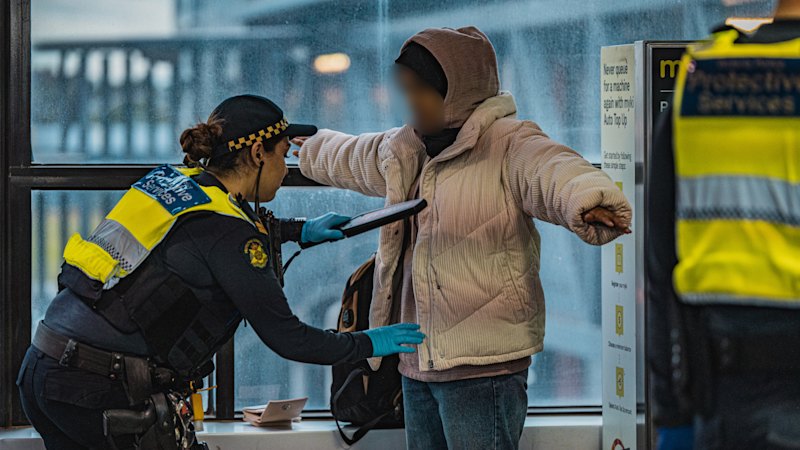
Police and PSOs would have the power to randomly search people anywhere in public with metal detectors, without needing a warrant or reasonable suspicion they have a weapon, under an election promise by Premier Ben Carroll.
asserted
they → have → Carroll
Carroll will on Wednesday pledge to implement a version of “Jack’s Law” in Victoria, modelled on a law first introduced in Queensland and copied in NSW, Tasmania, Western Australia and the Northern Territory.
asserted
Carroll → pledge → NSW
Named after 17-year-old Jack Beasley, who was fatally stabbed in Surfers Paradise in 2019, the law would allow police to use handheld metal detector “wands” to search anyone in a public place for knives.
asserted
police → name → knives
The Coalition has also pushed for Jack’s Law to be implemented, meaning it is likely to be legislated in some form by whichever party wins the November 28 election.
asserted
party → push → election
But the expanded police powers have previously been criticised as an imposition on individual liberty that may be misused by officers to target people on the basis of their race or ethnicity.
uncertain
that → expand → race
Police currently need a warrant or a reasonable suspicion that a person has a weapon to conduct a search.
asserted
person → need → search
The exception is when Victoria Police declares a “designated area” under the Weapons Control Act, meaning officers can stop and search anyone in that area randomly during a set period.
asserted
officers → declare → period
The Federal Court ruled in January that Victoria’s designated-area laws were invalid and unlawfully breached the state’s Charter of Human Rights and Responsibilities.
asserted
laws → rule → Rights
Queensland Police conducted almost 200,000 searches, seized 1400 weapons and charged 2930 people with offences in the 14 months after making Jack’s Law permanent in July 2025.
asserted
Law → conduct → July
Carroll said community safety was his priority.
asserted
safety → say → ?
“Stop and search powers for knives is the new direction I’m delivering,” he said.
asserted
he → stop → knives
The premier said he stood with all Victorians who had had their lives destroyed by violence.
asserted
lives → say → violence
Police and protective services officers would have the power to conduct random wand searches under the law change, but existing requirements will still apply to conduct pat-down or strip searches.
asserted
requirements → have → searches
Queensland introduced the law in 2021, allowing wand searches in specific entertainment precincts, and subsequently expanded it to cover any public space.
asserted
Queensland → introduce → space
Queensland has also removed safeguards, including the need for police to obtain authorisation from a senior officer to conduct a search in licensed venues, on public transport, in retail premises, or in other designated places.
asserted
police → remove → places
Police also no longer need to provide written notice to people who are searched.
asserted
who → need → people
Victorian Labor will closely model its rules on the latest iteration of Queensland’s laws.
asserted
Labor → model → laws
When the Queensland government sought to make permanent the powers in 2024, the Queensland Council for Civil Liberties said domestic and overseas research indicated that “police assessments of whom to search or question are often based on generalisations and negative stereotypes that are in part attributable to ethnic bias”.
asserted
that → seek → bias
Council president Michael Cope said at the time that Jack’s Law violated a fundamental principle, and that a trial had not produced evidence that the searches reduced offending.
asserted
searches → say → offending
“This proposed law, like many tough-on-crime measures, is being proposed in response to a most tragic situation.
asserted
law → propose → situation
However, as is always the case, public policy has to have regard to a broad range of considerations,” he said.
asserted
he → have → considerations
The Centre Against Racial Profiling has previously obtained data through freedom-of-information laws showing that in Victoria, people perceived to be Aboriginal or Torres Strait Islander were 15 times more likely to be searched by police than white people in 2024, and people perceived to be African were eight times more likely to be searched.
asserted
people → obtain → 2024
Both groups were less likely to be found with prohibited items.
asserted
groups → find → items
Separately, two years of data obtained by Liberty Victoria revealed just over 1 per cent of the searches conducted in designated areas resulted in any “objects or substances” being found.
asserted
objects → obtain → areas
Victoria’s designated-area laws were challenged in the High Court after Victoria Police declared the entire Melbourne CBD and surrounding areas for six months from November last year.
asserted
Police → designate → November
Carroll said a re-elected Labor government would work with legal experts to ensure the new rules were legally watertight.
asserted
rules → say → experts
The announcement comes just over a year since 12-year-old Chol Achiek and 15-year-old Dau Akueng were stabbed to death in Cobblebank, in Melbourne’s outer west, while walking home from a basketball match.
asserted
Achiek → come → match
On Tuesday, Carroll was at the Cobblebank basketball centre, where the two boys played, to announce $23 million in new programs and grants to avert youth crime, including sports programs and homework clubs.
asserted
boys → play → programs
“Idle hands are the devil’s workshop,” he said.
asserted
he → say → ?
“If you see the kids here doing basketball … the social bonding, the community connectedness, that is so critical for their future.”
asserted
that → see → future
 The Aporia