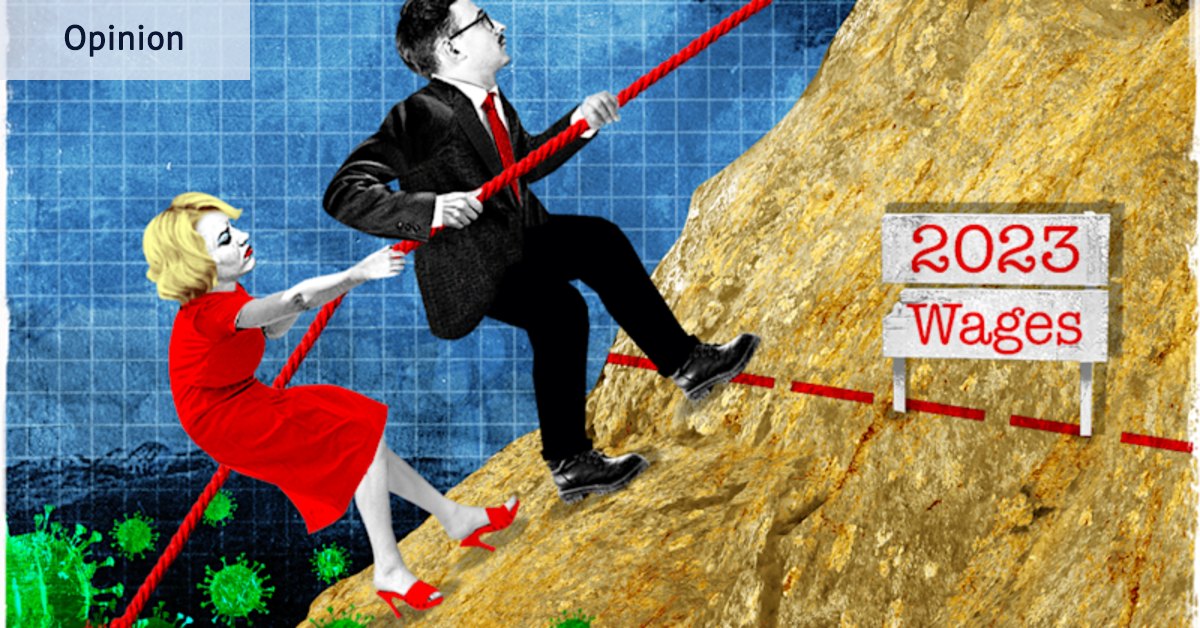
This article argues that declining wage growth rather than general economic conditions is the primary cause of rising costs for consumers. The author claims that while the economy's growth rate appears reasonable at 2%, most of this growth stems from population increase, with little improvement in average income levels. Additionally, the writer criticizes economists and policymakers for not addressing the fact that wages have failed to keep pace with inflation rates, which stand at 3.5% year-over-year as of July, significantly lagging behind rising prices since the start of the COVID pandemic.
Written by the local model on 2026-09-15,
using this article's own text rather than the other coverage of the
same event (that is the story summary below).
I have one thing to say to our politicians, economists and readers of this august organ: no, it’s not the economy, stupid … it’s wages.
asserted
it → have → organ
It’s going nowhere fast.
asserted
It → go → ?
Although its growth of 2 per cent over the year to June sounds reasonable, the great majority of that growth is attributable to our growing population.
asserted
majority → sound → population
Little of the remaining growth represents the rest of us becoming a bit better off.
asserted
Little → remain → us
The economy is close to stalling speed, and if we’re not careful, it will start contracting – getting smaller rather than bigger – otherwise known as being in recession.
asserted
it → stall → recession
After reaching a low of 3.5 per cent in late 2022, the rate of unemployment has crept up slowly but inexorably to 4.5 per cent.
asserted
rate → reach → cent
And, unless something major is done, it’s likely to keep edging up until, with more and more people unable to find work, it’s high enough to stop people banging on incessantly about the cost of living.
asserted
people → do → living
As I may have mentioned before, the cost of living is not really the problem.
uncertain
cost → mention → living
It’s just the bit you see when you go to the supermarket or fill up your car.
asserted
you → ’ → car
We’d all like to live in a world where our wages went up every year while prices didn’t change.
asserted
prices → like → world
Unfortunately, it’s the other way round: rising prices are the main reason we get a pay rise each year.
asserted
we → ’ → rise
If we didn’t, the real value of our wage would keep declining, making it harder to afford to buy as much as we used to.
asserted
we → do → much
Because wages haven’t been keeping up.
asserted
wages → keep → ?
You’ve seen me say that once or twice before of late.
asserted
me → see → that
What I haven’t done is explain how and why wage rises have fallen behind price rises.
asserted
rises → do → rises
That’s because I didn’t know.
asserted
I → ’ → ?
Why didn’t I know?
asserted
I → know → ?
Because no official body – not the Reserve Bank, not Treasury, not the treasurer nor the prime minister – and no private economist have pointed it out to me.
asserted
body → point → me
Did none of them know?
asserted
none → know → them
I find that hard to believe.
asserted
that → find → ?
Much easier to believe they kept it dark because they didn’t want people to know about it.
asserted
people → believe → it
They didn’t want to say rude words in public.
asserted
They → want → public
When I became an economic commentator many moons ago, I wrote incessantly about “excessive wage growth”.
asserted
I → become → growth
I said it because everyone else was saying it and, in that long-gone world, it was true.
asserted
it → say → world
I now realise that though everyone is free to say the rise in wages has been excessive, it is not done to say the reverse – that wage increases have been inadequate.
asserted
increases → realise → reverse
Because the bosses wouldn’t like it.
asserted
bosses → like → it
For that matter, nor would the unions thank me for pointing out their failure to do their jobs properly.
So I’m indebted to the Australia Institute’s Greg Jericho for being the country’s first economist to blow the whistle.
asserted
I → thank → whistle
He’s actually looked up the numbers and seen that, though businesses kept increasing their prices in the first two years following the COVID pandemic – March 2021 to March 2023 – the workers weren’t game to ask for a pay rise.
asserted
workers → look → rise
Since then, the system has got back to normal and wage rises have pretty much kept up with price rises.
asserted
rises → get → rises
The need for some sort of catch-up was forgotten.
asserted
need → forget → up
As a result, by March 2023, the purchasing power of everyone’s wage was cut by 5 per cent, and nothing’s been done to reduce that cut to people’s “real” wage.
asserted
nothing → cut → wage
Now do you wonder why balancing the household budget has become so much harder for so many people and why the economy is weak and getting weaker?
asserted
economy → wonder → people
Jericho projects that, if things continue on their present path – that is, if there’s no recession – the purchasing power of wages won’t have returned to what it was in 2023 until the end of 2036.
asserted
it → project → 2036
When the nation’s worthies preach their sermons about the need for improved productivity, the big come-on for you and me is that an X per cent improvement allows an X per cent increase in wages without adding anything to inflation.
asserted
improvement → preach → inflation
How do you get a “real” increase in wages?
asserted
you → get → wages
But from now on, any increase in real wages will be used to make up for the pay rises foregone in 2021 and 2022.
asserted
increase → use → 2021
Again, the boss does a lot better out of this deal than the workers do.
asserted
workers → do → deal
What the bosses and economists don’t get – or don’t want to get – is that they’ve got productivity the wrong way around.
asserted
they → get → productivity
They say, “give us an improvement in productivity and we’ll increase your wages”.
asserted
we → say → wages
But it works the other way: make employers increase wages, and they start looking for ways to improve the productivity of their workers, thereby cutting the cost of their labour.
asserted
they → work → labour
…and 10 more, not listed.
 The Aporia