Your writing was flagged as AI.
asserted
writing → flag → AI
What does that actually mean?
asserted
that → mean → What
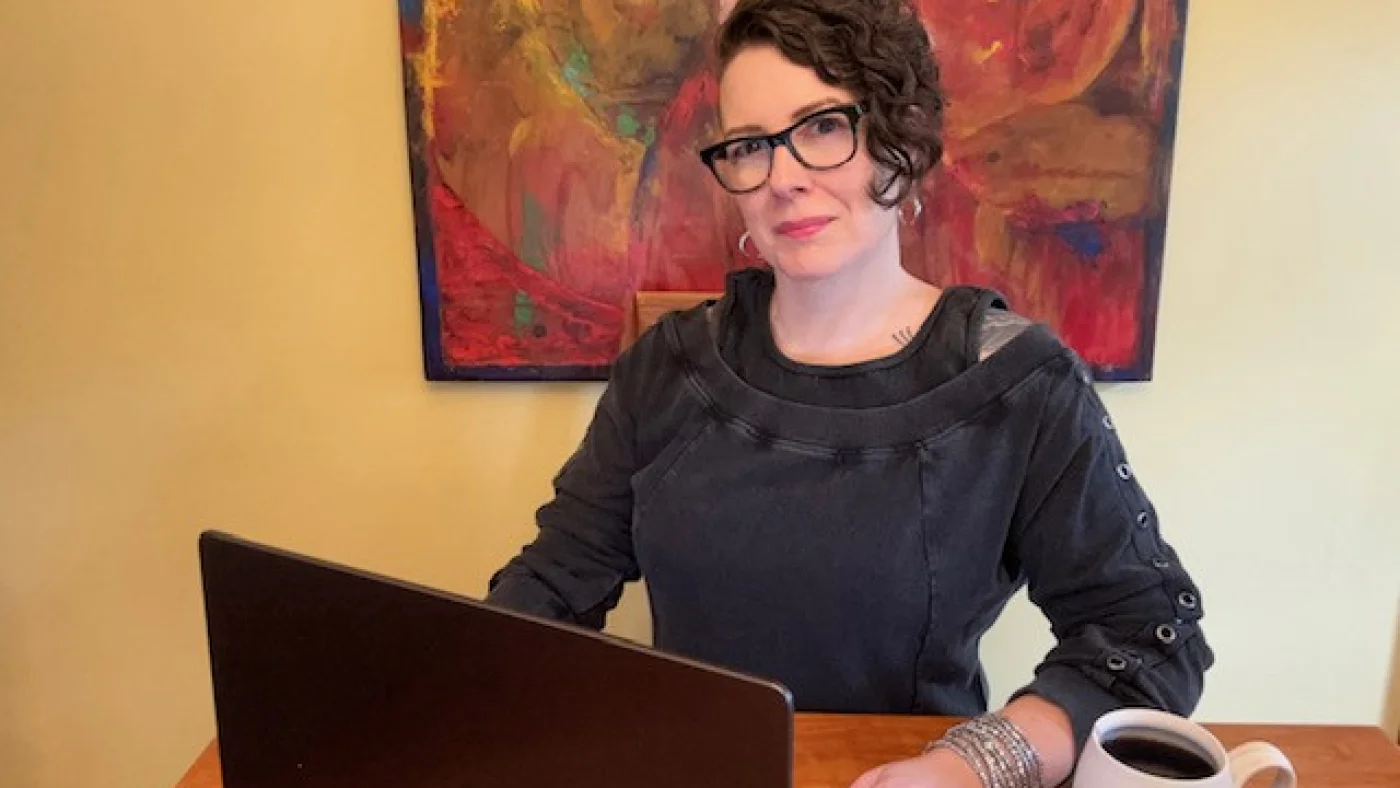
Ghostwriter Sally McGraw was hoping to land a job developing a book proposal for a prospective client.
asserted
McGraw → hop → client
But after submitting a writing sample, she got an unexpected response: an email telling her that multiple artificial intelligence detection tools had flagged her work as machine-generated.
asserted
tools → submit → work
"I was floored because I had not used AI to generate the text," McGraw said.
asserted
McGraw → floor → text
"I'd written it all myself."
asserted
I → write → it
Having spent more than 20 years as a professional nonfiction writer, McGraw said she was angry that her work had been dismissed as AI-written.
asserted
work → spend → writer
"You know where you see a cartoon character going red from their chin all the way up to the crown of their head?
asserted
character → know → head
I felt my ears starting to burn," she said.
asserted
she → feel → ?
"I thought, what is going on?"
asserted
what → think → ?
McGraw said she assured the client she had written the proposal herself, but decided not to press the issue because she considered the job "minor."
asserted
job → say → issue
In an email to NPR, the client confirmed that she had screened McGraw's work for AI.
asserted
she → confirm → AI
But she said the results were not the determining factor in choosing to hire a different writer, instead citing experience and fit.
asserted
results → say → experience
McGraw says she was paid for her writing samples, but believes the detector results cost her the opportunity to write the full book proposal.
asserted
results → say → proposal
As editors struggle to keep up with a growing influx of AI-generated content, some are turning to detection tools to help sift through the mounting number of submissions.
asserted
some → struggle → submissions
But these tools aren't perfect: They've been known to falsely flag human-written work as AI, which can leave writers with little idea of what triggered the result and how to prove otherwise.
asserted
what → know → result
"Everyone knows that these screeners are not 100% accurate," said McGraw.
asserted
McGraw → know → ?
Editors are overwhelmed by AI-written submissions
Neil Clarke, publisher and editor of Clarkesworld, says a flood of AI submissions at the science-fiction magazine has put pressure on the editing staff.
asserted
flood → overwhelm → staff
In 2021, the publication received roughly 1,100 submissions a month.
asserted
publication → receive → submissions
By February 2023, after AI agents like ChatGPT, Claude and Gemini started to become widely available, that number had doubled, forcing Clarke to temporarily close its submission portal.
asserted
number → start → portal
He estimates his own workload has increased by about 30%.
asserted
workload → estimate → %
"It's introduced an element of mistrust into the process," he said.
asserted
he → introduce → process
When AI writing detectors disagree
While AI detectors have gotten more sophisticated in recent years, the companies behind the detectors acknowledge that the tools aren't foolproof.
asserted
tools → disagree → detectors
Researchers have found that different AI detection tools can reach dramatically different conclusions about the same piece of writing.
asserted
tools → find → writing
In a study published in June, in the International Journal for Educational Integrity, researchers compared the accuracy of four widely used detectors.
asserted
researchers → publish → detectors
They tested 160 academic papers comprising four different categories: entirely human-written, entirely AI-written, a combination of the two, and AI material rewritten by a human.
asserted
They → test → human
Among the four detectors, Pangram was the most consistently accurate, correctly identifying the use of AI in 37 of the 40 papers with the combined text and in 37 of the 40 papers where a human rewrote AI-generated text.
asserted
human → identify → text
Pangram CEO Max Spero, in an emailed statement, said his company's detector can make mistakes, particularly when there is not much writing to evaluate.
asserted
detector → email → mistakes
Previously published writing can pose an additional problem, says Chris Callison-Burch, a professor of computer and information science at the University of Pennsylvania.
asserted
Burch → publish → Pennsylvania
"Many AI detectors work by asking a large language model how predictable a passage is," Callison-Burch said.
asserted
Burch → work → model
"The catch is that the language models also tend to find text from their training data unusually predictable."
asserted
text → tend → data
That could explain what science blogger Janelle Shane encountered in late 2022 when she tested excerpts from her 2019 book about how AI works, You Look Like a Thing and I Love You.
uncertain
I → explain → You
One detector reported a 98.7% confidence that a passage was machine-generated.
asserted
passage → report → confidence
"This is a clear, glaring, blinking-light false positive," Shane said.
asserted
Shane → glare → ?
"I had written this text myself."
asserted
I → write → text
An unpublished draft like McGraw's writing sample wouldn't face that particular problem, Callison-Burch said, but could still be falsely flagged based on patterns in the writing style.
uncertain
Burch → face → style
Detectors look for clues in word choice, punctuation and the way sentences are put together.
asserted
sentences → look → choice
can trigger an AI-positive result, he said.
asserted
he → trigger → result
Callison-Burch says detectors weigh patterns across a whole piece, so an em dash or a particular word alone doesn't necessarily mean that a bot was used.
asserted
bot → say → piece
What's at stake for writers
The Authors Guild, an organization that advocates for writers' rights, said in May that the use of AI detectors "creates an environment reminiscent of witch hunts," with writers worried about false accusations and how to defend themselves.
uncertain
writers → advocate → themselves
…and 13 more, not listed.
 The Aporia