Ranked choice voting explained as voters in 2 states rank congressional picks
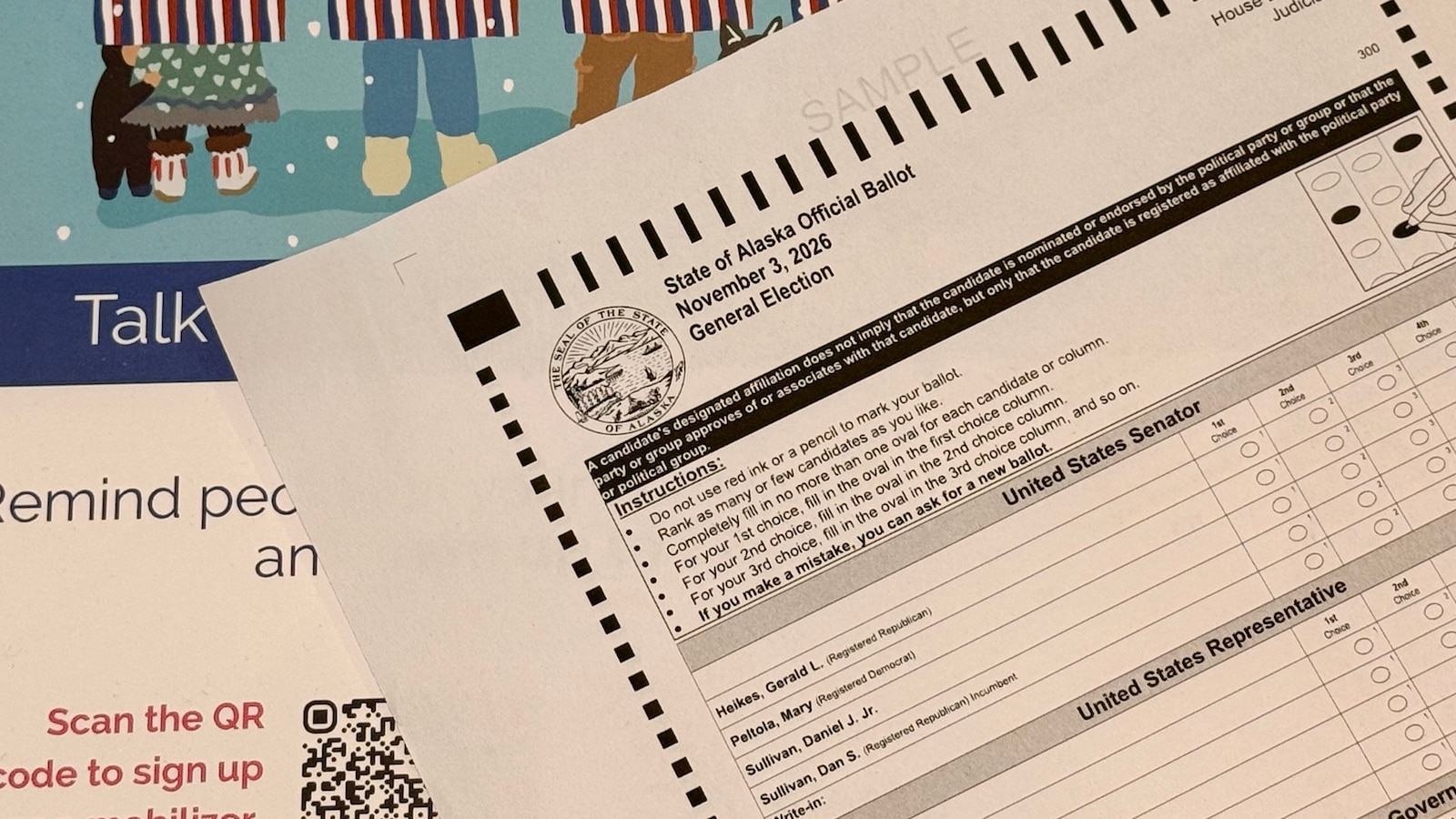
A ballot measure in Alaska seeks to repeal the state's use of the voting method.
asserted
measure → rank → method
As power in Congress hangs in the balance, all eyes will be on the two crucial states where races will be decided by a voting method that's no different than listing your top ice cream flavors.
asserted
that → hang → flavors
Ranked choice voting (RCV) will be used in the congressional and state races in Maine and Alaska again this year.
asserted
voting → rank → Maine
People in those states will have the opportunity to have their ballot count toward the person with the majority of votes, even if they strongly prefer a third party candidate.
asserted
they → have → candidate
Under RCV rules, voters rank their candidates in order of preference, first, second third, etc.
asserted
voters → rank → preference
If no candidate gets a majority of No. 1 rankings, votes are transferred from the candidate with the least top rankings to the other candidates based on who was ranked second, third and so on.
asserted
who → get → candidates
"The thinking is that even if my favorite candidate has no chance of winning, I can put my support and vote for someone who I also think is good," Ismar Volić, the director for the Institute for Mathematics and Democracy at Wellesley College who has been researching RCV for years, told ABC News.
asserted
who → have → News
Although the system has been in place in Maine since 2018 and in Alaska for the last four years, it has generated huge debates over its effectiveness and learning curve.
asserted
it → generate → effectiveness
Opposition from elected officials has risen over the last few years, with 19 states banning the practice.
asserted
states → elect → practice
Voters in Alaska will decide in a ballot question if they will join that list on Nov. 3.
asserted
they → decide → Nov.
Volić and other political and mathematical researchers stressed that as this debate continues across electorates, it is essential to look at the pros and cons of RCV and how it addresses the concerns from voters.
asserted
it → stress → voters
How it works
asserted
it → work → ?
Unlike standard voting, where people are mandated to choose one candidate on their ballot, RCV asks the electorate to rank the candidates in order of preference.
asserted
RCV → mandate → preference
Voters can choose to only rank one candidate on their ballot.
asserted
Voters → choose → ballot
If one of the candidates gets more than 50% of the No. 1 rankings, they win the election.
asserted
they → get → election
If no candidate gets more than 50%, the race goes into an instant runoff.
asserted
race → get → runoff
In that scenario, the ballots are re-examined and the candidates with the fewest No. 1 rankings are eliminated.
asserted
candidates → re → rankings
The votes from those eliminated candidates are then transferred to the candidate that the voter ranked as No. 2 on their ballot.
asserted
voter → eliminate → ballot
If the voter did not rank more than one candidate and only chose the eliminated person, their votes are not transferred.
asserted
votes → rank → person
Their ballot is still valid, however, and their vote for the eliminated candidate is still recorded.
asserted
vote → eliminate → candidate
If no candidate gets more than 50% of the vote after the elimination and vote transfer, the process restarts and continues until one candidate gets the majority.
asserted
candidate → get → majority
Electorates that use the system tally the votes with computer programs.
asserted
that → use → programs
This usually happens quickly, with most tallying the runoff rounds that night.
asserted
most → happen → rounds
How has RCV affected elections
David McCune, a professor of mathematics at William Jewell College who has researched RCV for a decade, told ABC News that the biggest effect of the voting method is the diminishing role of a spoiler candidate.
asserted
effect → affect → candidate
For example, in the 2014 Maine governor's race Republican Paul LePage won with under 50% of the vote in a race among LePage, Democrat Mike Michaud and independent candidate Eliot Cutler.
asserted
LePage → win → LePage
With RCV, voters who choose a third-party candidate as their top choice can also rank another candidate who aligns with their views and thus ultimately help select a candidate who represents their beliefs, according to McCune.
uncertain
who → choose → McCune
The end result is a victor who represents a bigger majority of the electorate, he said.
asserted
he → represent → electorate
"The evidence points to the fact that elections become more competitive when you switch to RCV," McCune told ABC News.
asserted
McCune → point → News
David Kimball, a professor of political science at the University of Missouri at St. Louis who has studied RCV, told ABC News that candidates have also changed their campaign tactics, to shore up all of those no. 2 and no. 3 rankings.
asserted
candidates → study → rankings
Mudslinging and negativity end up hurting a candidate in a RCV race as it turns voters off, according to Kimball.
uncertain
it → end → Kimball
He pointed to the 2025 New York Democratic mayoral primary where then-State Assemblyman Zohran Mamdani and then-City Comptroller Brad Lander crossed endorsed each other and encouraged their supporters to rank the other candidate second on their ballots.
asserted
Mamdani → point → ballots
In the final round of RCV tallying, Mamdani received the majority of Lander's 120,634 transfer votes that he accumulated before he was eliminated and went on to beat former Gov. Andrew Cuomo by more than 130,000 votes, according to election data.
uncertain
he → receive → data
"It can only help your candidate if they are seeking second or third choice endorsements," Kimball said.
asserted
Kimball → help → endorsements
Volić noted that while RCV does minimize the effect of a spoiler candidate, it does not outright eliminate them.
asserted
it → note → them
He noted the 2022 special election for Alaska's sole congressional seat where former Gov. Sarah Palin was up against Democrat Mary Peltola and Republican Nick Begich.
asserted
Palin → note → Peltola
Palin ended up splitting the first-round votes and, even though she received more of Beich's transfer votes, Peltola edged out to surpass the 50% threshold and won the election.
asserted
Peltola → end → election
"This type of spoiler event is very rare in RCV," Volić, who has analyzed data from over 1,000 RCV U.S. elections, said.
asserted
who → analyze → elections
The researchers noted that Begich went on to win the seat in 2024 election, after he beat Peltola in the third round of RCV runoffs.
asserted
he → note → runoffs
Volić warned that the polarization in current politics has led to more misinformation and misunderstandings about the system.
asserted
polarization → warn → system
Where it's used, where it's banned
As of October 2026, approximately 10.3 million voters in 14 cities and Maine and Alaska use RCV for their elections, according to data from The Ranked Choice Voting Resource Center, a non-partisan non profit that provides resources on RCV.
uncertain
that → use → RCV
…and 21 more, not listed.
 The Aporia