As a freshly crowned 27-year-old, Queen Elizabeth II surely did not mean to cause a crowd crush during her first visit to Sydney when more than a million Australians spilled onto the streets with gay abandon to catch a glimpse of England’s reigning monarch.
asserted
Australians → crown → monarch
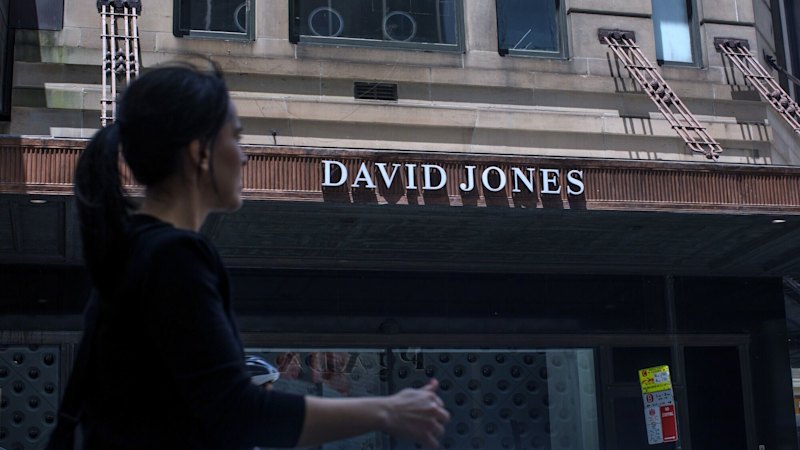
Mounted police formed a barricade outside David Jones and charged at onlookers jostling to get a glimpse of Her Majesty, dressed in a gown of gold-tinted tulle embroidered with thousands of Australian golden wattles made of gold and yellow beads, as she slipped into the David Jones store on Elizabeth Street to be whisked away for the State banquet dinner on the seventh floor.
asserted
she → form → floor
The royal visit on February 4, 1954, came in the midst of the golden era for global department stores, then destinations in themselves.
asserted
visit → come → themselves
It was a point of immense civic pride for the nation to have David Jones (decked out that day in a 30-metre-wide Union Jack flag) host the queen and the duke of Edinburgh.
asserted
Jones → have → Edinburgh
The department store is the oldest surviving one in the world still trading under its original name.
asserted
store → survive → name
That civic pride has long faded.
asserted
pride → fade → ?
The 188-year-old institution is the closest it’s ever come to financial if not existential ruin, besieged by a world where shoppers delight in online same-day delivery, and bricks-and-mortar stores compete with global behemoths like Amazon and Temu.
asserted
stores → come → Amazon
Many argue David Jones has a legacy worth saving – but no one seems to believe it can ever return to its former glory.
asserted
it → argue → glory
Founded in 1838 by Welsh merchant David Jones as high-quality fabric and drapery store, the retail outlet was the product of the era of mass production ushered in by the industrial revolution, and served as the heart of civic life and the economic engine of metropolitan cities, among hundreds of other independent stores.
asserted
outlet → found → stores
“Department stores generally were very important culture centres and landmarks in Australia,” says retail historian and Macquarie University associate professor Matthew Bailey.
asserted
Bailey → say → Australia
People dressed in their best and caught the train to town for a shopping trip to David Jones, which curated the fashion tastes of Australian women through buyers who travelled to Paris, London and New York.
asserted
who → dress → Paris
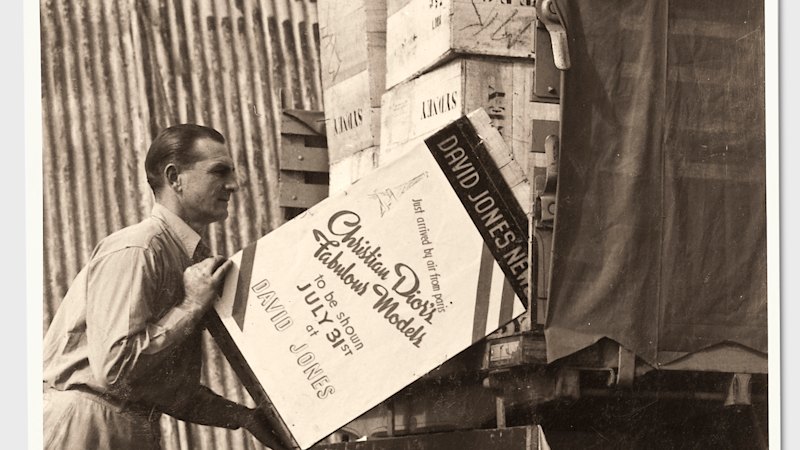
Six years before Queen Elizabeth’s visit, much newspaper ink was spilled on detailing various frocks by French designer Christian Dior when he presented his complete collection for the first time outside of Paris, planting Sydney – and David Jones – on the global fashion circuit.
asserted
he → spill → circuit
“David Jones was always, in Sydney, the most upmarket department store,” says Bailey.
asserted
Bailey → say → store
“In terms of selling taste in fashion, its connections to Europe and Britain, and to luxury goods and designers, it was the one that made an intensive effort to cultivate this sense of style and taste.
asserted
that → sell → style
Many milestones were marked by a visit to David Jones: a young lady’s first bra fitting or debutante ball, a young lad’s first two-piece suit, a bride’s bespoke wedding dress.
asserted
milestones → mark → Jones
Elaborate Christmas displays delighted children and parents alike.
asserted
displays → delight → children
Decades before customer loyalty meant signing up to programs and schemes, David Jones curried affection and allegiance with shoppers through customer service.
asserted
Jones → mean → service
This is a heyday some still remember, but a new generation of shoppers have never experienced.
asserted
generation → remember → shoppers
Months of rumours about whether David Jones has a future – and if it will make it past Christmas – come after years of financial instability.
asserted
it → make → instability
It has struck a nerve with scores of Australians, who are calling the radio and swapping anecdotes of their favourite memories of the 188-year-old department store.
asserted
who → strike → store
“I still have people stop me in the street to tell me their DJs story,” says Paul Zahra, who led David Jones between 2010 and 2014.
asserted
who → have → 2010
He calls a “wonderful retired lady” who would visit the store’s once-famed food hall every day to do her grocery shopping.
asserted
who → call → shopping
“She was head to toe in David Jones brands, with a full face of make-up and her hair bundled on top of her head,” Zahra says.
asserted
Zahra → bundle → head
The beginning of the end
The David Jones that exists today is a shadow of what people once loved.
asserted
people → exist → what
The advent of the motor vehicle, suburban sprawl and local shopping centres meant people no longer had to visit the CBD to do their shopping.
asserted
people → mean → shopping
The expansion of women’s participation in the workforce in the 1970s meant higher wages – and higher labour costs.
asserted
expansion → mean → wages
Over the next two decades, department stores were wiped out or absorbed by David Jones and Myer, leaving behind the duopoly that exists today, and without many of the services that made it so successful.
asserted
it → wipe → services
“Things you start to get rid of are very close and attentive customer service, building elaborate window displays, and so on because these things cost money and use labour,” says Bailey.
asserted
Bailey → start → labour
‘Department stores hold very strong memories of a business that seemed to care about its customers.
asserted
that → hold → customers
Bailey, retail historian and Macquarie University associate professor
David Jones’ owners have treated it like an asset.
asserted
owners → treat → asset
The chain was owned and run by the founding Jones family for 142 years before being overtaken by corporate raider John Spalvins in 1980, and refloated on the ASX in 1995.
asserted
chain → own → 1995
Under the helm of retail veteran Mark McInnes, who ran David Jones between 2003 and 2010, the department store firmly positioned itself in the luxury and premium end of the market through exclusive designer concessions and high margins.
asserted
store → run → concessions
In 2014, South African company Woolworths Holdings (no connection to the Australian supermarket business) purchased David Jones for $2.1 billion – and alienated their core customer base by trying to push private labels.
asserted
company → purchase → labels
Over the next few years and in a bid to pay down debt, Woolworths Holdings sold key properties.
asserted
Holdings → pay → properties
The Market Street Men’s store in Sydney was sold for $360 million in 2016, Melbourne’s 299 Bourke Street Men’s store went for $121 million in 2020, and Sydney’s Elizabeth Street flagship was snapped up by Charter Hall for $510 million in a 20-year leaseback deal that created an immediate rental bill of $25.5 million a year.
asserted
that → sell → million
By the time Sydney private equity firm Anchorage Capital Partners purchased it in December 2022 for between $100 million and $150 million, less than 7 per cent of what Woolworths Holdings paid, the world no longer needed department stores.
asserted
world → purchase → stores
For the second time in four years, David Jones will need another rescue just in time for Christmas.
asserted
Jones → need → Christmas
Chief executive Erica Berchtold and Anchorage Capital partners who sit on the board of David Jones are scrambling to renegotiate deals with multiple landlords if it is to have a viable long-term future.
asserted
it → sit → future
Even in the best-case scenario, David Jones’ footprint of 38 stores will be axed by more than half to about 12 to 15, according to people with knowledge of the matter, with 70 per cent of revenue being made by a third of its existing stores.
uncertain
cent → ax → stores
At any point, British investor and distressed business lender Hilco has the right to call in receivers.
asserted
Hilco → have → receivers
…and 9 more, not listed.
 The Aporia