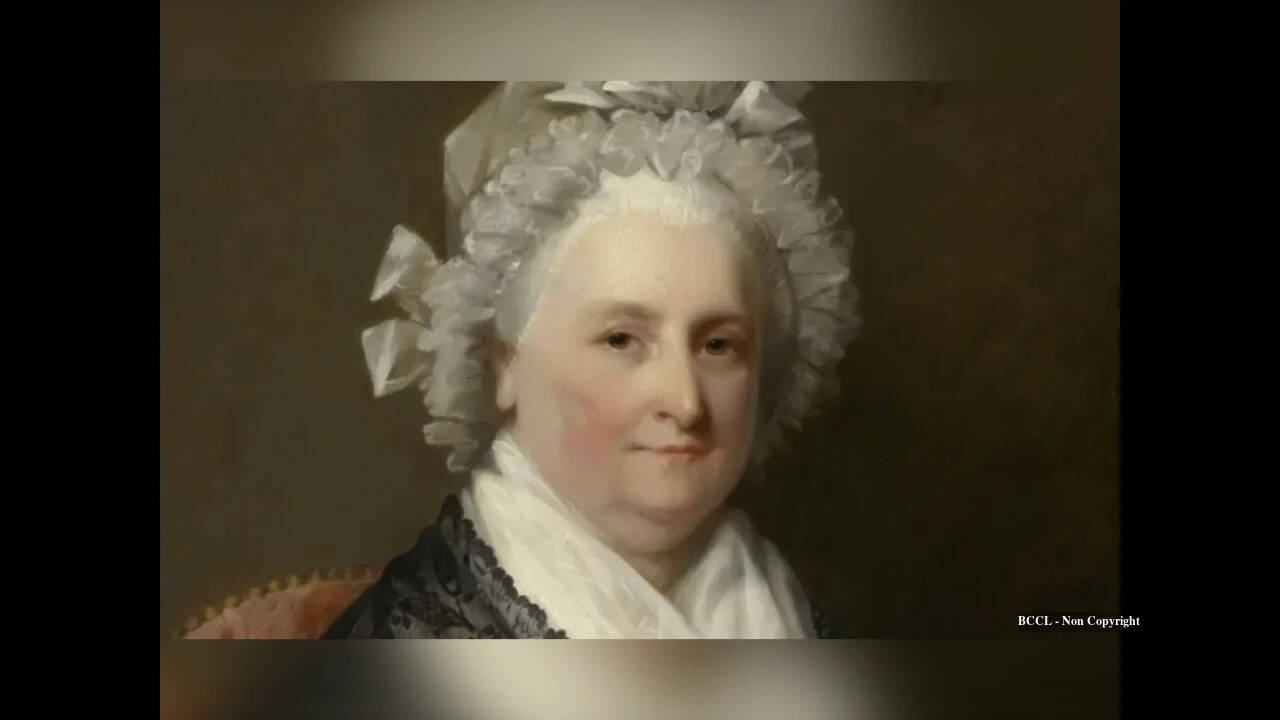
A short letter written by Martha Washington in 1760, describing the recovery of her four-year-old daughter from a frightening illness, has found a permanent home at the Library of Congress.
asserted
letter → write → Congress
The document, addressed to her friend Margaret Green, was purchased for $47,500 through the Library’s James Madison Council Edwin L. Cox Legacy Trust.
asserted
document → address → Trust
It is now the first original item in Martha Washington’s handwriting held by the Library’s Manuscript Division, making it an unusually intimate addition to the nation’s historical record, as per a report on Library of Congress.
asserted
it → hold → Congress
The letter was written on September 29, 1760, long before George Washington became president of the United States.
asserted
Washington → write → States
At the time, Martha was the widowed Martha Dandridge Custis, recently married to Washington and raising two surviving children from her first marriage.
asserted
Martha → marry → marriage
In the letter, she tells Margaret Green that her daughter Martha Parke Custis, known as Patsy, is “much better” after suffering “fitts & fevours.”
asserted
daughter → tell → fitts
The words offer a rare, personal view of a future first lady as a worried mother rather than a distant historical figure.
asserted
words → offer → mother
A mother’s relief in her own words
Martha Washington’s message captures the relief of a parent whose child has begun to recover.
asserted
child → capture → parent
She wrote that Patsy had lost her “fitts & fevours bout” and appeared to be getting well quickly.
asserted
Patsy → write → bout
The family had taken the little girl out in a carriage the day before, and Martha noted that the change of air had refreshed her considerably.
asserted
change → take → her
The phrasing is simple and domestic, yet it carries the emotional weight of a mother watching a young child return to health.
asserted
child → carry → health
Historians believe Patsy’s “fitts” may have been caused by epilepsy.
uncertain
fitts → believe → epilepsy
According to the Library of Congress, her treatment included “Bake” or “bark,” meaning cinchona, the source of quinine, as well as “bitters,” a liquid medicine.
uncertain
treatment → accord → quinine
The letter therefore documents not only a family crisis but also the medical practices available to a wealthy Virginia household in the mid eighteenth century.
asserted
letter → document → century
The recovery described in 1760 did not last.
asserted
recovery → describe → 1760
Patsy’s seizures continued, and on June 19, 1773, George Washington recorded in his diary that “poor Patcy Custis Died Suddenly” at about five o’clock in the afternoon.
asserted
Custis → continue → afternoon
Washington later wrote that the sudden loss had almost reduced his wife to “the lowest ebb of Misery,” a reminder that the earlier letter describes a temporary reprieve in a much longer family ordeal.
asserted
letter → write → ordeal
Why the letter is so rare
The acquisition matters because very little of Martha Washington’s private writing survives.
asserted
little → matter → writing
The Library of Congress says she appears to have destroyed most of her personal correspondence, leaving historians with only fragments of her voice.
asserted
she → say → voice
Although the Library’s George Washington Papers contain eleven letters written by Martha Washington, none were in her own hand.
asserted
none → contain → hand
Eight are letterbook copies, while three are drafts written in her husband’s hand.
asserted
three → write → hand
That makes the newly acquired letter especially significant.
asserted
letter → make → ?
It is the first item in the Manuscript Division’s collections written in Martha Washington’s own handwriting.
asserted
It → write → handwriting
Researchers and visitors can now see her spelling, phrasing, and penmanship directly, rather than encountering her words only through copies or transcriptions made by others.
asserted
Researchers → see → others
Kevin Butterfield, acting chief of the Manuscript Division, said the Library’s already vast collection of materials related to American history continues to grow, sometimes one letter at a time.
asserted
collection → act → time
He noted that documents such as this one help the Library tell stories that it previously could not tell.
uncertain
it → note → that
The letter joins a collection that includes materials connected to many former first ladies, including Dolley Madison, Lucretia Garfield, and Edith Wilson.
asserted
that → join → Madison
A window into early American family life
The letter also illuminates the world of women and children in colonial Virginia, where illness and early death were common.
asserted
illness → illuminate → Virginia
Martha Washington had four children with her first husband, Daniel Parke Custis, but two died young.
asserted
two → have → husband
After marrying George Washington in 1759, she and Washington raised Patsy and John “Jacky” Parke Custis.
asserted
she → marry → Patsy
Martha ultimately outlived all four of her children, a painful pattern that the Library describes as not unusual in early Virginia, where death rates were high.
asserted
rates → outlive → Virginia
After Jacky died in 1781 at the age of 26, Martha and George Washington raised two of his youngest children, George Washington Parke Custis and Eleanor “Nelly” Parke Custis.
asserted
Martha → die → children
The new letter therefore sits within a much larger story of motherhood, loss, and resilience in the Washington household.
asserted
letter → sit → household
It shows Martha not as a symbol of the founding era, but as a parent managing a child’s illness with the tools and anxieties of her time.
asserted
It → show → time
The document also connects to the life of its recipient, Margaret Green, later Margaret Savage.
asserted
document → connect → recipient
Five years after Martha wrote to her, Margaret’s husband, the Reverend Dr. Charles Green, died.
asserted
husband → write → her
She later married Dr. William Savage, but the marriage ended in separation.
asserted
marriage → marry → separation
George Washington helped Margaret pursue the annuity she was owed from Savage, who the Library describes as an evidently violent husband, sometimes contributing his own funds to assist her.
asserted
Library → help → her
Her financial and marital difficulties, recorded in the George Washington Papers, continued for more than thirty years.
asserted
difficulties → record → years
The Martha Washington letter was acquired alongside a letter from Mary Todd Lincoln, written on February 15, 1865, just two months before President Abraham Lincoln’s assassination.
asserted
letter → acquire → assassination
…and 4 more, not listed.
 The Aporia