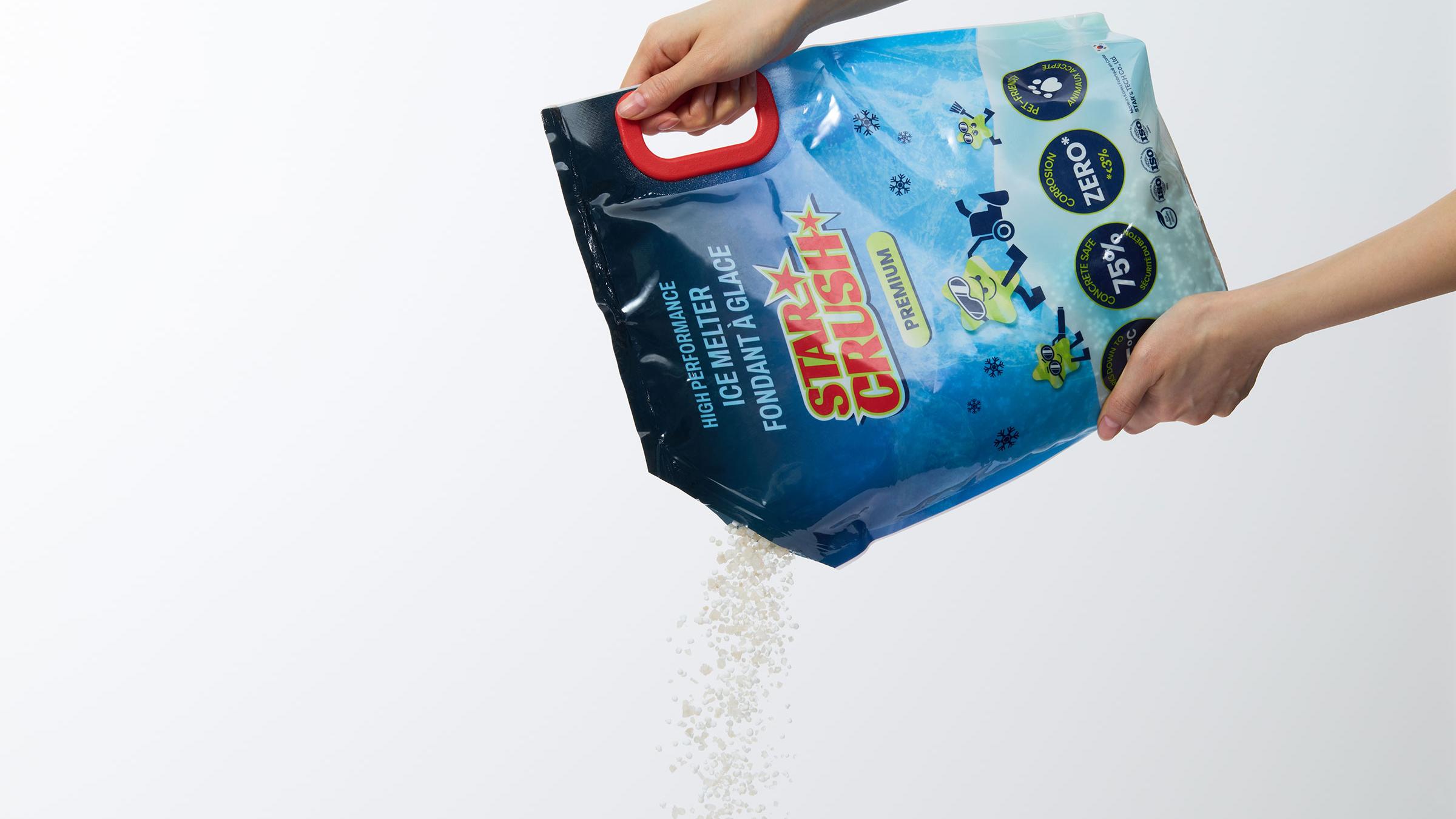
Photo via TIME

Star's Tech Starcrush

Read the original at TIME ↗
Cite

Cizmar, M. (2026, October 30). Star's Tech Starcrush. TIME. https://time.com/collection/best-inventions/2026/stars-tech-eco-st/

Dated from the outlet's own feed. Check the original for its byline.

TIME · collected 2026-10-30 · by Martin Cizmar

Quick Summary

Star's Tech Starcrush, previously known as Eco-St, is an innovative ice-melting product that uses crushed bones from invasive starfish to reduce corrosion compared to traditional road salt. Developed by Seungchan Yang in high school through experimentation with calcium chloride and crushed starfish bones, the product aims to minimize environmental harm while effectively melting ice. Currently, Star's Tech is the leading de-icer producer in South Korea and has started gaining traction in North America, preparing for a wider U.S. retail release.
Written by AI on 2026-11-01, from this article's own text only (the story summary below draws on all the coverage).

AI analysis

Story summary

Seungchan Yang, founder of Star's Tech, has developed a new de-icing product called Starcrush that is set to revolutionize the industry by being less corrosive than traditional road salt while still effectively melting ice. Originally conceived in high school when Yang hypothesized that crushed starfish bones could absorb excess chloride ions from calcium chloride and salt, his innovative idea has transformed into a commercial success. The product uses the porous bones of an invasive starfish species to create a more environmentally friendly de-icer.

Star's Tech is now the largest producer of de-icing products in South Korea, with its Starcrush being used by some airports and landscapers in North America. The company is preparing for a full retail launch in the U.S. market later in 2026, promising to be more sustainable and less damaging to infrastructure than existing de-icing solutions.

Written for “Star's Tech Starcrush” on 2026-11-01, grounded in this article and the 0 other(s) covering the same event.

Story

📰 Star's Tech Starcrush
Technology · 1 article(s) covering the same event.

Compared with similar articles

Nothing to compare against. No article is close enough to this one for the pipeline to have linked or judged the pair.
How this article was measured signals, leaning charts, publisher record, byline, topics and claims

Signals How these are calculated →

Claims extracted
4
sentences that state something as happening or true
Uncertain
0%
0 of 4 hedged ("reportedly", "may", "according to")
Leaning
not political
takes no side on a contested political question
Publisher signals
59/100
TIME's corrections and hedging, across everything collected from it. Not a measure of accuracy.
Outlets on this story
1
Technology
Same framing elsewhere
1
articles that frame the event the way this one does
Analyzed 2026-11-01 · how these are computed

How this is being covered How these are calculated →

Article leaning vs. publisher reliability
Source leaning vs. consistency

Publisher

TIME · 783 article(s) · 2 correction(s) detected
Running correction rate · 2 correction(s)

Who wrote this

Martin Cizmar
1 article(s) here · 1 carrying a prediction
🔮 In high school, Yang thought to combine the salt and calcium chloride used in traditional de-icers with crushed starfish bones, which he hypothesized would absorb excess chloride ions and make the final product less corrosive.
2026-10-30 · assertive framing · Star's Tech Starcrush
The only article under this byline in the corpus.

Topics

Eco South Korea Star U.S.

Subjects

Star ORG · 3× Martin Cizmar PERSON · 1× Seungchan Yang PERSON · 1× South Korea GPE · 1× U.S. GPE · 1× Yang PERSON · 1×

Narrative

In high school, Yang thought to combine the salt and calcium chloride used in traditional de-icers with crushed starfish bones, which he hypothesized would absorb excess chloride ions and make the final product less corrosive.
framing: assertive · carried by 1 article(s) · first seen 2026-11-01
🔮 In high school, Yang thought to combine the salt and calcium chloride used in traditional de-icers with crushed starfish bones, which he hypothesized would absorb excess chloride ions and make the final product less corrosive.
2026-11-01 · TIME
Star's Tech Starcrush · assertive framing

Claims (4 extracted, 0 hedged)

Star’s Tech Starcrush (which until late 2026, was called Eco-St) promises to de-ice much more effectively than traditional road salt with almost none of the corrosive effect on steel. asserted
which → call → steel
The porous bones of an invasive starfish breed that has devastated shellfish and seaweed farms, says Star’s Tech founder Seungchan Yang. asserted
Yang → devastate → farms
In high school, Yang thought to combine the salt and calcium chloride used in traditional de-icers with crushed starfish bones, which he hypothesized would absorb excess chloride ions and make the final product less corrosive. asserted
product → think → ions
Today, his company is the largest producer of de-icer in South Korea; it’s used by some airports and landscapers in North America, but is preparing for a U.S. retail launch. asserted
it → use → launch
💬Give feedback
🕘History 🎫Support