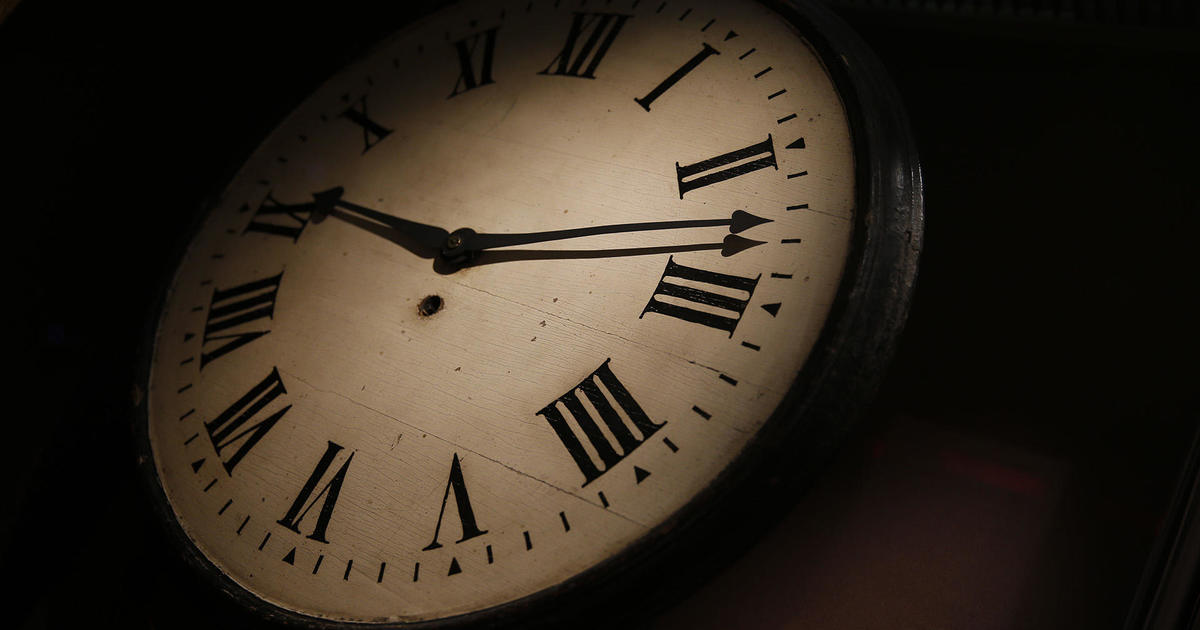
Clocks "spring forward" an hour this Sunday — to the chagrin of many Americans.
asserted
Clocks → spring → Americans
But as the time changes, why daylight saving time started — and who was behind the effort — remain complicated.
asserted
who → change → effort
For more than 100 years, proponents and opponents of
have argued over whether to keep observing the twice-yearly changing of the clocks, but many don't know how or why the U.S. started the custom in the first place.
asserted
U.S. → argue → place
Why was daylight saving time created?
asserted
time → create → ?
The origins of daylight saving time have been attributed to various people and reasons.
asserted
origins → attribute → people
Fingers are often pointed at farmers as the originators of the practice so they could have more daylight, but
when it was adopted in the early 20th century.
uncertain
it → point → century
Who invented daylight saving time?
asserted
Who → invent → time
Some have said Benjamin Franklin started the practice back in 1784 when he wrote a satirical essay for the Journal de Paris proposing regulations to ensure early risers.
asserted
he → say → risers
Philadelphia's Franklin Institute disputes this claim, and places the daylight saving time blame on George Hudson, a New Zealand entomologist.
uncertain
Institute → dispute → Hudson
In 1895, Hudson proposed a two-hour rollback on clocks inspired by his bug-collecting passion, as he wanted more daylight after his shift work to collect insects.
asserted
he → propose → insects
Others say British builder William Willet was the architect of daylight saving time.
asserted
Willet → say → time
In 1907, he wrote a pamphlet called "The Waste of Daylight," which encouraged advancing clocks in the spring so people could get out of bed earlier.
uncertain
people → write → bed
Longer and lighter days were supposed to save energy, reduce traffic accidents and help people become more active.
asserted
people → suppose → accidents
When was daylight saving time put into place?
asserted
time → save → place
Clocks really started to roll back during World War I, with Germany in 1916 becoming the first country to observe daylight saving time to conserve fuel, according to the Congressional Research Service.
uncertain
Germany → start → Service
The U.S. Embassy in Berlin sent a dispatch on April 8 to Washington, D.C., to let them know about the clock change initiative made two days prior.
asserted
them → send → initiative
According to the National Archives, an "order directing a change in the clocks to 'add' an hour of daylight to the day during the months of May through September" had been made.
uncertain
order → accord → September
The dispatch noted that Germany believed that changing the clocks would save $23.8 million — about $748 million in today's dollars — by limiting the use of artificial light.
asserted
changing → note → light
Other European countries followed suit, and then in 1918, the U.S. started to use daylight saving time.
asserted
U.S. → follow → time
The following year, in 1919, Congress repealed daylight saving time over the veto of then-President Woodrow Wilson.
asserted
Congress → repeal → Wilson
States were given the option to continue the practice.
asserted
States → give → practice
So, why do we still have daylight saving time?
asserted
we → have → time
During World War II, the entire country started to observe daylight saving time year-round.
asserted
country → start → time
In 1966, the Uniform Time Act established the system Americans use today, with the clocks falling back in November, and springing forward in March.
asserted
clocks → establish → March
The honeymoon lasted almost a decade, until 1974, when Congress tried to keep daylight saving time year-round again in response to the 1973 oil embargo.
asserted
Congress → last → embargo
That attempt, though, fizzled out in a few months.
asserted
attempt → fizzle → months
Americans were back to the twice-yearly clock change, and despite the introduction of the Sunshine Protection Act with every new Congress in recent years, the clocks are still changing.
asserted
clocks → change → years
 The Aporia