
Photo via South China Morning Post

Asian scientists are looking to South Korea as it becomes harder to stay in the US

Read the original at South China Morning Post ↗
Cite

Chik, H. (2026, October 30). Asian scientists are looking to South Korea as it becomes harder to stay in the US. South China Morning Post. https://www.scmp.com/news/china/science/article/3372506/asian-scientists-are-looking-south-korea-it-becomes-harder-stay-us

Dated from the outlet's own feed. Check the original for its byline.

South China Morning Post · collected 2026-10-30 · by Holly Chik

Quick Summary

South Korean universities are attracting Asian scientists amid increasing difficulties for them to remain in the United States. Sungkyunkwan University (SKKU) in Seoul is specifically targeting researchers in energy, quantum materials, and biomedicine. The university's president, Yoo Ji-beom, notes this trend as part of a larger shift where Asia is rising in scientific prominence, challenging the long-standing dominance of Western institutions.
Written by AI on 2026-11-01, from this article's own text only (the story summary below draws on all the coverage).

AI analysis

Story summary

South Korean universities, including Sungkyunkwan University (SKKU) in Seoul, are attracting Asian scientists as it becomes increasingly difficult for them to remain in the United States due to stricter visa policies and job market challenges. According to Yoo Ji-beom, president of SKKU, this shift reflects a broader trend where Asia is replacing Western dominance in applied technology fields such as energy, quantum materials, and biomedicine. The university aims to lure top researchers while maintaining collaborations with both the US and China, highlighting the intensifying global competition for talent in scientific research.

Written for “South Korea Attracts Scientists” on 2026-11-01, grounded in this article and the 0 other(s) covering the same event.
Why this leaning score
The article's own words the score was based on. Each is quoted verbatim and was checked against the article text before being stored, so you can find it in the original.
Reading Leans left (beta estimate) Confidence high
Leaning: leans left for article 116912 (high confidence, 1 verified quote) · logged 2026-11-01

Story

📰 South Korea Attracts Scientists
Science · 1 article(s) covering the same event.

Compared with similar articles

Nothing to compare against. No article is close enough to this one for the pipeline to have linked or judged the pair.
How this article was measured signals, leaning charts, publisher record, byline, topics and claims

Signals How these are calculated →

Claims extracted
4
sentences that state something as happening or true
Uncertain
25%
1 of 4 hedged ("reportedly", "may", "according to")
Leaning
Leans left
of the writing, not the subject · beta estimate
Publisher signals
63/100
South China Morning Post's corrections and hedging, across everything collected from it. Not a measure of accuracy.
Outlets on this story
1
Science
Same framing elsewhere
1
articles that frame the event the way this one does
Analyzed 2026-11-01 · how these are computed

How this is being covered How these are calculated →

Article leaning vs. publisher reliability
Source leaning vs. consistency

Publisher

South China Morning Post · 3535 article(s) · 7 correction(s) detected
Running correction rate · 7 correction(s)

Who wrote this

Holly Chik
12 article(s) here · 0 carrying a prediction
🔮 Chinese archaeologists set for hi-tech excavations with AI and deep-sea robots Scientists will be tasked with deploying big data tech and underwater drones to unearth centuries of lost history under 15th five-year plan
🔮 Beijing blasts US ban on device testing in China, warns of supply chain disruptions Commerce ministry urges Washington to revoke measures barring Chinese labs from certifying smartphones and computers “[We] hope the United States will face the calls of the industry, respect market rules, meet China halfway and immediately revoke the measures,” it said.
🔮 Even if global warming is limited to 1.5 degrees Celsius, scientists warn China’s densely populated coastline faces flooding this century They said gravitational shifts caused by shrinking Antarctic ice would redistribute water across the globe, causing higher ocean levels along China’s densely populated coastlines.
🔮 New Taipei-Hong Kong subsea route opened to cut risk and meet AI demand New path launched through underwater network to tackle recurring disruptions and surging data workloads, RETN says One of the world’s biggest network service providers has opened a new subsea route between Taipei and Hong Kong to strengthen the system against repeated underwater cable disruptions around the island. Britain-headquartered RETN said the new route would take its total to six serving Taiwan: four connecting Taipei and Hong Kong, and two linking Taipei and Tokyo.
🔮 Could Chinese explorers have settled New Zealand before the Maori?
🔮 “Our analysis reveals that US trade sanctions, such as the Entity List, have generated consequences that US policymakers may not have fully anticipated,” the researchers wrote in a policy article published in the peer-reviewed journal Science on Friday.
🔮 China will never allow any country in this world to achieve AI dominance: Victor Gao
🔮 “The big mistake that Asians made after the end of colonial rule [is assuming] that the end of physical colonisation would automatically mean the end of mental colonisation,” veteran Singaporean diplomat Kishore Mahbubani told the inaugural Penang Peace Dialogue in Malaysia on Saturday.
Also by Holly Chik
Nothing else under this byline is closely related to this article, so these are simply their most recent.
All 12 articles by Holly Chik →

Topics

Chinese SKKU Seoul South Korea Sungkyunkwan University

Subjects

Seoul GPE · 2× South Korea GPE · 2× China GPE · 1× Chinese NORP · 1× Hong Kong GPE · 1× Japan GPE · 1× SKKU ORG · 1× Sungkyunkwan University ORG · 1× Yoo PERSON · 1× Yoo Ji-beom PERSON · 1×

Narrative

ExclusiveAsian scientists are looking to South Korea as it becomes harder to stay in the US Seoul university says it’s luring researchers in energy, quantum materials and biomedicine while still working with US and Chinese partners
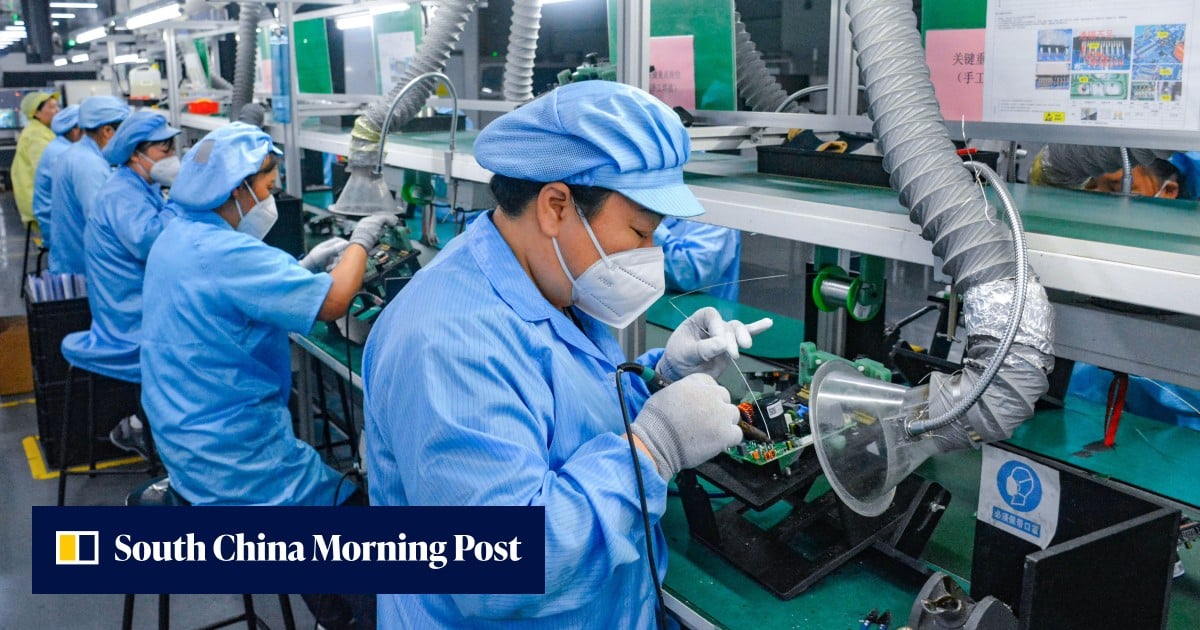
framing: mixed · carried by 1 article(s) · first seen 2026-11-01
2026-11-01 · South China Morning Post
Asian scientists are looking to South Korea as it becomes harder to stay in the US · mixed framing
Claims (4 extracted, 1 hedged)

ExclusiveAsian scientists are looking to South Korea as it becomes harder to stay in the US Seoul university says it’s luring researchers in energy, quantum materials and biomedicine while still working with US and Chinese partners asserted
it → look → partners
According to Yoo Ji-beom, president of Sungkyunkwan University (SKKU) in Seoul, that reflects a broader trend that has seen the West giving way to Asia after decades of dominance – particularly in the field of applied technology in China, Japan and South Korea. uncertain
West → accord → China
“Technological competition and global talent mobility are reshaping the knowledge ecosystem. asserted
competition → reshape → ecosystem
Competition to attract and retain the very best researchers has become far more intense than before,” Yoo said during an interview in Hong Kong. asserted
Yoo → attract → Kong
💬Give feedback
🕘History 🎫Support