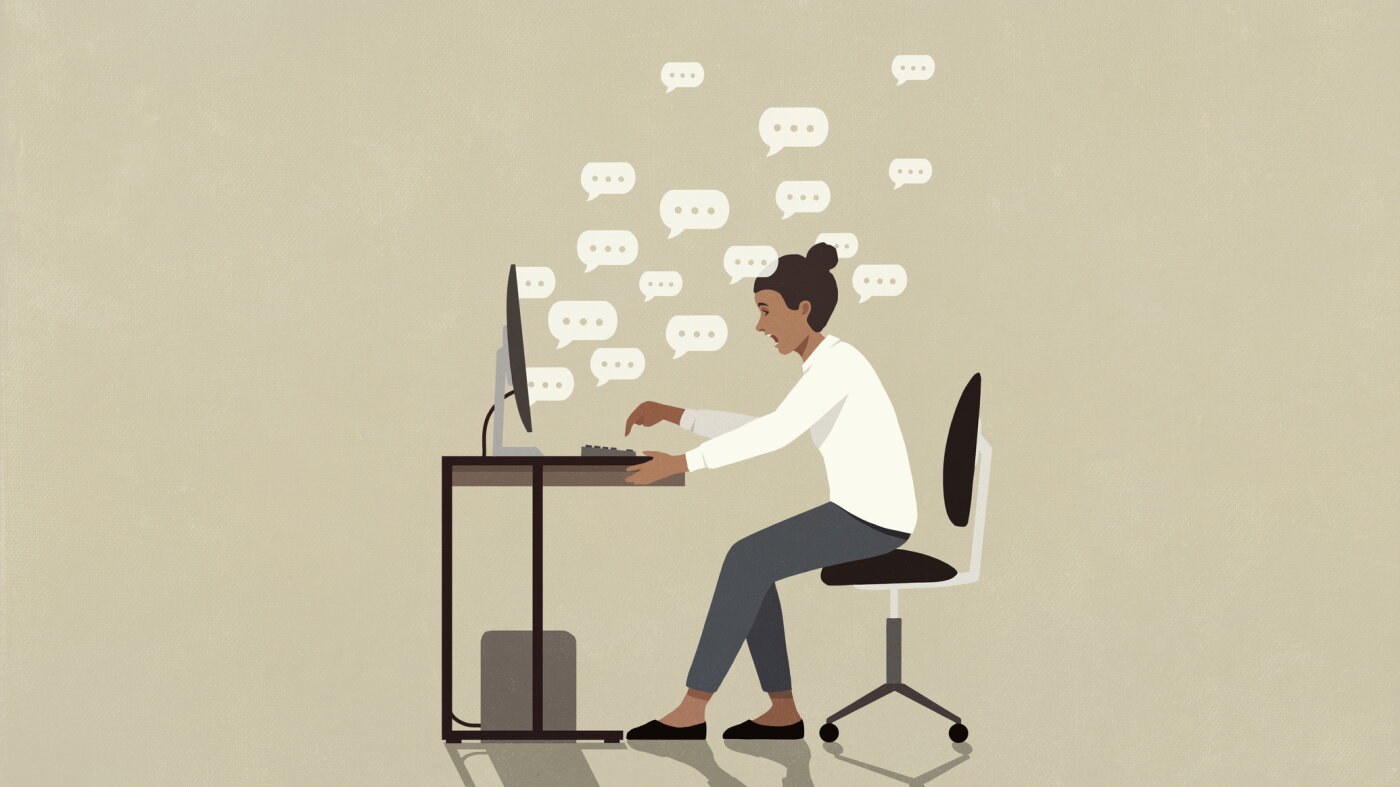
Photo via NPR

Nearly 2 out of 3 teens and tweens use AI chatbots, new research shows

Read the original at NPR ↗
Cite

Chatterjee, R. (2026, October 30). Nearly 2 out of 3 teens and tweens use AI chatbots, new research shows. NPR. https://www.npr.org/2026/10/30/nx-s1-6022278/ai-artificial-intelligence-teens-jed-common-sense-media

Dated from the outlet's own feed. Check the original for its byline.

NPR · collected 2026-10-30 · by Rhitu Chatterjee

Quick Summary

Nearly two-thirds of American teens and tweens use AI chatbots regularly, according to new surveys by Common Sense Media and the JED Foundation. The studies show that while many young people use these tools for schoolwork and emotional support, nearly half of 9-to-12-year-olds have also used chatbots despite age restrictions. By age 13, three-quarters of teens report using AI chatbots. Developmental psychologist Anne Maheux notes the rapid adoption of this technology among youth in recent years.
Written by AI on 2026-10-30, from this article's own text only (the story summary below draws on all the coverage).

AI analysis

Story summary

Nearly 2 out of every 3 American teenagers and tweens now use artificial intelligence (AI) chatbots, according to new research. The studies show that while many young people start using these tools for homework help, an increasing number also rely on them for emotional support and companionship. One survey by Common Sense Media found that nearly half of 9-to-12-year-olds have used AI chatbots, rising to almost three-quarters among those aged 13. Another study from the JED Foundation involving over 5,500 students aged 9 to 17 revealed that 90% had interacted with AI chatbots, and nearly two-thirds use them both for schoolwork and emotional support when feeling stressed or anxious. These findings highlight a significant shift in how young people are integrating technology into their daily lives and mental health routines.

Written for “Teen Tween AI Chatbot Use” on 2026-10-30, grounded in this article and the 0 other(s) covering the same event.
Why this leaning score
This article does not take a side on a contested political question, so it has no leaning score. That is an answer rather than a gap: a match report or a rescue can be warmly or critically written without being left or right, and scoring it anyway is how approval of a subject gets recorded as a political position.
No political leaning scored for article 116774 · logged 2026-10-30

Story

📰 Teen Tween AI Chatbot Use
Technology · 1 article(s) covering the same event.

Compared with similar articles

This article reads unscored and hedges 9% of its claims. Each row says how that neighbour differs.
New York Post
Hedges 3 of 17 claims Outlet record 66/100
“Article A reports on Governor Hochul signing laws to regulate AI chatbots, while Article B discusses research showing usage trends among teens and tweens.”
The Straits Times
Hedges 1 of 14 claims Outlet record 66/100
“Article A describes the passage and signing of a new law in New York, while Article B reports on research showing usage statistics for AI chatbots among teens and tweens.”
Times of India
⚖️ Leans left Hedges 4 of 17 claims Outlet record 59/100
“Article A discusses New York's legislation banning unsafe AI companion features for children, while Article B reports on a survey showing high usage of AI chatbots among teens and tweens.”
The Sydney Morning Herald
Hedges 3 of 27 claims Outlet record 61/100
“The articles discuss different aspects of young people's relationship with AI, one focusing on feelings of guilt and uncertainty about relaxation due to AI, while the other focuses on usage statistics of AI chatbots among teens and tweens.”
The Hindu
Hedges 2 of 50 claims Outlet record 77/100
“Article A reports on a survey showing AI chatbot usage among teens and tweens, while Article B discusses new legislation in New York restricting AI chatbots' interactions with minors.”
New York Post
Hedges 4 of 46 claims Outlet record 66/100
“The articles discuss related topics but describe different events: one warns about a new threat from AI chatbots, while the other reports on research showing widespread use among teens and tweens.”
How this article was measured signals, leaning charts, publisher record, byline, topics and claims

Signals How these are calculated →

Claims extracted
34
sentences that state something as happening or true
Uncertain
9%
3 of 34 hedged ("reportedly", "may", "according to")
Leaning
not political
takes no side on a contested political question
Publisher signals
60/100
NPR's corrections and hedging, across everything collected from it. Not a measure of accuracy.
Outlets on this story
1
Technology
Same framing elsewhere
1
articles that frame the event the way this one does
Analyzed 2026-10-30 · how these are computed

How this is being covered How these are calculated →

Article leaning vs. publisher reliability
Source leaning vs. consistency

Publisher

NPR · 972 article(s) · 3 correction(s) detected
Running correction rate · 3 correction(s)

Who wrote this

Rhitu Chatterjee
5 article(s) here · 1 carrying a prediction
🔮 "And now it seems like roughly the same number of kids using it for homework are using it to get emotional support or help with coping." "I use it to make myself practice sample questions – sample test questions that I will answer with my own work," says 15-year-old Arjun Sharda, in Round Rock, Texas.
🔮 "This idea that a parent would find out when the person that you connected with in the account is in distress hardly triggered at all for us," he says.
🔮 "And then the younger one – much to my older daughter's dismay – got it in sixth grade.
🔮 So, back in May, the company started an optional feature called Trusted Contact to connect those struggling with thoughts of suicide and self harm to someone they can turn to in times of emotional crises.
🔮 If you or someone you know may be considering suicide or is in crisis, call or text 9 8 8 to reach the Suicide and Crisis Lifeline. Laura Reiley knew that her only daughter, 29-year-old Sophie Rottenberg, was struggling.
Also by Rhitu Chatterjee
Nothing else under this byline is closely related to this article, so these are simply their most recent.

Topics

American ChatGPT Common Sense Media JED Foundation the University of North Carolina

Subjects

Maheux PERSON · 2× the JED Foundation ORG · 2× American NORP · 1× Anne Maheux PERSON · 1× Arjun Sharda PERSON · 1× Chapel Hill GPE · 1× Common Sense Media ORG · 1× JED Foundation ORG · 1× Round Rock GPE · 1× the University of North Carolina ORG · 1×

Narrative

"And now it seems like roughly the same number of kids using it for homework are using it to get emotional support or help with coping." "I use it to make myself practice sample questions – sample test questions that I will answer with my own work," says 15-year-old Arjun Sharda, in Round Rock, Texas.
framing: assertive · carried by 1 article(s) · first seen 2026-10-30
🔮 "And now it seems like roughly the same number of kids using it for homework are using it to get emotional support or help with coping." "I use it to make myself practice sample questions – sample test questions that I will answer with my own work," says 15-year-old Arjun Sharda, in Round Rock, Texas.

Claims (34 extracted, 3 hedged)

Nearly 2 out of 3 teens and tweens use AI chatbots, new research shows Artificial intelligence chatbots are increasingly becoming a regular part of life for American youth. asserted
chatbots → use → youth
Two new surveys show that nearly two-thirds of tweens and teens use AI chatbots. asserted
thirds → show → chatbots
While most kids use the technology for help with school work, and for companionship and emotional support, certain uses were linked with worse mental health symptoms. asserted
uses → use → symptoms
One survey, done by the online safety advocacy group, Common Sense Media, found that AI use starts early – years before kids hit the minimum age of 13 on most popular chatbots. asserted
kids → do → chatbots
Nearly half 9-to-12-year-olds have used an AI chatbot or companion. asserted
olds → use → chatbot
By the time kids are 13 years old, nearly three-quarters of them have used chatbots. asserted
quarters → use → chatbots
The other survey, done by the mental health advocacy group JED Foundation, found that 90% of the 5,500 9-to-17-year-olds in schools across the country have used an AI chatbot. asserted
% → do → chatbot
Nearly two-thirds use it both for schoolwork and as companions, or when they are stressed, lonely, anxious or overwhelmed. asserted
they → use → companions
The findings are "remarkable" in showing how dramatically AI use by children and teens has changed in a short time, says developmental psychologist Anne Maheux at the University of North Carolina, Chapel Hill, who wasn't involved in the surveys. asserted
who → show → surveys
"It seems like just a few years ago, no one was using" the technology, she says. asserted
she → seem → technology
"And now it seems like roughly the same number of kids using it for homework are using it to get emotional support or help with coping." "I use it to make myself practice sample questions – sample test questions that I will answer with my own work," says 15-year-old Arjun Sharda, in Round Rock, Texas. asserted
Sharda → seem → Rock
"I use it to understand concepts outside of the classroom." asserted
I → use → classroom
He uses both OpenAI's ChatGPT and Google's Gemini, he says, although he prefers the latter lately. asserted
he → use → latter
In Raynham, Mass., McKenzie Craig, 17, has been using chatbots since she was in eighth grade. asserted
she → use → grade
"I use it typically if I'm overwhelmed with a bunch of tasks I have," she says. asserted
she → use → tasks
"I'll have it help me prioritize the tasks." asserted
me → have → tasks
She also uses it for help with assignments. asserted
She → use → assignments
"If I write an essay, I'll run it through either Grammarly or ChatGPT and have it graded, so to speak," says Craig. asserted
Craig → write → Grammarly
"It gives me feedback, and then I can edit accordingly. asserted
I → give → feedback
Sharda says he and his friends also turn to chatbots when they are stressed and anxious. asserted
they → say → chatbots
"With tests, for example," he says, "I was so scared of failing one of my first chemistry tests on conversions and moles that I kept asking ChatGPT 'Will I be OK? asserted
I → say → ChatGPT
Some chatbot uses are linked to worse mental health Researchers at the JED Foundation also surveyed students on symptoms of overall well-being and mental health. asserted
Researchers → link → being
"We were able to look at how young people are using AI and then how that correlates separately with indicators of well-being, history of suicidal ideation and attempts, and poor mental health," says psychologist Kayla Anderson, vice president of research and evaluation at the JED Foundation. asserted
Anderson → look → Foundation
"When young people are using AI, when they're in emotional distress," she adds, "they're more likely to report poor mental health and well-being outcomes." asserted
they → use → outcomes
They also report a greater history of suicidal thoughts and attempts. asserted
They → report → thoughts
But the data don't suggest a causal link, cautions Anderson. asserted
Anderson → suggest → link
"It's unclear, based on these data, whether AI use is contributing to poor mental health and well-being, or whether students who are already in distress in certain ways are more likely to turn to AI," she explains. uncertain
she → base → AI
But preliminary data collected by other researchers suggests that the link between chatbots and poorer mental health symptoms in young people might go both ways, says Maheux. uncertain
Maheux → collect → people
"So kids who do have worse mental health are seeking out AI to help them," she says. asserted
she → have → them
"But that AI use may be exacerbating those mental health challenges instead of helping." In a soon-to-be-published study of middle schoolers in one state, Maheux and her colleagues at UNC found that students who use chatbots for companionship grew lonelier over time. uncertain
who → exacerbate → time
They found similar results in another study of young adults. asserted
They → find → adults
"We see that people who are using AI more for companionship or feeling like they're overreliant on AI to solve various emotional or cognitive problems, are developing worse mental health over time." asserted
they → see → time
One potential explanation for this effect, she says, is that AI is easing people's emotional distress — loneliness, anxiety, stress — in the immediate moment, but that reliance on the technology is preventing young people from developing the skills to tolerate and navigate normal daily stresses. asserted
reliance → say → stresses
That, she explains, "can lead to worse mental health." asserted
she → explain → health

💬Give feedback
🕘History 🎫Support