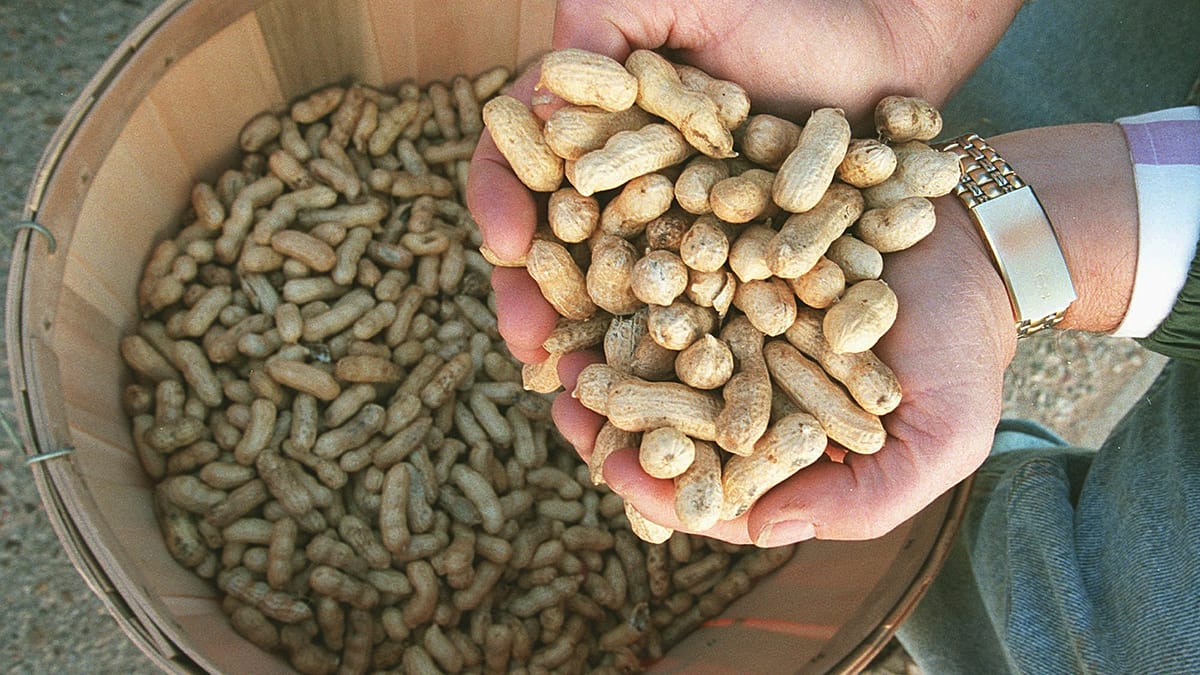
Photo via Euronews

What happens to the brain when you eat peanuts daily? New study reveals striking results

Read the original at Euronews ↗
Cite

Chihi, C. (2026, October 30). What happens to the brain when you eat peanuts daily? New study reveals striking results. Euronews. https://www.euronews.com/2026/10/30/what-happens-to-the-brain-when-you-eat-peanuts-daily-new-study-reveals-striking-results

Dated from the outlet's own feed. Check the original for its byline.

Euronews · collected 2026-10-30 · by Chaima Chihi

Quick Summary

A recent study published in "Food & Function" by Maastricht University found that daily consumption of 60 grams of unsalted roasted peanuts for 16 weeks improved brain insulin response in areas linked to memory and cognitive function among healthy adults aged 60-75. Using MRI, researchers observed enhanced blood flow in the hippocampus, parahippocampal gyrus, lingual gyrus, and posterior cingulate gyrus, suggesting that peanut consumption could support brain health as people age. However, the study does not confirm that eating peanuts prevents cognitive decline or dementia.
Written by AI on 2026-11-01, from this article's own text only (the story summary below draws on all the coverage).

AI analysis

Story summary

A recent study published in Food & Function by Maastricht University in the Netherlands suggests that eating peanuts daily may improve brain function related to memory in older adults. The research involved 31 healthy participants aged 60 to 75 years, who consumed 60 grams of roasted peanuts with their skins and no salt every day for 16 weeks. During this period, the study found an enhanced response to insulin in key areas of the brain's right hemisphere, such as the hippocampus, parahippocampal gyrus, lingual gyrus, and posterior cingulate gyrus, which are crucial for memory processes and cognitive functions. The improvement was measured by comparing data from periods when participants consumed peanuts with times they did not eat them.

Written for “Peanuts Brain Effects Study” on 2026-11-01, grounded in this article and the 0 other(s) covering the same event.

Story

📰 Peanuts Brain Effects Study
Health · 1 article(s) covering the same event.

Compared with similar articles

Nothing to compare against. No article is close enough to this one for the pipeline to have linked or judged the pair.
How this article was measured signals, leaning charts, publisher record, byline, topics and claims

Signals How these are calculated →

Claims extracted
16
sentences that state something as happening or true
Uncertain
25%
4 of 16 hedged ("reportedly", "may", "according to")
Leaning
not political
takes no side on a contested political question
Publisher signals
60/100
Euronews's corrections and hedging, across everything collected from it. Not a measure of accuracy.
Outlets on this story
1
Health
Same framing elsewhere
1
articles that frame the event the way this one does
Analyzed 2026-11-01 · how these are computed

How this is being covered How these are calculated →

Article leaning vs. publisher reliability
Source leaning vs. consistency

Publisher

Euronews · 1131 article(s) · 1 correction(s) detected
Running correction rate · 1 correction(s)

Who wrote this

Chaima Chihi
4 article(s) here · 1 carrying a prediction
🔮 A recent scientific study indicates that eating peanuts daily may help improve the brain's response to insulin in areas linked to memory in older adults.
🔮 More than half of households in Iraq, Jordan and Palestine said they would be unable to cover basic needs for a month if they lost their income.
🔮 Axios reported that the plan remains in its early stages but that it could set out US policy towards the Middle East for the remainder of Trump's term.
Also by Chaima Chihi
Nothing else under this byline is closely related to this article, so these are simply their most recent.

Topics

Clinical Nutrition Food & Function Maastricht University Netherlands

Subjects

Clinical Nutrition ORG · 1× Food & Function ORG · 1× Maastricht University ORG · 1× Netherlands GPE · 1×

Narrative

The participants ate 60 grams of roasted peanuts with their skins and without salt every day for 16 weeks, then the researchers compared the results with another period during which they did not eat peanuts. Improved brain response to insulin The results showed an improvement in the response of areas in the right hemisphere of the brain to insulin, including parts of the hippocampus, the parahippocampal gyrus, the lingual gyrus and the posterior cingulate gyrus, which are areas involved in memory processes and other cognitive functions.
framing: mixed · carried by 1 article(s) · first seen 2026-11-01
🔮 A recent scientific study indicates that eating peanuts daily may help improve the brain's response to insulin in areas linked to memory in older adults.

Claims (16 extracted, 4 hedged)

Does eating peanuts every day help to maintain memory as we get older? asserted
we → eat → memory
A recent scientific study indicates that eating peanuts daily may help improve the brain's response to insulin in areas linked to memory in older adults. uncertain
eating → indicate → adults
The study was published in the journal "Food & Function", and was carried out by researchers from the medical centre at Maastricht University in the Netherlands, with the aim of examining the effect of regular peanut consumption on the brain's response to insulin with advancing age. asserted
study → publish → age
The experiment involved 31 healthy people aged between 60 and 75 years. asserted
experiment → involve → years
The participants ate 60 grams of roasted peanuts with their skins and without salt every day for 16 weeks, then the researchers compared the results with another period during which they did not eat peanuts. Improved brain response to insulin The results showed an improvement in the response of areas in the right hemisphere of the brain to insulin, including parts of the hippocampus, the parahippocampal gyrus, the lingual gyrus and the posterior cingulate gyrus, which are areas involved in memory processes and other cognitive functions. asserted
which → eat → processes
To measure this response, the researchers gave the participants insulin through the nose, then used magnetic resonance imaging based on arterial blood labelling to measure changes in blood flow to brain regions. asserted
researchers → measure → regions
Insulin plays a role in a number of brain processes linked to learning, memory and communication between nerve cells. asserted
Insulin → play → cells
The brain's response to this hormone may become less effective with advancing age, a change that is associated with age related cognitive decline. uncertain
that → become → decline
However, the researchers did not demonstrate that eating peanuts prevents cognitive decline or stops dementia from developing, but they observed changes in the response of specific brain regions to insulin. asserted
they → demonstrate → insulin
These findings build on previous research by the same team on the same dietary intervention, published in the journal Clinical Nutrition in 2025, where the results showed a 3.6% increase in total blood flow to the brain, along with a 5.8% improvement in verbal memory after the 16 week intervention period. asserted
results → build → period
The researchers believe that the nutritional composition of peanuts may explain some of these effects, as they contain unsaturated fats, fibre, vitamins, minerals and biologically active plant compounds, as well as plant protein. uncertain
they → believe → fats
Peanuts are also a source of the amino acid L-arginine, which the body uses to produce nitric oxide, a compound that helps regulate blood vessel functions and may in turn be linked to learning and memory processes. uncertain
that → use → processes
Is eating peanuts enough to protect memory? asserted
eating → eat → memory
These findings still need further research to determine to what extent the recorded changes in the brain's response to insulin are reflected in memory and mental performance. asserted
changes → need → performance
The experiment was limited to 31 people, and the indicators observed by the researchers are not enough to state with certainty that peanuts provide protection from Alzheimer's or other dementia disorders. asserted
peanuts → limit → disorders
Conducting studies on larger numbers of participants and following them for longer periods would help to clarify this relationship and determine whether the potential benefits continue over time. asserted
benefits → conduct → time

💬Give feedback
🕘History 🎫Support