Bangladesh is unlikely to see an immediate fall in remittances from Saudi Arabia even as Houthi attacks on the kingdom intensified from early October, but a slowdown in new migration could weigh on inflows in the years ahead.
uncertain
slowdown → see → years
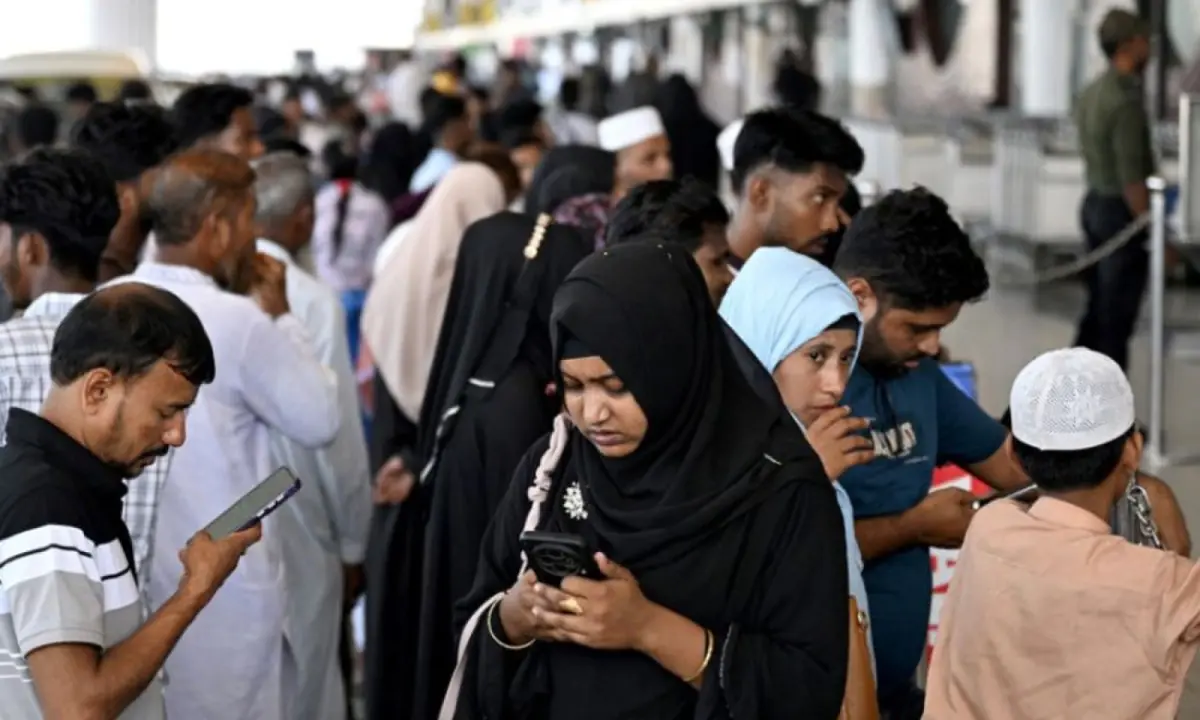
Following the attacks, migration to Saudi Arabia, the largest destination for Bangladeshi workers, has already been disrupted.
asserted
migration → follow → workers
As of Sunday, 144 direct and transit flights had been affected by prolonged flight restrictions at Saudi airports, disrupting the travel plans of around 22,000 passengers.
asserted
flights → affect → passengers
But economists and manpower experts say remittance inflows are unlikely to be hit immediately because newly arrived migrant workers typically take about a year to start sending significant amounts of money home.
asserted
workers → say → money
According to them, the longer-term impact will depend on the duration of the crisis, the performance of the Saudi economy and demand for labour, particularly in construction.
uncertain
impact → accord → construction
A prolonged crisis that damages the Saudi economy could slow job creation and reduce workers’ incomes.
uncertain
that → damage → incomes
If Houthi missile and drone attacks continue without damaging oilfields and refineries, higher global oil prices could boost Saudi revenues, potentially supporting investment and demand for foreign workers, according to Zahid Hussain, a former lead economist at the World Bank’s Dhaka office.
uncertain
prices → continue → office
“But everything is uncertain so far,” he commented.
asserted
he → comment → ?
Remittances are a major source of foreign currency for Bangladesh, accounting for around 7.5 per cent of gross domestic product, according to World Bank data.
uncertain
Remittances → account → data
Their importance has grown amid volatility in global energy markets following the US-Israel war on Iran, which has sent shockwaves through sectors ranging from agriculture to the garment industry.
asserted
which → grow → industry
In the July-September quarter of the current fiscal year, Saudi Arabia remained Bangladesh’s largest source of remittances.
asserted
Arabia → remain → remittances
Inflows from the kingdom rose to $1.65 billion, up from $1.23bn in the same period of FY26, according to Bangladesh Bank data.
uncertain
Inflows → rise → data
The kingdom accounted for 19.2pc of Bangladesh’s total remittance inflows in the first quarter of FY27, compared with 16.26pc a year earlier.
asserted
kingdom → account → 16.26pc
During the July-September quarter, overall remittances reached around $8.59bn, with Gulf Cooperation Council (GCC) countries continuing to account for the bulk of transfers.
asserted
countries → reach → transfers
Diversifying overseas jobs is becoming urgent
The latest disruption shows Bangladesh’s heavy reliance on a handful of overseas labour markets, leaving migrant workers and the economy exposed to regional crises.
asserted
disruption → diversify → crises
Since FY2014-15, Saudi Arabia has employed around half of the 9.6 million Bangladeshis who went abroad for work.
asserted
who → employ → work
Workers in the kingdom have sent home an average of $5bn a year.
asserted
Workers → send → 5bn
Overseas employment fell 36pc year-on-year to 134,000 in the July-August period this year, following a decline to around 969,000 workers in FY26, the lowest level in five years, according to Bureau of Manpower, Employment and Training data.
uncertain
employment → fall → data
Tasneem Siddiqui, executive director of the Refugee and Migratory Movements Research Unit (RMMRU), a local think tank, said the crisis exposed the structural weaknesses of the country’s migration sector.
asserted
crisis → say → sector
“Therefore, rather than relying on piecemeal decisions, we must completely overhaul and diversify the manpower market.
asserted
we → rely → market
Otherwise, one crisis after another will emerge, leaving us perpetually vulnerable,” said Tasneem, also a political science professor at Dhaka University.
asserted
Tasneem → emerge → University
She said the government needs a long-term strategy to develop skills suited to specific overseas markets and expand employment opportunities beyond traditional destinations.
asserted
government → say → destinations
Particularly, allocating a mere 0.08pc of the budget for a $35bn remittance sector is grossly insufficient to accomplish meaningful interventions,” she said.
asserted
she → allocate → interventions
Meanwhile, economist Zahid said Bangladesh should target countries facing ageing populations and labour shortages, including Japan and countries in eastern Europe, where demand for workers in nursing, caregiving and manufacturing could offer alternatives to Middle Eastern markets.
uncertain
demand → say → markets
Sayema Haque Bidisha, an economics professor at Dhaka University, also called for greater diversification of migration destinations, stronger diplomatic engagement and better support for expatriates through overseas missions.
asserted
Bidisha → call → missions
She said Bangladesh needs to improve its international image by demonstrating that its workers can fill skilled jobs, rather than being seen primarily as a source of manual labour.
asserted
workers → say → labour
Shariful Hasan, associate director of BRAC’s Migration Programme and Youth Platform, said earlier this month that many Bangladeshi workers in Saudi Arabia depend on daily or weekly employment and that security concerns have reduced work opportunities.
asserted
concerns → say → opportunities
Pakistan faces greater exposure than India
Bangladesh is not the only country with a significant reliance on remittances from Saudi Arabia.
asserted
Bangladesh → face → Arabia
Its neighbours India and Pakistan also depend on money sent home by their citizens working in the kingdom, although the potential impact varies.
Saudi Arabia is Pakistan’s largest source of remittances, contributing $9.78 billion in the last fiscal year, according to State Bank of Pakistan data.
Meanwhile, around 7pc of India’s international remittance inflows originate from Saudi Arabia.
uncertain
7pc → depend → Arabia
The country receives about $8 billion annually from the kingdom, according to the Reserve Bank of India.
uncertain
country → receive → India
A prolonged crisis that affects employment and earnings in Saudi Arabia could therefore have a greater impact on Pakistan than on India, given Pakistan’s substantial reliance on the kingdom as a source of remittances.
uncertain
that → affect → remittances
 The Aporia