Photo via Dawn

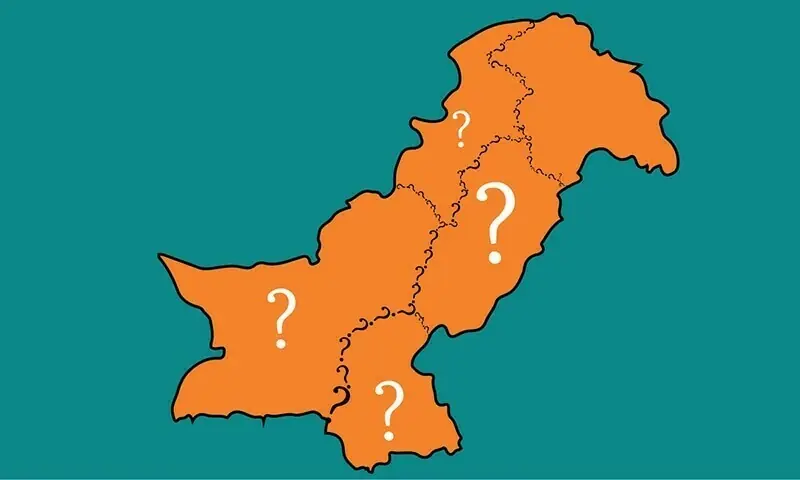
New provinces to carry heavy cost

Read the original at Dawn ↗
Cite

Kiani, K. (2026, October 30). New provinces to carry heavy cost. Dawn. https://www.dawn.com/news/2040850/new-provinces-to-carry-heavy-cost

Dated from the outlet's own feed. Check the original for its byline.

Dawn · collected 2026-10-30 · by Khaleeq Kiani

Quick Summary

A private think tank, Policy Research Institute of Market Economy (Prime), has released a report detailing the financial implications of creating additional provinces in Pakistan. The analysis shows that forming two more provinces would cost an estimated Rs47 billion to Rs57 billion annually, while upgrading 30 divisional units to provincial status could cost up to Rs730 billion. Prime advises conducting thorough fiscal costing exercises before any constitutional changes are made to ensure that the benefits of administrative restructuring justify the additional financial burden.
Written by AI on 2026-11-01, from this article's own text only (the story summary below draws on all the coverage).

AI analysis

Story summary

A private think tank, the Policy Research Institute of Market Economy (Prime), has released an analysis highlighting significant financial drawbacks associated with creating new provinces in Pakistan. The report suggests that adding two more provinces in Punjab could cost between Rs47 billion and Rs57 billion annually. If all 30 divisional units were upgraded to provincial status, the annual recurring expenditure would rise to up to Rs730 billion. Prime argues that before any constitutional changes are made, a formal fiscal costing exercise should estimate the additional expenses required for each proposed unit's governor, chief minister, assembly, secretariat, and high court. This would help determine if the administrative benefits outweigh the financial burden. The analysis underscores that political restructuring is often perceived as cost-effective but actually adds significant ongoing costs to governance.

Written for “Cost Of Provinces Increases” on 2026-11-01, grounded in this article and the 1 other(s) covering the same event.
Why this leaning score
The model judged this article politically coded and scored it -0.35, but every quote it verified points right, so the score is not published.
Written under an earlier scoring contract, which gave a paragraph rather than checkable quotes. Re-analysing this article replaces it.
Leaning score withheld for article 116497: score contradicts its own evidence · logged 2026-11-01

Story

📰 Cost Of Provinces Increases
Economy/Business · 2 article(s) covering the same event. See how they differ ↓

Compared with similar articles

This article reads unscored and hedges 0% of its claims. Each row says how that neighbour differs.
Cost of provinces Same event
Dawn
Hedges 5 of 21 claims Outlet record 72/100
How this article was measured signals, leaning charts, publisher record, byline, topics and claims

Signals How these are calculated →

Claims extracted
16
sentences that state something as happening or true
Uncertain
0%
0 of 16 hedged ("reportedly", "may", "according to")
Leaning
withheld
no quote in the article backed the model's score
Publisher signals
72/100
Dawn's corrections and hedging, across everything collected from it. Not a measure of accuracy.
Outlets on this story
2
Economy/Business
Same framing elsewhere
1
articles that frame the event the way this one does
Analyzed 2026-11-01 · how these are computed

How this is being covered How these are calculated →

Article leaning vs. publisher reliability
Source leaning vs. consistency

Publisher

Dawn · 2540 article(s) · 3 correction(s) detected
Running correction rate · 3 correction(s)

Who wrote this

Khaleeq Kiani
38 article(s) here · 1 carrying a prediction
🔮 Stakeholders said SOEs had limited LPG import experience and warned that the proposed levy on locally produced LPG would push prices higher, calling for a greater private-sector role.
🔮 This is expected to have a significant impact on fuel cost for power generation in December.
2026-10-30 · assertive framing · Ogra notifies 15.3pc increase in RLNG price for October
🔮 “The petroleum minister highlighted that strategic oil storage facilities in Pakistan would provide Saudi Arabia with greater flexibility in managing supply routes and accessing regional markets,” it added.
🔮 This would make it possible to assess whether the expected administrative benefits justify the additional recurring burden,” it said.
2026-10-30 · assertive framing · New provinces to carry heavy cost
🔮 Industrial representatives Amir Shaikh, Arif Bilwani, Tanveer Bari and Rehan Javed, representing various chambers of commerce and industry, said the government was charging substantial petroleum levies — about Rs76,000 per tonne on furnace oil and Rs80 per litre on diesel — which could otherwise be reduced to lower generation costs amid the energy crisis arising from the Iran conflict.
🔮 DAAB would monitor project implementation and help prevent or resolve disputes as they arise, while CAP proposed applying the mechanism to projects valued at Rs20bn and above.
🔮 “The project will continue to focus on timely implementation, effective contract management, and compliance with applicable environmental and social requirements.”
🔮 The NEC also approved the inclusion of the Pakistan Virtual Assets Regulatory Authority (PVARA) in Schedule IV of the AMLA, meaning that the crypto body would also have regulatory powers over virtual and digital assets to meet AML-CFT requirements, like the SBP, Securities and Exchange Commission of Pakistan and Federal Board of Revenue, among others.
🔮 Mohammad Ali Haider, vice chairman of the LPG Marketing Association, representing over 200 companies, said prices rose by Rs100 per kilogram over the weekend following withdrawal of the trade exemption and could climb further without immediate intervention.
2026-10-19 · assertive framing · LPG stakeholders seek daily pricing amid soaring rates
🔮 It said a transparent mechanism for disposing of locally produced LPG through a competitive process remained a government priority, as it would ensure a level playing field for the industry and address existing market concentration, where locally produced LPG was concentrated among a few market players.
2026-10-18 · assertive framing · Govt moves to curb LPG hoarding ahead of winter
Also by Khaleeq Kiani
Nothing else under this byline is closely related to this article, so these are simply their most recent.
All 38 articles by Khaleeq Kiani →

Topics

Bahawalpur ISLAMABAD NFC South Punjab Zhob

Subjects

Bahawalpur GPE · 2× NFC ORG · 2× South Punjab GPE · 2× Zhob GPE · 2× ISLAMABAD GPE · 1× Karachi GPE · 1× Lahore GPE · 1× Policy Research Institute of Market Economy ORG · 1× Prime ORG · 1× Punjab GPE · 1×

Narrative

“Any proposal for creating new provinces should include a formal fiscal costing exercise before constitutional or legislative changes are pursued”, the think tank said, adding that the costing should estimate the recurring expenditure required for the governor, chief minister, provincial assembly, secretariat, high court and other core institutions, together with the likely NFC resource envelope of each proposed unit.
framing: assertive · carried by 1 article(s) · first seen 2026-11-01
🔮 This would make it possible to assess whether the expected administrative benefits justify the additional recurring burden,” it said.
2026-11-01 · Dawn
New provinces to carry heavy cost · assertive framing

Claims (16 extracted, 0 hedged)

A private think tank has found more fiscal faults than benefits of the much-discussed creation of new provinces, advising priority to stronger local governments instead of new provinces if public service delivery was actually intended. asserted
delivery → find → governments
In its latest market analysis release on Thursday, Policy Research Institute of Market Economy (Prime) highlighted the additional annual recurring cost of Rs47 billion to Rs57bn in case of creation of two more provinces — South Punjab, Bahawalpur and remaining Punjab — and up to Rs730bn if 30 divisional units were to upgrade to provincial status. asserted
units → highlight → status
“Any proposal for creating new provinces should include a formal fiscal costing exercise before constitutional or legislative changes are pursued”, the think tank said, adding that the costing should estimate the recurring expenditure required for the governor, chief minister, provincial assembly, secretariat, high court and other core institutions, together with the likely NFC resource envelope of each proposed unit. asserted
costing → create → unit
This would make it possible to assess whether the expected administrative benefits justify the additional recurring burden,” it said. asserted
it → make → burden
If the number of provinces increases to six, South Punjab receives an illustrative allocation of Rs1tr under the existing NFC, while Bahawalpur receives Rs537bn. asserted
Bahawalpur → increase → Rs537bn
In case of 30 provinces, allocations differ considerably, ranging from Rs7201bn for Lahore and Rs691bn for Karachi to Rs46bn for Loralai and Rs50bn for Zhob. asserted
allocations → differ → Zhob
Thus 11 of the 30 proposed units receive less than Rs150bn per annum. asserted
11 → propose → annum
Think tank puts annual recurring bill at Rs47-57bn for two provinces and up to Rs730bn for 30 The estimated annual recurring cost of a new provincial government is Rs22.4bn under the low-cost scenario and Rs25.9bn under the high-cost scenario, asserted
cost → put → scenario
Using a 10pc fiscal sustainability benchmark based on the low recurring-cost estimate, 16 of the 30 proposed provinces would remain at or below the threshold, while 14 exceed it. asserted
14 → use → it
The burden is particularly high in the smallest units: the core provincial structure would absorb around 49pc of Loralai’s allocation, 45pc of Zhob’s and 37pc of Rakhshan’s even under the low-cost estimate. asserted
structure → absorb → estimate
Every proposed province with a population below 1.2 million would require more than one-third of its NFC allocation to finance the core provincial government structure. asserted
province → propose → structure
The findings therefore show that the fiscal implications of restructuring depend strongly on the number and size of the provinces created. asserted
implications → show → provinces
Limited restructuring involving relatively large units produces a much smaller recurring burden, whereas several smaller division-based provinces would face disproportionately high administrative costs relative to their expected NFC resources. asserted
provinces → involve → resources
Therefore, at the fiscal level, creation of new provinces will put additional pressure on fiscal resources of smaller provinces, especially those with lower NFC allocations and constrained revenue generation capacity. asserted
creation → put → allocations
A greater portion of their available resources would be consumed by ongoing government expenses, resulting in reduced fiscal room for other provincial spending, such as public service provision and developmental expenditure, the analysis showed. asserted
analysis → consume → provision
Therefore, the think tank emphasised that provincial restructuring should be evaluated not only in political and administrative terms, but also through a clear fiscal framework. asserted
restructuring → emphasise → framework

💬Give feedback
🕘History 🎫Support