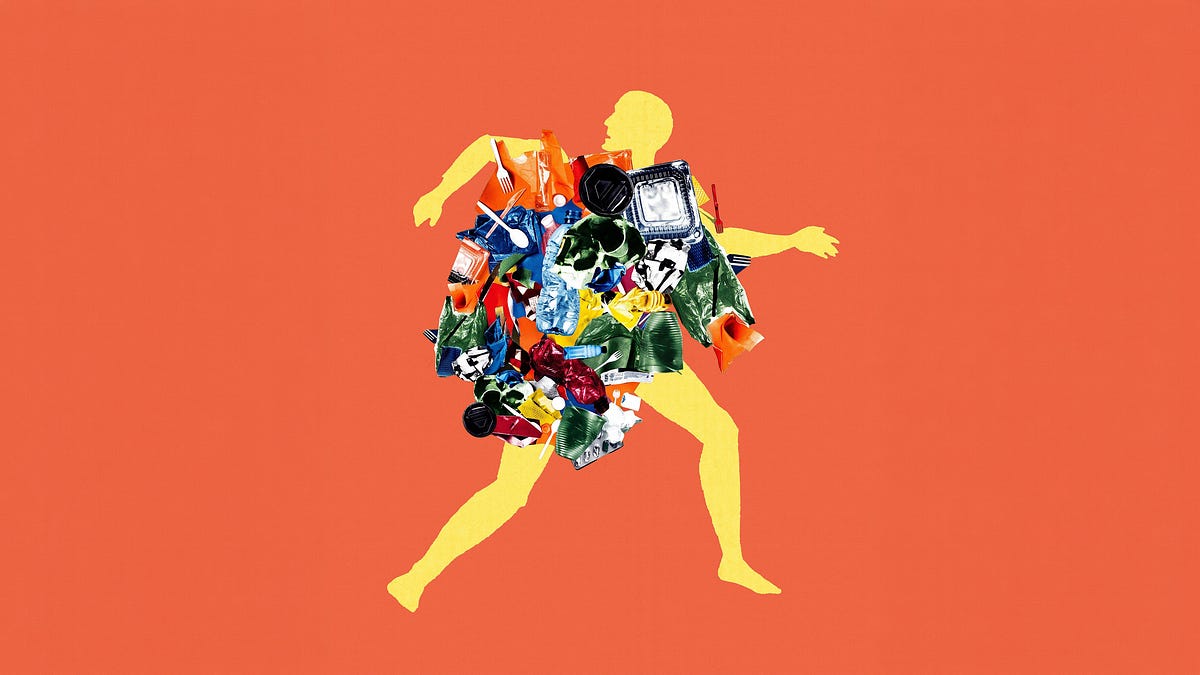
Photo via The Free Press

The Sane Person’s Guide to Microplastics

Read the original at The Free Press ↗
Cite

Grinberg, C. (2026, October 29). The Sane Person’s Guide to Microplastics. The Free Press. https://www.thefp.com/p/microplastics-maha-charlotte-grinberg-rfk

Dated from the outlet's own feed. Check the original for its byline.

The Free Press · collected 2026-10-29 · by Charlotte Grinberg

Quick Summary

The author reflects on their attempt to eliminate plastics from daily life due to health concerns but finds it impractical because of its pervasive use in household items and products. They discuss a recent study published in Nature indicating that common plastics generate harmful free radicals when exposed to water, suggesting potential health risks associated with the widespread use of these materials.
Written by AI on 2026-10-31, from this article's own text only (the story summary below draws on all the coverage).

AI analysis

Story summary

In October 2026, Charlotte Grinberg from The Free Press wrote about her attempt to eliminate plastic from her family's life after learning that common plastics can generate harmful molecules called free radicals when they come into contact with water. Her journey included replacing traditional Ziploc bags with more expensive plant-based alternatives but found it impractical and costly due to the ubiquity of plastic in everyday products. She concluded that completely avoiding plastic is both exhausting and unrealistic for most families, highlighting the challenges of reducing plastic use while maintaining a normal lifestyle.

Written for “Microplastics Impact Explained” on 2026-11-01, grounded in this article and the 0 other(s) covering the same event.

Story

📰 Microplastics Impact Explained
Environment · 1 article(s) covering the same event.

Compared with similar articles

Nothing to compare against. No article is close enough to this one for the pipeline to have linked or judged the pair.
How this article was measured signals, leaning charts, publisher record, byline, topics and claims

Signals How these are calculated →

Claims extracted
20
sentences that state something as happening or true
Uncertain
5%
1 of 20 hedged ("reportedly", "may", "according to")
Leaning
not political
takes no side on a contested political question
Publisher signals
96/100
The Free Press's corrections and hedging, across everything collected from it. Not a measure of accuracy.
Outlets on this story
1
Environment
Same framing elsewhere
1
articles that frame the event the way this one does
Analyzed 2026-10-31 · how these are computed

How this is being covered How these are calculated →

Article leaning vs. publisher reliability
Source leaning vs. consistency

Publisher

The Free Press · 406 article(s) · 0 correction(s) detected
No corrections detected for this publisher. That may mean careful reporting, or simply that nothing has been checked.

Who wrote this

Charlotte Grinberg
1 article(s) here · 1 carrying a prediction
🔮 And that was just the plastic I could see.
2026-10-29 · assertive framing · The Sane Person’s Guide to Microplastics
The only article under this byline in the corpus.

Topics

2WAY Amazon The Free Press Ziploc Ziplocs

Subjects

2WAY ORG · 1× Amazon ORG · 1× Nature ORG · 1× The Free Press ORG · 1×

Narrative

Researchers found that the six common plastics, including the kinds used in food containers and bottles, can generate highly reactive molecules called free radicals when they come into contact with water.
framing: assertive · carried by 1 article(s) · first seen 2026-10-31
🔮 And that was just the plastic I could see.
2026-10-31 · The Free Press
The Sane Person’s Guide to Microplastics · assertive framing

Claims (20 extracted, 1 hedged)

A couple of years ago, I went through a plastic-exposure epiphany. asserted
I → go → epiphany
It dawned on me that nearly everything my family touched involved plastic. asserted
family → dawn → plastic
We prepared food on it, heated food in it, and stored leftovers in it. asserted
We → prepare → it
My kids drank from plastic bottles, sucked on plastic pacifiers, and chewed on plastic toys and toothbrushes. asserted
kids → drink → toys
And that was just the plastic I could see. uncertain
I → see → ?
So I decided, abruptly, that we needed to eliminate plastic from our lives entirely. asserted
we → decide → lives
I started reconsidering every item in our kitchen and playroom, and became suspicious of anything that came wrapped in plastic. asserted
that → start → plastic
“What are these?” my husband asked, holding up the plant-based storage bags I had bought to replace our Ziplocs. asserted
I → ask → Ziplocs
He looked up the price I had paid in our shared Amazon account and was shocked. asserted
I → look → account
My quest to rid our home of plastic lasted approximately one week. asserted
quest → rid → plastic
Plastic bags at the grocery store, plastic in all my kids’ toys they were unwilling to part ways with, plastic packaging around practically everything I bought. asserted
I → part → everything
Trying to eliminate it entirely was exhausting, expensive, and, for most families, unrealistic. asserted
Trying → try → families
The Free Press and 2WAY are teaming up for a real-time interactive election night special, November 3 from 8 p.m. ET until late. asserted
Press → team → late
If plastic is impossible to avoid, the question of whether it harms us matters all the more. asserted
it → avoid → us
Researchers have found tiny particles known as microplastics in our blood, brains, and placentas. asserted
Researchers → find → blood
Whether they hurt us, and how, is still unsettled. asserted
hurt → hurt → us
But a study published this month in Nature offers one possible explanation. asserted
study → publish → explanation
Researchers found that the six common plastics, including the kinds used in food containers and bottles, can generate highly reactive molecules called free radicals when they come into contact with water. asserted
they → find → water
The more water-repellent the plastic, the more radicals it produces. asserted
it → produce → radicals
And free radicals can damage cells, harm that’s been linked to heart disease and dementia. asserted
that → damage → disease

💬Give feedback
🕘History 🎫Support